






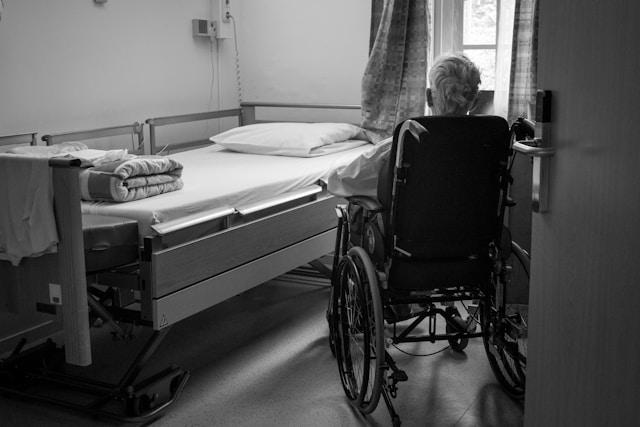
UK assisted suicide bill faces renewed debate as Archbishop warns it risks vulnerable lives and exposes unresolved legal concerns.
Newsroom (17/06/2026 Gaudium Press ) A renewed push to legalize assisted suicide in the United Kingdom has sparked sharp criticism from religious leaders and lawmakers, as a previously stalled bill is set to return to Parliament. The proposed legislation, which failed to complete its passage through the House of Lords earlier this year, has been described by critics as deeply flawed and potentially dangerous to vulnerable groups.
Archbishop John Sherrington of Liverpool, the Lead Bishop for Life Issues at the Catholic Bishops’ Conference of England and Wales, has voiced strong opposition following confirmation that the bill will be reintroduced. In a formal statement, Sherrington expressed “deep disappointment” at the move, warning that the legislation remains riddled with unresolved concerns despite earlier scrutiny.
“The Catholic Church opposes this Bill in principle and joins with many other people of faith and none in arguing that we should not cross this watershed,” Sherrington said, emphasizing the moral weight he believes the issue carries. He added that the earlier parliamentary debate exposed significant concerns, even among those predisposed to support the measure in principle.
The bill in question, formally titled the Terminally Ill Adults (End of Life) Bill, was initially introduced by Labour MP Kim Leadbeater. Although it passed the House of Commons in June 2025 by a narrow margin of 25 votes, it failed to complete its legislative journey after becoming stalled in the House of Lords. More than 1,200 proposed amendments significantly delayed progress, ultimately causing the bill to run out of parliamentary time.
Now, Labour MP Lauren Edwards has announced her intention to bring forward the same legislation after securing a high placement in the private members’ bill ballot. Edwards has defended the move, suggesting that further scrutiny by the Lords should not prevent progress initiated in the Commons.
“Laws passed in the House of Commons are then refined by the House of Lords, but they don’t have the opportunity to block them,” Edwards said in a BBC interview. “It’s perfectly reasonable for us to ask the House of Lords to finish the job.”
Her remarks point to a broader constitutional tension between the two chambers. If the bill passes the Commons again, supporters may seek to invoke the Parliament Act, a mechanism that allows legislation to bypass the House of Lords under certain conditions.
However, opposition remains strong across multiple sectors. Archbishop Sherrington highlighted that numerous professional organizations raised objections during the bill’s first passage—concerns he says have yet to be addressed. Among those critical were the Royal College of Psychiatrists and the Royal College of Physicians, whose members would potentially be required to participate in assisted dying procedures under the proposed framework.
Beyond the medical community, advocacy groups have also voiced alarm. Disability rights organizations, campaigners addressing eating disorders, and groups working to combat domestic abuse have all warned of potential risks. Critics argue that the safeguards embedded in the legislation may be insufficient to protect vulnerable individuals from coercion or systemic pressures.
Sherrington further argued that the bill threatens the ethical autonomy of healthcare professionals. “The Bill undermines freedom of conscience for medical professionals and care workers,” he said, adding that it could compel care homes and hospices to facilitate assisted suicide. Such requirements, he warned, could jeopardize the viability of these institutions and place additional strain on staff who may object on moral or religious grounds.
The debate has also exposed broader issues within the UK healthcare system, particularly concerning the availability and quality of end-of-life care. Sherrington pointed to disparities in palliative care services across the country, calling for increased investment and attention to compassionate alternatives.
“Surely what is now needed to help the terminally ill is an improvement in compassionate, high-quality palliative care, and proper hospice funding,” he said, urging lawmakers to reconsider healthcare priorities rather than pursue legislative change.
Political opposition to the bill is not limited to religious voices. Labour MP Ashley Dalton expressed “deep concern” about its reintroduction, arguing that Parliament’s efforts should be focused elsewhere. “Voters put us in power to reduce the cost of living and fix the NHS,” she said, criticizing what she described as a deeply divisive and inadequately revised proposal.
Dalton added that supporters of the bill had failed to address key flaws during previous debates, despite extended discussion lasting more than a year.
As the bill prepares to return to the Commons, the stage is set for another contentious debate that cuts across ethical, medical, and political lines. With strong opinions on all sides and the possibility of procedural maneuvering to secure its passage, the future of assisted suicide legislation in the UK remains uncertain—but highly consequential.
- Raju Hasmukh with files from Crux Now
Related Images:


