






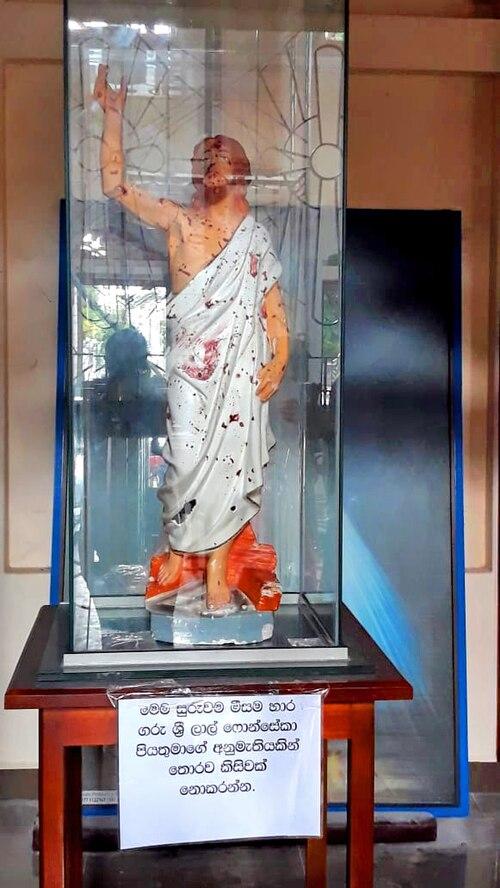
Sri Lanka’s Archdiocese of Colombo rejects allegations targeting Cardinal Ranjith, calling them a politically driven smear campaign.
Newsroom (19/06/2026 Gaudium Press ) The Archdiocese of Colombo has strongly rejected what it described as a “coordinated smear campaign” targeting Cardinal Malcolm Ranjith and the Catholic Church in Sri Lanka. The accusations, it says, are being driven by political figures and loyalists aligned with former President Gotabaya Rajapaksa.
At a press conference held on June 17 at the Archbishop’s House in Colombo, archdiocesan spokesman Father Cyril Gamini dismissed a series of allegations circulating across sections of the media and social networks. He said these claims were fabricated and intended to undermine both the Church and its leadership at a sensitive moment in the country’s political and social climate.
According to Gamini, the Church has become the focus of “baseless allegations” that attempt to link Cardinal Ranjith to political manipulation, preferential treatment from the government, and efforts to create interreligious discord.
Claims of Political Interference Denied
Among the allegations highlighted were claims that Cardinal Ranjith influenced government appointments connected to the renewed investigation into the 2019 Easter Sunday attacks. Politicians aligned with the Rajapaksa camp reportedly cited remarks made in parliament by Minister Bimal Ratnayake, suggesting that senior security officials leading the investigation had been appointed based on the cardinal’s recommendations.
These officials — Public Security Ministry Secretary Ravi Seneviratne and Criminal Investigation Department (CID) Director Shani Abeysekaray — are retired senior police officers now overseeing a fresh probe into the attacks that killed 269 people and injured more than 500.
Father Gamini categorically denied these claims, stating that “no Church leader, including Cardinal Ranjith, requested those appointments.” He emphasized that attributing such influence to the Church was entirely unfounded and part of a broader attempt to discredit its role.
Rejection of Security and Intelligence Allegations
Additional claims suggested that Cardinal Ranjith benefited from special government security arrangements and had prior knowledge of the Easter Sunday bombings on April 21, 2019. The attacks, which targeted churches and luxury hotels, remain one of the deadliest acts of terrorism in Sri Lanka’s history.
Gamini firmly rejected these accusations. He pointed out that the cardinal followed his normal schedule during the Easter period, celebrating the Easter Vigil and subsequent Mass at St. Lucia Cathedral in Kotahena. This, he argued, directly contradicts claims that Ranjith possessed foreknowledge of the attacks.
Accusations of Religious Division Also Refuted
Political figures have also accused Cardinal Ranjith of contributing to division between religious communities. Pro-Rajapaksa politician Udaya Gammanpila allegedly claimed that the cardinal’s actions were damaging to Buddhist-Christian relations, while also accusing him of attempting to shift blame for the attacks from Muslim extremists to the Sinhala Buddhist majority.
The Archdiocese rejected these assertions, with Gamini clarifying that Cardinal Ranjith had instead urged restraint in the immediate aftermath of the bombings. His appeals, the Church says, were focused on preventing retaliatory violence against Muslim communities, including attacks on mosques and businesses.
Legal Case Allegations Dismissed
Another politician, Wimal Weerawansa, alleged that the cardinal intervened to secure the release of two individuals suspected of links to the suicide bombers. Father Gamini countered that the individuals in question had been released by a court in 2022 and that Cardinal Ranjith had no involvement in their case.
These repeated allegations, the Church argues, form part of a pattern aimed at discrediting its call for accountability in connection with the Easter Sunday attacks.
Victims and Activists Decry Misinformation
Civil society voices have echoed the Church’s concerns. Nuwan Anthony, a human rights defender injured in the bombing at St. Anthony’s Church in Kochchikade, said individuals close to the Rajapaksa camp have long attempted to mislead the public through false narratives.
“They are still trying to create religious and ethnic conflicts to gain power,” Anthony said, underscoring fears that misinformation could reignite communal tensions.
Father Rohan Silva, executive director of the Center for Society and Religion, reaffirmed that the Church would continue pressing for justice. Silva has filed a petition with the Supreme Court seeking accountability for the victims, and insists that the truth behind the attacks must be fully uncovered.
Unresolved Questions Over Easter Attacks
The Easter Sunday bombings continue to cast a long shadow over Sri Lanka’s political landscape. Reports have suggested that the attacks may have been part of a broader political conspiracy that helped pave the way for the Rajapaksa family’s return to power. Notably, Gotabaya Rajapaksa announced his presidential candidacy just two days after the attacks and went on to win the election by a landslide.
The Catholic Church has repeatedly rejected official investigations into the bombings, arguing that they failed to identify the true masterminds behind the attacks. It has consistently called for a credible and transparent inquiry.
Recent developments have added further complexity. In February this year, the CID arrested Major General Suresh Sallay, who served as intelligence chief during the Rajapaksa administration, over a suspected role in the attacks. On June 10, Public Security Minister Ananda Wijepala told parliament that Sallay had “directed” the bombings.
Meanwhile, Gotabaya Rajapaksa, who was ousted following mass protests in 2022, has reportedly sought legal intervention to prevent the arrest of his supporters in connection with the case.
Church Vows to Continue Pressure
Despite the ongoing controversy, the Archdiocese of Colombo remains steadfast in its position. It has dismissed all allegations against Cardinal Ranjith as politically motivated and reiterated its commitment to seeking justice for the victims of the Easter Sunday attacks.
As competing narratives continue to shape public discourse, the Church says it will not back down from its demand for truth and accountability — even as it faces what it calls a persistent campaign to undermine its credibility.
- Raju Hasmukh with files from UCA News
Related Images:


