






Ferrari unveils its first electric Luce EV to Pope Leo XIV, blending innovation with controversy as markets and critics question the bold shift.
Newsroom (27/05/2026 Gaudium Press ) In a moment that symbolized both reverence for tradition and a bold leap into the future, Pope Leo XIV took the wheel—figuratively—of Ferrari’s first fully electric vehicle, the Luce, during a private presentation at Castel Gandolfo near Rome on May 26.
The unveiling brought together the spiritual leader of the Catholic Church and one of Italy’s most iconic industrial brands. Ferrari chairman John Elkann, accompanied by senior executives and technical staff, personally introduced the vehicle to the pontiff. The meeting was both ceremonial and symbolic, underscoring Ferrari’s ambition to position its electric future within the broader cultural and technological narrative of modern Italy.
During the encounter, the Pope sat in the driver’s seat while Ferrari test driver Raffaele De Simone knelt beside him, offering a detailed explanation of the vehicle’s controls and driving modes in English. Elkann occupied the passenger seat, guiding the conversation.
“Is this the first four-door Ferrari?” Pope Leo XIV asked, reflecting curiosity about the model’s departure from traditional Ferrari design.
“The first five-seater,” Elkann replied, emphasizing a subtle but meaningful evolution in the brand’s lineup.
The Luce: Ferrari’s Electric Vision
The Luce—Italian for “light”—marks Ferrari’s first fully electric production car, a milestone for a company long synonymous with roaring combustion engines and high-performance engineering.
The vehicle represents a technical showcase: it boasts 1,000 horsepower, accelerates from 0 to 60 miles per hour in just 2.5 seconds, and offers a range exceeding 330 miles. Power is delivered through four independent electric motors, one for each wheel, highlighting Ferrari’s commitment to maintaining performance leadership even in electrification.
Yet performance comes at a price. Media reports estimate the Luce’s cost at around 500,000 euros in Italy, placing it among the most exclusive electric vehicles ever produced. Pricing for the United States market remains undisclosed.
Ferrari has framed the launch as more than a product debut. In a statement, Elkann described the moment as transformative: the Luce is not simply a new car but “a chapter that turns our vision into reality,” reinforcing Ferrari’s legacy of shaping the future.
Market Doubts and Critical Reactions
Despite Ferrari’s confidence, the Luce’s arrival has been met with immediate skepticism from both investors and automotive critics. The financial markets responded sharply: Ferrari shares dropped 8.4 percent in Milan trading and fell 5.3 percent in the United States following the unveiling.
Public reaction has also been mixed. Online commentary and industry analysis suggest that the Luce deviates too far from Ferrari’s established design language. Critics argue that electric vehicle architecture—particularly the placement of batteries under the floor—has altered the proportions of the car, making it appear taller and less aerodynamic than the sleek silhouettes traditionally associated with the brand.
Matt Prior, editor-at-large of Autocar, noted that while the interior is well executed, the car “doesn’t shout Ferrari.” He highlighted the absence of an engine bay as a defining design constraint, explaining that electric platforms naturally change a car’s stance and proportions.
“The battery goes under the floor which makes the car higher,” Prior said, adding that adapting to these realities is especially challenging for a brand built on visual dynamism.
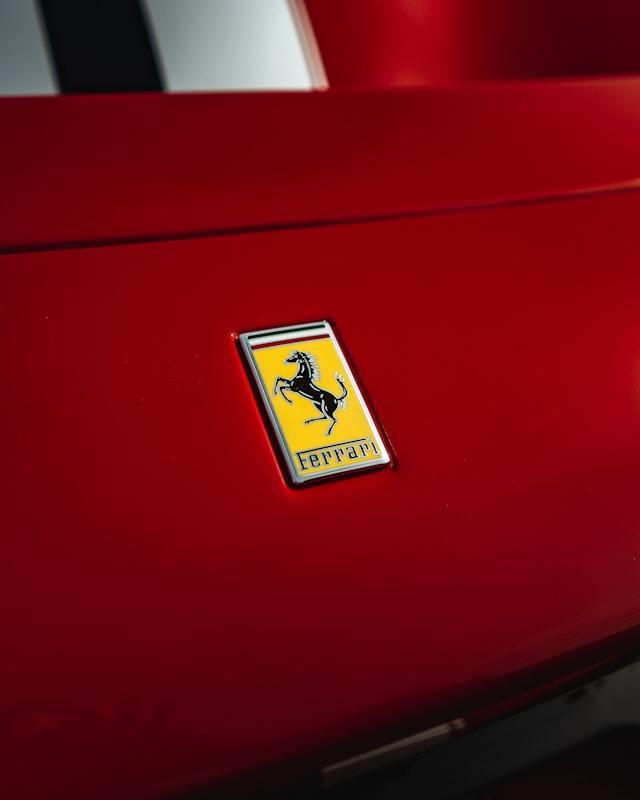
Robby DeGraff of AutoPacific went further, calling the Luce “perhaps the most controversial model” ever to carry Ferrari’s iconic prancing horse badge. He questioned whether such a high-priced electric offering aligns with market demand, even as he acknowledged the pressure on automakers to comply with increasingly strict emissions regulations.
Ferrari’s Strategic Shift in a Volatile EV Market
Ferrari’s pivot toward electrification has been cautious but deliberate. While the company has invested billions of euros in electric and hybrid technologies, it has recently scaled back its ambitions. Originally targeting 40 percent of its lineup to be fully electric by 2030, Ferrari has reduced that goal to 20 percent.
This recalibration reflects broader uncertainty in the global electric vehicle market. While EV adoption continues to grow—reaching 20 million units sold globally last year, or roughly one in four new cars—demand remains uneven across regions.
Europe has seen strong growth, with sales increasing by more than 30 percent in 2025, but competition has intensified as lower-cost Chinese manufacturers enter the market with advanced technology offerings. In contrast, adoption in the United States remains unpredictable, influenced by shifting policies and fluctuating consumer sentiment.
Even geopolitical events have added complexity. While interest in EVs has risen during recent global tensions, experts note that increased curiosity does not always translate into actual purchases.
“The whole electric car market is not really where it could be,” Prior observed, emphasizing that much of the demand remains driven by regulation rather than organic consumer desire.
Balancing Heritage with the Future
Ferrari now finds itself at a crossroads: how to maintain its identity as a maker of emotionally compelling, high-performance vehicles while adapting to a future defined by electrification and sustainability.
The Luce represents both opportunity and risk. On one hand, it positions Ferrari within the evolving automotive landscape and ensures compliance with future emissions standards. On the other, it challenges the brand to redefine what a Ferrari should look and feel like in the absence of its traditional engines.
The presence of Pope Leo XIV at the unveiling added a layer of symbolic weight to the moment. It underscored not just the car’s technological significance, but also its cultural resonance—a merging of legacy, innovation, and global scrutiny.
Whether the Luce ultimately succeeds will depend not on its audience at Castel Gandolfo, but on a far larger and less predictable judge: the consumer.
Pope Leo XIV tests drives the new Ferrari Luce, the Prancing Horse’s first fully electric car, and its first with five seats.
The Pope didn’t get to keep the car, probably didn’t like the handling, you know prefers American, however Ferrari President John Elkann gave the car’s… pic.twitter.com/3R181O9FsG
— Catholic Sat (@CatholicSat) May 26, 2026
- Raju Hasmukh with files from Crux Now
Related Images:


