







Bishop Erik Varden reflects on the Christian meaning of freedom during the Vatican’s Lenten Retreat, urging believers to embrace love over self-will.
Newsroom (24/02/2026 Gaudium Press ) In the hushed setting of the Vatican’s Spiritual Exercises, Bishop Erik Varden delivered his fourth reflection for Pope Leo XIV, the cardinals residing in Rome, and the heads of Dicasteries. His meditation, titled “Becoming Free,” pierced into one of the most contested concepts in the modern world: freedom itself.
The bishop began by observing how the word “freedom” has become both a rallying cry and a rhetorical weapon. Across Europe, political movements of every persuasion invoke it to mobilize public emotion, painting their causes as struggles for liberation. Yet, as Varden noted, what one group calls “freedom” may appear to others as oppression. “The banner of freedom,” he warned, “is raised high on all sides, but the conflict beneath it is bitter and often irreconcilable.”
This paradox, he suggested, presents a profound challenge to Christians. Freedom, he said, cannot be left to the winds of ideology; it must be defined through faith. Turning to the 12th-century mystic Bernard of Clairvaux, Varden drew from the verse, “He has freed me from the snare of the hunters and from the bitter word.” For Bernard, true freedom is not innate to human beings weakened by the fall. What we think of as “natural freedom” — doing as we please, gratifying our desires, asserting our will — is in fact a delusion. “Man, fancied as self-sufficient, is caught in the snares he himself has set,” Varden paraphrased with a trace of Bernard’s own irony.
The bishop dwelt on humanity’s paradoxical condition: we repeatedly stumble into the same pitfalls, even knowing where they lie. This repetition, he explained, is evidence that we are captives, far from free. Freedom, for Christians, begins not in self-assertion but in surrender — in aligning our will with the will of God.
Varden emphasized that Bernard’s theology rooted freedom in Christ’s obedient “Yes” to the Father. This is no passive resignation, but a revolution of heart. Christian freedom, he declared, “is not about seizing the world with force; it is about loving it with a crucified love.” To follow Christ is to willfully offer one’s life for the redemption of others — a freedom that liberates through self-giving, not dominance.
He also cautioned against the misuse of “freedom” as an ideological pretext. When invoked to justify the actions of faceless powers — “the Party,” “the Economy,” or “History” — the term becomes hollow, even dangerous. “No oppressive policy,” Varden reminded his audience, “can be redeemed by invocations of freedom.” Genuine freedom, he insisted, is always personal; it cannot destroy the liberty of another.
In the closing moments of his reflection, Bishop Varden turned to Christ’s words, “Resist not evil.” For many, this counsel seems to imply submission to injustice. Varden, however, clarified that Christ’s command reveals a deeper power — the strength to suffer rather than retaliate, to uphold justice not through coercion but through sacrificial endurance.
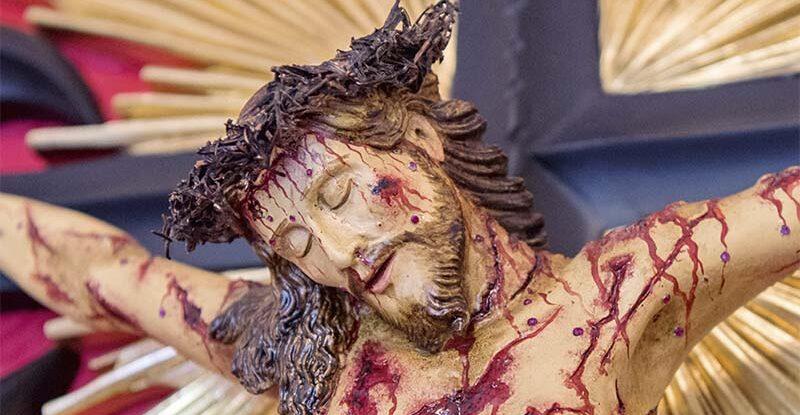
“Our emblem of freedom,” Varden concluded, “remains the Son of God who emptied Himself.” In emptiness, the bishop suggested, lies the secret of liberation — a paradox that stands as the heart of Lent and the path toward a freer, redeemed humanity.
- Raju Hasmukh with files from Vatican News
Related Images:


