






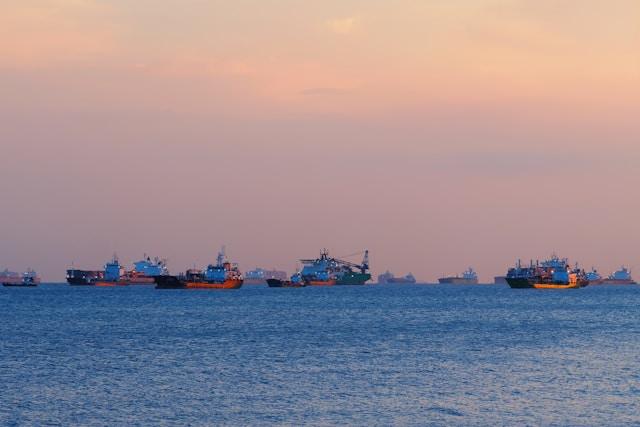
Sea Sunday 2026 highlights seafarers’ dignity, struggles, and hope, urging global solidarity and care for maritime workers and oceans.
Newsroom (24/06/2026 Gaudium Press ) Each year on the second Sunday of July, Christian Churches across the globe pause to recognize Sea Sunday—a day devoted to prayer, reflection, and solidarity with maritime workers and their families. In 2026, Sea Sunday will be observed on July 12 under the theme “Harbours of Hope: The Church Alongside Seafarers.” The occasion serves as both a spiritual observance and a call to greater awareness of the human lives that sustain global trade and connection.
In a message marking the day, Cardinal Michael Czerny, Prefect of the Dicastery for Promoting Integral Human Development, offered a reflection titled “Beyond Cargo and Commerce: The Human Face of the Sea.” His message shifts attention away from ships and shipping routes to the people behind them—the more than 1.8 million individuals whose livelihoods are tied to the world’s waterways.
Beyond Their Work
Cardinal Czerny underscores a critical truth: while the global economy depends heavily on seas, rivers, and ports, the human dimension of maritime labor is often overlooked. Recent tensions, including the crisis in the Strait of Hormuz, have exposed how deeply interconnected humanity is with maritime workers and the routes they navigate.
The Church’s observance of Sea Sunday aims to correct this imbalance. Rather than recognizing seafarers solely for their economic contribution, the Church affirms their identity as human beings endowed with dignity. Each seafarer carries a personal story—one that, as Cardinal Czerny stresses, deserves to be “seen, honored, and cherished.”
Behind every shipment and supply chain lies a network of individuals whose labor supports families, communities, and global livelihoods. Sea Sunday seeks to ensure those individuals are not reduced to invisible components of commerce.
Isolation in an Uncertain World
Despite their essential role, maritime workers face mounting challenges. The sea, historically a symbol of connection, has increasingly become a space marked by geopolitical tension, insecurity, and fear. Crews not only confront the dangers of the natural environment but also the ripple effects of global conflict, including food shortages, confinement, and threats to their safety.
These realities contribute to a growing sense of isolation. Extended time away from home and families has always been a defining aspect of seafaring life, but Cardinal Czerny notes that new pressures—tight schedules, reduced crew sizes, and shortened time in port—have intensified emotional strain.
Paradoxically, technological advances have not alleviated this isolation. While connectivity tools exist, the Cardinal observes that “human closeness is becoming rarer.” Maritime workers often find themselves physically connected yet emotionally distant, navigating a world where meaningful interaction is increasingly scarce.
Echoing themes from Pope Leo XIV’s encyclical Magnifica Humanitas, Czerny warns against systems that reduce individuals to mere data points or instruments of production. A ship, he argues, must never become a place of “silent isolation or indifference,” where people live side by side yet remain unseen and unheard.
A Model of Human Unity
Yet amid these challenges, life at sea also offers a powerful counterexample. Ships bring together individuals from different nations, cultures, and beliefs, often requiring them to cooperate in conditions that demand mutual trust and respect.
For Cardinal Czerny, this reality carries a broader lesson: “we belong to one another.” The oceans, rather than dividing humanity, serve as a reminder of its interconnectedness. Sea Sunday seeks to reinforce this vision, encouraging a sense of shared responsibility and global solidarity.
The Church, through its ministries and outreach, aims to remind maritime workers that they are not forgotten. The message is clear—no seafarer is alone in their journey.
Stewardship of the Seas
Beyond the human dimension, the Cardinal’s message also addresses the environmental state of the oceans. The world’s waterways, entrusted to humanity, are under significant strain. Pollution, degradation, and exploitation threaten marine ecosystems and, by extension, the communities that depend on them.
Statistics cited in the message reveal the scale of the crisis: approximately 88 percent of the sea’s surface is affected by plastic pollution, and by 2018 nearly 90 percent of global fish stocks had been exploited or depleted. These figures underscore a sobering reality—when the oceans suffer, humanity suffers alongside them.
The responsibility to act, Cardinal Czerny emphasizes, belongs to all. Protecting marine environments, promoting sustainable practices, and defending the dignity and safety of maritime workers are interconnected obligations that transcend national boundaries.
The Church as a “Harbour of Hope”
Central to the 2026 Sea Sunday theme is the image of the Church as a “harbour of hope.” This vision calls for more than symbolic support. It demands active presence—accompanying maritime workers, listening to their concerns, offering comfort, and advocating for their rights.
Through chaplaincies and dedicated ministries rooted in the longstanding tradition of the Apostleship of the Sea (Opus Apostolatus Maris), the Church seeks to embody this mission. These efforts aim to ensure that every seafarer, fisher, and inland navigation worker feels remembered and valued.
As Cardinal Czerny concludes, the Church is called “to enter the boat”—to stand alongside maritime workers amid the uncertainties of modern life. In doing so, it becomes a visible sign of compassion and solidarity in a world where such qualities are often in short supply.
Sea Sunday 2026 thus emerges not only as a day of prayer, but as a global reminder: beyond cargo and commerce lies a deeply human story—one that calls for recognition, dignity, and hope.
- Raju Hasmukh with files from Vatican News
Related Images:


