










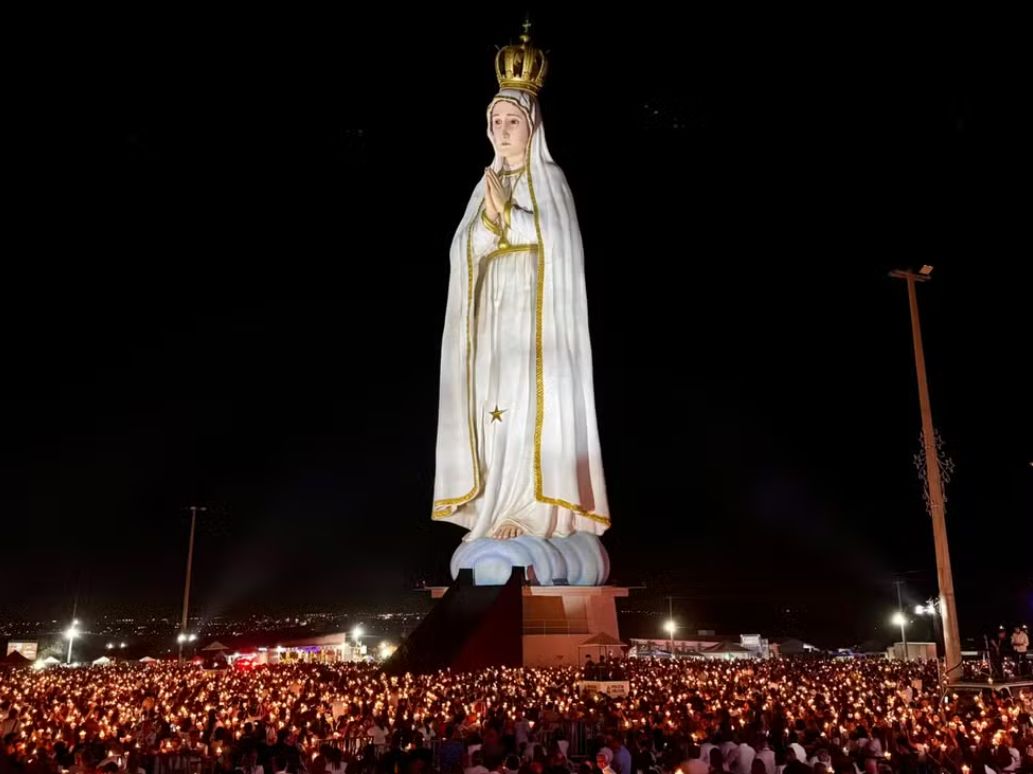
Brazil inaugurates the world’s tallest Marian statue at 51m in Crato, Ceará — Our Lady of Fátima now towers above Christ the Redeemer as a beacon of faith.
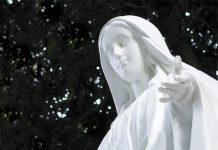
Newsroom (17/11/2025 Gaudium Press ) On November 13, 2025, the Diocese of Crato in Brazil officially inaugurated the new statue of Our Lady of Fátima, a 51-meter (167-foot) colossus that now claims the title of the world’s tallest statue dedicated to the Virgin Mary.
Perched atop a hill within the Shrine of Our Lady of Fátima sanctuary in Ceará state, the prefabricated concrete and steel figure dramatically reshapes the regional skyline. The monument surpasses previous record-holders, including the 46-meter Our Lady of Peace in Venezuela and numerous other Marian statues across Latin America and Europe.
For scale, the new statue stands roughly 15 stories tall — higher than the Christ the Redeemer in Rio de Janeiro (30 meters statue + 8-meter pedestal) and the Cristo Protetor in Encantado, Rio Grande do Sul (43.5 meters). Only the pedestal elevates the Statue of Liberty in New York above it when total height is measured.
The inauguration coincided with the 72nd anniversary of the 1953 visit of the original pilgrim statue of Our Lady of Fátima to Crato, an event that profoundly marked the city. Streets, schools, hospitals, and even the local airport bear the Virgin’s name, evidence of decades-long devotion.
Bishop Magnus Henrique Lopes of Crato described the statue as “a visible sign of Mary’s maternal presence,” emphasizing that the shrine complex — which includes a replica of Portugal’s Chapel of the Apparitions — exists to foster living faith rather than mere tourism.
The project reflects a broader trend in Brazil, home to the world’s largest Catholic population, where monumental sacred art continues to flourish. Christ the Redeemer remains the country’s most iconic religious symbol, but recent years have seen a surge in large-scale Marian and Christ statues, each staking a claim on both landscape and identity.
Critics occasionally question the expense and scale of such projects in a country marked by social inequality. Supporters counter that the statues serve as public proclamations of faith, draw pilgrims, stimulate local economies, and offer what architects of medieval cathedrals once called a “sermon in stone” — a non-verbal invitation to transcendence.
The Crato shrine incorporates pastoral facilities, confessionals, a pilgrim welcome center, and extensive landscaping to ensure the statue functions as the heart of an active sanctuary rather than an isolated landmark.
As dusk fell on inauguration day, thousands of pilgrims gathered at the statue’s base, lighting candles and singing beneath the illuminated figure. For many, the towering Mary — arms gently outstretched — serves as both protector and pointer: a 51-meter reminder, in the words of the Fatima message, that “My Immaculate Heart will be your refuge and the way that will lead you to God.”
With the Crato monument now complete, Brazil solidifies its reputation as a global capital of large-scale religious expression, where faith continues to be written, unmistakably, across the horizon.
- Raju Hasmukh with files from Aleteia
Related Images: