










‘It is a whole world that needs to be rebuilt from the ground up…”
Newsroom (01/02/2026, Gaudium Press) At the beginning of his pontificate (1922-1939), the late Pope Pius XI analyzed in his first encyclical the causes of the supreme calamities that overwhelmed and afflicted mankind. He stated that ‘most men had turned away from Jesus Christ and His most holy law.’ And he saw this both in their lives and customs, as well as in the family and the governments of states. He firmly concluded that the hope of true peace would never shine as long as the reign of Christ Jesus was denied and rejected. For, ‘men and nations, far from God, rush to ruin and death amid fires of hatred and fratricidal strife’ (Encyclical Quas Primas,).
Concerned about how he saw the world and mankind, he insisted on “reinvigorating peace”; he was clear that this would only be achieved by “seeking the restoration of the reign of Jesus Christ”.
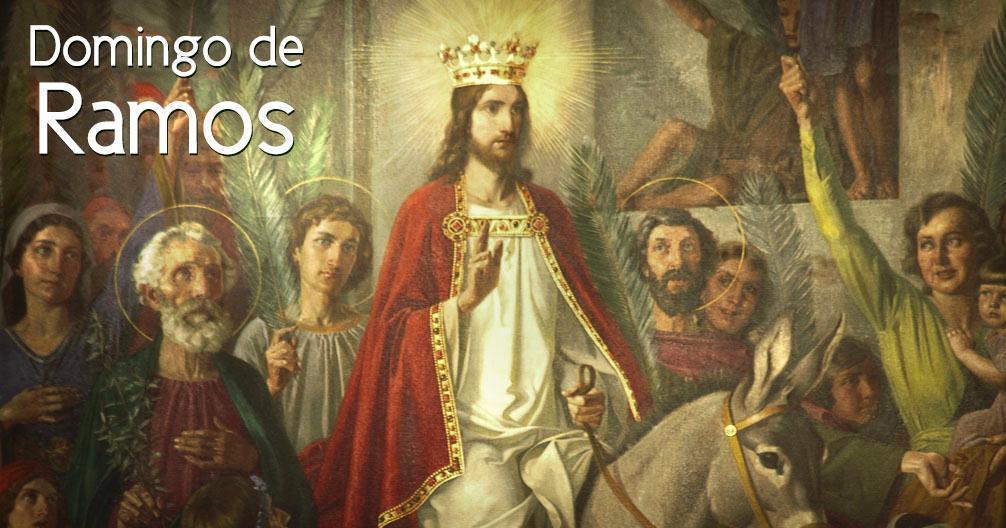
Thus, he instituted the Solemnity of Christ the King, which today falls on the last Sunday of the liturgical cycle, prior to the beginning of Advent. He was encouraged by the sweet hope that the celebration of this feast each year would impel men, institutions, and states to turn to the Divine Saviour of the World.
For a better understanding of the importance of this Solemnity, it is essential to have an overview of the situation in the world over the last century.
We can clearly see how there was a continuity in the process of ‘de-Christianization’ throughout the last century; it also occurred at an ‘accelerated’ pace in the second half of the century. Faced with this phenomenon, previous Pontiffs warned about the situation into which contemporary society was entering.
Leo XIII (1878-1903) himself urged that: ‘The deviant society must therefore return to the bosom of Christianity if it desires well-being, rest and salvation’ (Having reached the twenty-fifth year).
It was the ‘Instaurare omnia in Christo,’ the motto of the pontificate of St. Pius X (1903-1914). He believed that temporal society would not rise up unless the Holy Church laid its foundations, inspired it and blessed its works: ‘We declare that in the management of our pontificate we have but one purpose, to restore all things in Christ’ (E Supremi Apostolatus,). Thus was born the symbolic phrase that expressed his deepest desire.
After the institution of the solemnity in the Encyclical Quas Primas by Pope Pius XI (11-12-1925), the pontiffs continued to emphasize the fundamental importance of Jesus Our Lord being recognized as King of the Universe.
From the foundations
This was the proposal of Pope Pius XII (1939-1958) when he said: ‘It is a whole world that needs to be rebuilt from its foundations, that needs to be transformed from savage to human, from human to divine, that is, according to the heart of God’ (10-2-1952).
It was to ‘extend to others the fruits of Christian redemption and spread them everywhere’ so that, ‘like evangelical leaven, it may penetrate the veins of the civil society in which we live and work’ in Mater et Magistra by St. John XXIII (1958-1963).
The Church, as the Second Vatican Council told us in Gaudium et Spes, ‘has only one aim: the coming of the kingdom of God and the salvation of all humanity,’ for we all walk as pilgrims, ‘with his loving plan: to restore in Christ all that is in heaven and on earth.’
It was to bring the Good News to all environments, as St. Paul VI (1963-1978) affirmed, in which an influence is exercised to ‘transform from within, to renew humanity itself’ (Evangelii nuntiandi).
It was the deep desire of St. John Paul II (1978-2005) to emphasize the permanent validity of the missionary mandate of Our Lord Jesus Christ: no one can escape the supreme duty of ‘proclaiming Christ to all peoples’ (Redemptoris Missio).
For Benedict XVI (2005-2013), the ‘goal of the Church’s mission is indeed to enlighten all peoples with the light of the Gospel on their historical journey towards God, so that in Him they may find their full realization and fulfilment.’ (29-6-2009)
All these statements show us the intimate relationship between the spiritual order and the temporal order. They lead us to reconsider our personal actions (in our witness) and religious actions (in our apostolic work) at all times and in all places. Thus, we can say that not only religious men and women, but men and women in general, participate in the redemptive work of Christ Our Lord in all areas of life. This is how the Second Vatican Council’s Decree ‘Apostolicam Actuositatem’ on the apostolate of the laity introduces the subject, saying that: ‘The redemptive work of Christ, although it refers to the salvation of men, also aims at the restoration of the entire temporal order.’
This shows us how the spiritual and temporal orders, so different, must be ‘intimately related in God’s single purpose, which is to make the whole world a new creation in Christ’. The “temporal” is the world, the life of men. The ‘spiritual’ is the ecclesial, the Holy Church. The temporal and the spiritual must live in harmony. Let us remember the advice of Our Lord: ‘Seek first his kingdom, and all these things will be given to you as well’ (Lk 12:31).
This will happen, according to the encouraging words of Pius XI on the solemnity of Christ the King, that: ‘if men, publicly and privately, recognize the royal power of Christ, incredible benefits will necessarily come to the whole of civil society, such as just freedom, tranquillity and discipline, peace and harmony’ (Quas Primas,). And quoting Leo XIII, he concluded: ‘the goods of peace will return, swords and weapons will fall from hands, when all willingly accept the empire of Christ, when they obey Him, when every tongue proclaims that Our Lord Jesus Christ is in the glory of God the Father (Annum Sacrum)’.
Compiled by Sandra Chisholm with Files From Fr. Fernando Gioia, EP, and La Prensa Grafica of El Salvador
Related Images: