






Sri Lanka charges ex-intelligence chief Suresh Sallay over 2019 Easter attacks, alleging links to jihadists, political ties, and covert planning.
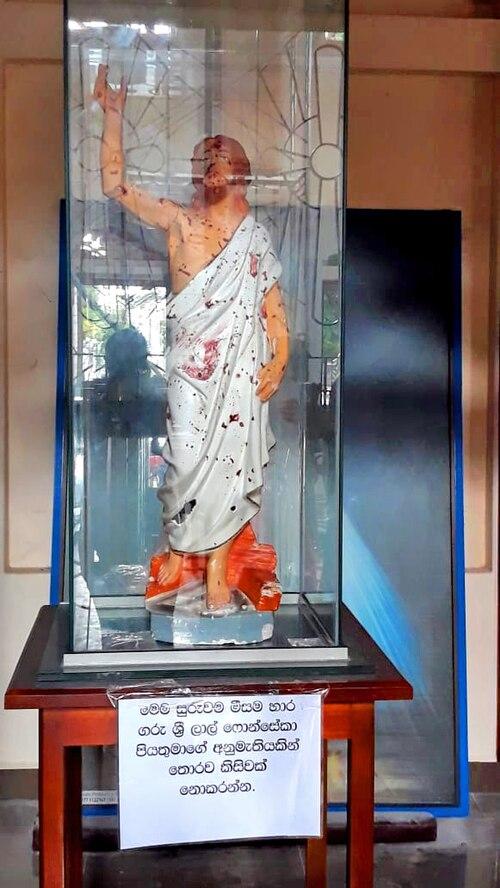
Newsroom (25/05/2026 Gaudium Press ) The long-running investigation into Sri Lanka’s devastating Easter Sunday attacks of 2019 has entered a critical phase, with prosecutors formally accusing retired Major General Suresh Sallay, the former head of military intelligence, of masterminding the coordinated suicide bombings that killed 278 people and shook the nation.
Sallay, who was detained for questioning in February and is currently hospitalised at Colombo’s National Hospital due to ill health, faces serious allegations presented before the Colombo Fort Magistrate’s Court. Additional Solicitor General Dileepa Peiris submitted a detailed 14-page report outlining what authorities describe as a years-long effort to orchestrate a high-impact terrorist and political operation.
Alleged Long-Term Planning and Militant Links
According to the Attorney General’s Department (AGD), Sallay began laying the groundwork for the attacks as early as 2017. Central to the accusations is his alleged relationship with the extremist Islamist group led by Zaharan Hashim, widely identified as the mastermind behind the Easter bombings.
The report states that connections between military intelligence and the extremist network date back to clashes between Muslim factions in the Aliyar area in 2017. During this period, Seyni Moulavi, an associate of Hashim, was arrested. Prosecutors allege that Sallay authorised the use of intelligence funds to cover Moulavi’s legal expenses, securing his release.
Investigators contend that this support was not incidental but part of a broader strategy to cultivate a group of extremists capable of executing suicide attacks when required. The AGD claims that military intelligence sought to exploit such individuals for a larger agenda.
Key Witness and Documentary Evidence
Much of the prosecution’s case hinges on testimony from Azad Maulana, a former personal secretary to Sivanesathurai Chandrakanthan—commonly known as Pillayan, a Tamil political figure. Sri Lankan investigators travelled to France to obtain Maulana’s statement, which has become central to the unfolding case.
Maulana reportedly described ongoing contacts between Sallay and Zaharan Hashim’s network, alleging that detailed records of these interactions were maintained. According to Peiris, Maulana possessed five notebooks documenting meetings, communications, and operational details involving both military intelligence personnel and extremist actors.
These records, if validated in court, could prove critical in establishing the extent of alleged state-linked involvement in facilitating the attackers.
Allegations of Political Connections
The AGD further introduced claims of high-level political involvement, linking developments in the aftermath of the attacks to prominent figures within Sri Lanka’s political establishment.
The court was told that former President Mahinda Rajapaksa, accompanied by his sons Namal and Basil Rajapaksa, visited Pillayan while he was imprisoned in Batticaloa. During this visit, they allegedly assured him that he would be released within a week of Gotabaya Rajapaksa securing electoral victory. It was also claimed that Sallay’s return to the role of national intelligence chief was discussed or announced at that time.
Prosecutors argue that military intelligence not only supported Zaharan Hashim’s group but also financed and protected Pillayan’s network using public funds. Additional allegations link individuals associated with Pillayan to several high-profile cases involving murdered or disappeared journalists, including Lasantha Wickrematunge, Prageeth Eknaligoda, and Keith Noyahr—incidents that have long raised concerns about impunity and political violence in Sri Lanka.
Defence Pushback and Evidence Challenges
Sallay has categorically denied all charges. His defence counsel, Shaveendra Fernando, challenged the credibility of the prosecution’s evidence, particularly the testimony of Azad Maulana. Fernando argued that Maulana’s claims cannot be considered reliable until they are formally tested through cross-examination in court.
The defence also criticised Channel 4, the British broadcaster that has aired documentaries alleging state involvement in the Easter attacks, questioning its reliability and suggesting potential bias in shaping public perception of the case.
Security Concerns and Court Proceedings
The AGD has expressed concerns over Sallay’s safety, claiming that organised groups are attempting to obstruct the investigation. As a precaution, prosecutors requested that Sallay not be required to appear in open court. Instead, they proposed that any interactions with his legal team be conducted under strict supervision.
Colombo Fort Magistrate Pasan Amarasena has deferred a decision on this matter until 2 June, when the court will determine whether Sallay must appear publicly or be permitted to provide a confidential statement.
Political and National Implications
As proceedings continue, the case is expected to have far-reaching implications for Sri Lanka’s political landscape. The Easter attacks remain one of the deadliest terrorist incidents in the country’s history, and questions surrounding accountability, intelligence failures, and possible complicity at the highest levels of power continue to fuel public debate.
With new allegations surfacing and legal battles intensifying, the investigation into the Easter Sunday bombings has become not only a pursuit of justice for victims but also a test of Sri Lanka’s institutions and their ability to confront the truth behind one of its darkest chapters.
- Raju Hasmukh with files from Asianews.it
Related Images:


