









In Southern Arabia’s migrant Church, Bishop Martinelli reveals a universal tapestry of faith amid UAE, Oman, and Yemen’s diversity—where exile fuels mission and hope endures.
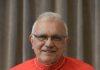
Newsroom (03/10/2025, Gaudium Press ) In the shadow of the Arabian Peninsula’s towering dunes and bustling expatriate hubs, the Catholic Church thrives not as a native institution but as a vibrant mosaic of global wanderers. Bishop Paolo Martinelli, the Franciscan friar appointed Vicar Apostolic of Southern Arabia by Pope Francis in May 2022, describes his jurisdiction—spanning the United Arab Emirates, Oman, and Yemen—as a “Church of migrants,” a singular entity where faith transcends borders and cultures.
Speaking to Vatican media ahead of the Oct. 4-5 Jubilees for migrants and missionaries, Martinelli, who was in Rome with a pilgrimage group from the region, emphasized the vicariate’s extraordinary universality. “We have no local Catholic citizens,” he noted. “All our faithful come from very different countries, arriving to work on temporary permits that must be renewed.” With roughly 100 nationalities represented, the communities embody Catholicism’s global essence: believers united “in the same faith, the same baptism, the same body of Christ,” despite their diverse charisms, ministries, talents, and traditions. “This interaction enriches and fructifies our Christian life,” Martinelli said, calling it a “plural richness of Christian vitality.”
A Diverse Catholic Footprint
This diversity is mirrored in the demographics of Catholicism across the three nations, where Muslims form the overwhelming majority but Christian minorities hold significant sway. In the UAE, home to about 10 million people, more than 850,000 are baptized Catholics. Oman counts around 100,000 among its 4.5 million residents. Yemen presents a murkier picture: “It’s hard to estimate due to the lack of a structured Church presence right now,” Martinelli admitted. The COVID-19 pandemic further reshaped these figures by curtailing foreign labor flows throughout the peninsula.
Jubilees of Pilgrimage and Purpose
A delegation from Southern Arabia will join the dual Jubilees at the Vatican, building on earlier pilgrimages. A robust group attended the Youth Jubilee, and during the Catechists’ event, the vicariate received a milestone: the ordination of Catherine Miles-Flynn, a 30-year UAE resident, to the catechist ministry.
The convergence of migrant and missionary celebrations in a single weekend carries deep resonance, Martinelli said, especially as Pope Leo XIV’s message for the 2025 World Day of Migrants and Refugees urges the faithful to become “missionaries of hope.” This framing reflects “a more mature awareness in the Church toward migrants,” he explained—not merely as recipients of aid and rights, but as active bearers of Christian witness. In a region dominated by Islam, where proselytism is off-limits, “no one can stop us from testifying to our faith in daily life: in family, at work, in school, in social ties.” For these expatriates, migration itself becomes “a favorable occasion to live our Christianity, to be missionaries as witnesses to our encounter with God.”
Navigating Faith in a Multifaceted Landscape
Interreligious dialogue, Martinelli stressed, must be grounded in authentic witness: “Live your faith in relationships with people of other beliefs.” He encourages his flock to view their transience not as happenstance but as a divine sending—”You are not migrants by chance; you are sent for a purpose.” The rigors of expatriate life, in turn, spark a “desire to rediscover faith in relation to everyday existence,” reshaping how dialogue unfolds in each country.
In the UAE, the Holy Father’s 2019 visit laid enduring foundations: the Document on Human Fraternity and the Abrahamic Family House in Abu Dhabi foster mutual knowledge, dismantle stereotypes, and affirm that “diverse traditions can build a more fraternal society.” It’s less about doctrinal dissection than shared humanization—”discovering that, though different, we can walk a common path, like centering life on God.”
Oman emphasizes tolerance as a bedrock for harmony: nurturing “good social relations through a strong relationship with God,” allowing each faith to flourish while enabling collective strides. “We don’t so much promote interreligious dialogue as ensure everyone lives their religious belonging—and thus walks together.”
Yemen, however, remains a stark outlier, scarred by a decade of civil war that erupted in 2014 between Houthi rebels (controlling Sana’a and allied with forces backing former President Ali Abdullah Saleh) and loyalists of the Aden-based government under Abd Rabbuh Mansur Hadi. Though the internal strife has receded from headlines—overshadowed now by the Israel-Hamas conflict engulfing the north—profound poverty persists, thwarting long-term renewal. “It’s tough to launch sustained recovery projects,” Martinelli said. Caritas operates mainly in the south, aiming to revive an ecclesial footprint, while in the north, just two communities of Mother Teresa’s Missionaries of Charity sustain quiet charitable works for all in need.
In these shadowed corners, the call to be “missionaries of hope” rings with quiet power, as Leo XIV envisions: bearers of light amid wars, injustices, and entrenched sin. For Southern Arabia’s migrant faithful, it’s a mandate woven into their very displacement—a testament to resilience in the world’s most transient flock.
- Raju Hasmukh with files from Vatican News
Related Images: