






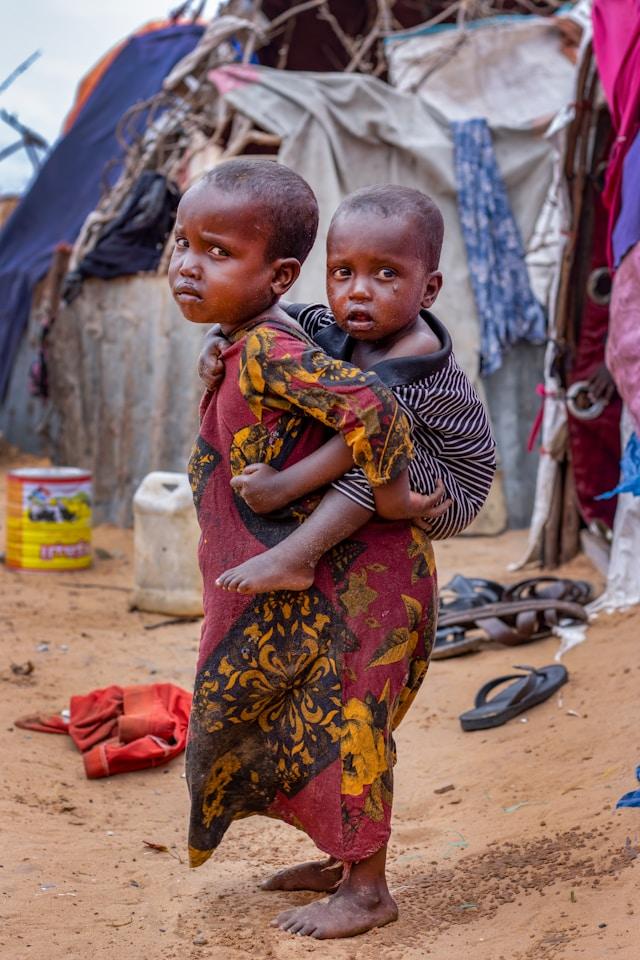
Somalia faces severe hunger, rising costs and shrinking aid as millions lack essential services, prompting urgent calls for global support.
Newsroom (26/05/2026 Gaudium Pres ) Somalia is once again approaching the brink of catastrophe, with international aid organizations warning of one of the world’s most severe and rapidly deteriorating humanitarian crises. Millions of Somalis are struggling without access to basic, life‑sustaining services, while a combination of drought, conflict, and economic shocks continues to intensify suffering across the country.
A coalition of international agencies—including Save the Children International and SOS Children’s Villages International—reported in a joint statement on May 20 that nearly 6.5 million people are experiencing high levels of acute food insecurity. Among them, more than 1.8 million children are suffering from acute malnutrition, with hundreds of thousands requiring urgent, life‑saving treatment.
Aid groups emphasize that these figures go beyond statistics. They reflect families uprooted by repeated drought, children going to bed hungry, and caregivers forced into impossible choices to keep their loved ones alive. The data aligns with the April–June assessments of the Integrated Food Security Phase Classification, a global standard for measuring hunger and malnutrition.
A Crisis Fueled by Multiple Pressures
The scale of Somalia’s humanitarian emergency is driven by intersecting crises. Recurrent drought, ongoing displacement, and climate-related shocks have steadily eroded livelihoods, while conflict continues to disrupt daily life. The country remains affected by an insurgency led by al‑Shabab, an al‑Qaida‑affiliated group that carries out attacks and enforces strict controls in areas it dominates.
Overlaying these long-standing challenges is a worsening economic crisis. According to humanitarian leaders, Somalia is now absorbing a major external shock that is compounding already fragile conditions. Fuel prices have surged by as much as 150 percent, while the cost of basic food staples has increased by 50 percent following the disruption of trade routes through the Strait of Hormuz.
Somalia’s heavy dependence on imports for food, fertilizer, and fuel makes these disruptions particularly severe. With shipping effectively halted through key corridors, prices for critical goods have roughly doubled, pushing basic necessities further out of reach for vulnerable populations.
Aid Shortfalls and a ‘Post-Aid Era’
Despite the growing urgency, humanitarian funding remains critically inadequate. Aid officials report that only about 15 percent of the required funding for Somalia’s humanitarian response has been secured. Caritas Somalia warned earlier this year that just 11 percent of needed donor contributions had been received, leaving essential programs underfunded.
Mohammed Abdi, country director for the Norwegian Refugee Council, described the situation as one of real-time deterioration. He noted that as hunger intensifies and costs rise, the resources needed to prevent further escalation are simply not available.
The environment for aid delivery has also shifted significantly. The closure of the U.S. Agency for International Development in 2025 removed a key pillar of global humanitarian funding. Combined with broader geopolitical disruptions, including conflict affecting global trade routes, humanitarian actors now face what some describe as the first true test of a “post-aid era,” where traditional support systems are no longer reliable.
Church and Humanitarian Presence
Amid these challenges, the Catholic Church maintains a modest but vital presence in Somalia, largely through its humanitarian arm, Caritas Somalia, and partnerships with international organizations. Millions remain without access to essential services such as healthcare and clean water, yet efforts continue to deliver assistance wherever possible.
Bishop Jamal Boulos Sleiman Daibes of Djibouti, who also serves as apostolic administrator of Mogadishu, has called for sustained international solidarity. He described the humanitarian situation as extremely serious, emphasizing that available resources fall far short of the immense needs.
Despite security constraints and Somalia’s overwhelmingly Muslim population—about 99.9 percent—the Church continues its mission with discretion. Much of its infrastructure has been destroyed over decades of conflict, including the Mogadishu cathedral, which has stood in ruins since 2008 and now shelters displaced families.
The Church’s work focuses on humanitarian outreach, accompaniment, and fostering dialogue. Bishop Daibes maintains regular contact with local clergy in Somaliland and chaplains in Mogadishu, ensuring continued engagement with communities on the ground.
Resilience Amid Hardship
Even as the crisis deepens, observers point to the resilience and dignity of the Somali people. Local authorities and international partners continue efforts to stabilize communities and promote recovery, though progress remains fragile.
Women, children, and the elderly are bearing the heaviest burden. Humanitarian agencies warn that without immediate and sustained funding, the situation could worsen dramatically, leading to preventable loss of life.
A Fragile Path Forward
While acknowledging the scale of suffering, Bishop Daibes expressed cautious hope for Somalia’s future. He stressed that lasting peace will require more than security measures alone. Investment in young people, social development, and efforts to rebuild trust within society are essential to long-term stability.
For now, however, the country stands at a critical juncture. With hunger rising, costs soaring, and aid shrinking, Somalia’s crisis serves as a stark reminder of how quickly fragile systems can falter—and how urgently coordinated global action is needed to prevent a humanitarian catastrophe.
- Raju Hasmukh with files from OSV news
Related Images:


