






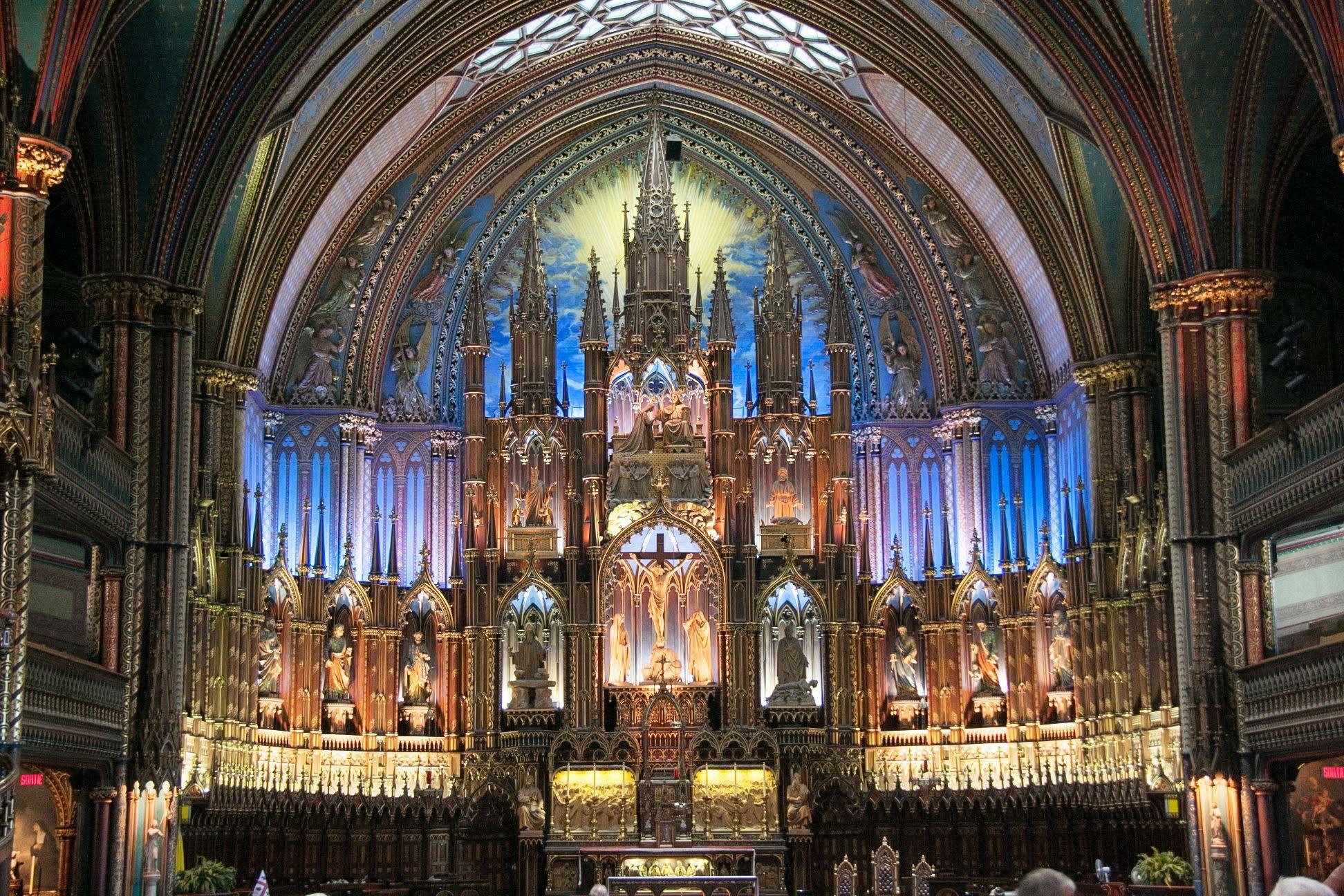
Quebec’s Bill 21 faces Supreme Court scrutiny as critics argue it restricts religious freedom and reshapes civil rights in Canada.
Newsroom (10/07/2026 Gaudium Press ) Quebec’s controversial Bill 21, a law that prohibits many public-sector employees from wearing visible religious symbols while on duty, remains at the center of a national debate over religious freedom, constitutional authority, and the future of civil rights in Canada.
Officially titled “An Act Respecting the Laicity of the State,” the legislation was adopted by Quebec’s National Assembly on June 16, 2019. The law bars public servants in positions of authority—including teachers, police officers, government lawyers, and judges—from wearing religious symbols such as crucifixes, hijabs, or yarmulkes while performing their duties. The restrictions also extend to employees in subsidized day cares, private schools, and professional development centers.
Quebec’s government argues that the legislation reflects the province’s commitment to secularism and reinforces the separation of religion and state institutions. Bill 21 identifies four guiding principles of Quebec secularism: the separation of state and religion, state religious neutrality, equality of all citizens, and freedom of conscience and religion.
Yet critics contend that the law does the opposite, infringing upon fundamental freedoms while disproportionately affecting people whose religious beliefs require visible expressions of faith.
Supreme Court Challenge Awaits Resolution
The future of Bill 21 now rests largely with the Supreme Court of Canada, which heard four days of arguments in March concerning the law’s impact on religious liberty and equality rights. Since the hearings concluded, observers across political, legal, and religious sectors have been awaiting the court’s decision.
Among the most vocal opponents of the legislation is the Canadian Conference of Catholic Bishops (CCCB). In its submission to the Supreme Court, the organization argued that the law’s purpose and effect extend beyond provincial authority.
The bishops asserted that the measure seeks to impose what they described as an “anti-religious” and “non-neutral” ideology, contending that Canada’s constitutional foundations are rooted in the protection of fundamental rights and freedoms, including religious expression. According to the CCCB, Bill 21 replaces a pluralistic approach to religion with one that excludes religious symbols from specific governmental settings.
The bishops further argued that the legislation effectively imposes an atheistic posture on religious believers by treating visible expressions of faith as incompatible with public service.
Constitutional Questions at the Heart of the Case
The legal dispute extends beyond religious freedom itself and into broader constitutional territory.
Under Canada’s constitutional framework, legislative powers are divided between the federal Parliament and the provinces. Sections 91 and 92 of the Constitution Act, 1867, outline these areas of jurisdiction.
Philip Horgan, who represented the CCCB before the Supreme Court, said the bishops focused their intervention on whether Quebec possesses constitutional authority to define the relationship between religion and the state in the manner Bill 21 attempts to do.
Rather than centering their argument on the law’s use of the Notwithstanding Clause, Horgan emphasized that religion is not expressly assigned to either federal or provincial jurisdiction within the constitutional framework.
The Supreme Court hearing attracted significant attention, featuring more than 50 interveners and becoming one of the longest appellate hearings in the court’s history. Interveners, such as the CCCB, were allotted limited time to present specialized arguments intended to assist the court’s deliberations.
The Controversial Role of the Notwithstanding Clause
For many critics, however, the most contentious aspect of Bill 21 remains its reliance on the Notwithstanding Clause, found in Section 33 of the Canadian Charter of Rights and Freedoms.
The clause allows governments to shield legislation from certain Charter challenges, limiting courts’ ability to invalidate laws that would otherwise be found to violate protected rights.
Civil liberties advocates have expressed concern that the provision could establish a precedent for limiting fundamental freedoms. The question extends beyond religious expression, raising broader concerns about the future application of constitutional rights in Canada.
Michael W. Higgins, a Canadian academic and author, argues that the implications could reach far beyond Quebec. Opposition to Bill 21, he noted, comes not only from religious organizations but also from civil rights groups worried about the precedent created when governments invoke constitutional override powers.
For critics, the core question is straightforward: if one protected freedom can be restricted through the Notwithstanding Clause, what other rights might face similar limitations in the future?
A Province Torn Between History and Secularism
The controversy carries particular significance in Quebec, a province whose cultural identity was once deeply intertwined with Catholicism.
According to historian Philip Jenkins, Quebec in the 1950s was among the most religiously active societies in the world. The Roman Catholic Church played a dominant role in education, health care, and social welfare, while church attendance reportedly reached approximately 90 percent. Montreal earned the nickname “the city of a thousand steeples” due to its abundance of churches and religious landmarks.
Today, that landscape has changed dramatically. Weekly Mass attendance has fallen to roughly 4 percent, and many once-thriving parishes have been merged, repurposed, or closed altogether.
Despite the decline in religious participation, visible reminders of the province’s religious heritage remain widespread. Church steeples continue to define many town skylines, while basilicas and cathedrals remain prominent features of Quebec’s major cities.
Recent developments have illustrated the ongoing tension between secular public policy and religious traditions. Following the passage of Bill 9, legislation that includes restrictions on collective prayer in public outdoor spaces unless municipalities grant permits, concerns emerged about whether Montreal’s traditional Corpus Christi procession could proceed. Ultimately, city officials issued a permit, and the procession took place through downtown Montreal under the leadership of Archbishop Christian Lépine.
A Debate About Pluralism
For Horgan, the debate surrounding Bill 21 ultimately raises questions about how a diverse society manages religious differences.
He argues that shielding students and the broader public from visible expressions of faith may do little to foster genuine understanding. Instead, he advocates what he describes as “authentic pluralism,” a framework in which individuals with different beliefs can coexist openly without fear or exclusion.
Supporters of that view contend that religious symbols worn by individuals do not compromise state neutrality. Rather, they represent personal identity within a pluralistic society.
Critics of Bill 21 therefore see the legislation not as a defense of neutrality, but as a form of suppression that limits public expressions of faith.
A Decision With National Implications
The Supreme Court’s eventual ruling could become one of the most consequential decisions involving religious liberty in recent Canadian history.
For supporters, Bill 21 represents a legitimate expression of Quebec’s secular identity and authority to govern its public institutions. For opponents, it is a test of Canada’s commitment to religious freedom, constitutional protections, and multicultural pluralism.
As the country awaits the court’s judgment, the debate surrounding Bill 21 continues to reflect a larger question confronting modern democracies: how can governments maintain secular institutions while protecting the rights of citizens to express their faith openly?
The answer, many observers believe, may shape not only Quebec’s future but also the broader trajectory of civil liberties across Canada.
- Raju Hasmukh with files from OSV News
Related Images:


