









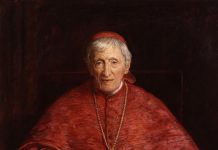
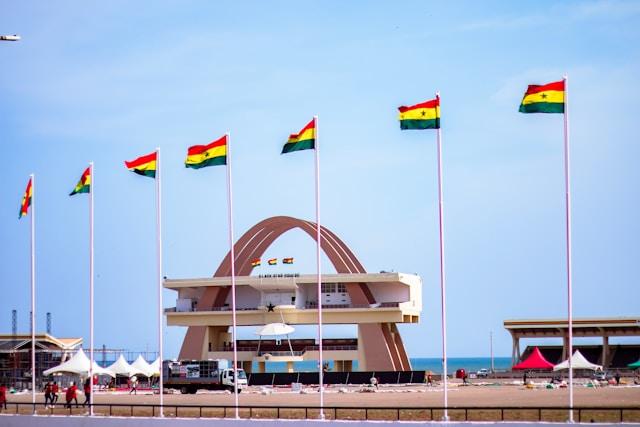
Pope Leo XIV accepts credentials from Ghana’s Ambassador Ben Batabe Assorow, praises Church-state ties, and expresses eagerness for a papal visit amid upcoming national milestones.
Newsroom (18/11/2025 Gaudium Press ) In a ceremony rich with diplomatic symbolism, Pope Leo XIV on Thursday last, received the Letters of Credence from Ghana’s new Ambassador Extraordinary and Plenipotentiary to the Holy See, Sir Ben Batabe Assorow (also referred to as Benedict Batabe Assorow), formally accrediting him as Accra’s representative to the Vatican.
The presentation, held in the Apostolic Palace, was followed by a private audience in the Pope’s library — an encounter described in unusually detailed terms by the Ghanaian side, highlighting the warmth of bilateral relations and shared priorities in human development.
Pope Leo XIV, lauded the “excellent and time-tested” ties between the Holy See and Ghana. He reaffirmed the Catholic Church’s commitment to the spiritual and integral development of all people, regardless of faith, emphasizing that the Church “does not seek to proselytise” but to advance human dignity through education, healthcare, social outreach, and advocacy for justice and peace.
Echoing longstanding Vatican teaching — including a 2007 doctrinal note from the Congregation for the Doctrine of the Faith distinguishing legitimate missionary work from coercive proselytism — the Pope stressed the Church’s preferential option for the poor, marginalized, and those suffering from conflict.
He expressed particular satisfaction with the deep collaboration between the Ghanaian state and the Catholic Church in education, health, agriculture, and socio-economic progress, urging its continuation.
Ambassador Assorow, a veteran Catholic communicator and former managing editor of Ghana’s The Catholic Standard, conveyed greetings from President John Dramani Mahama and briefed the Pontiff on key government initiatives. These include the “Reset Agenda,” featuring a proposed 24-hour economy, intensified efforts against illegal mining (known as galamsey) to curb environmental degradation, and an anti-corruption drive — all aimed at improving living standards for Ghana’s 34.6 million people.
The ambassador extended a formal invitation on behalf of the President for Pope Leo XIV to visit Ghana, highlighting two major upcoming anniversaries: the 70th year of national independence on March 6, 2027, and the 150th anniversary of the Catholic Church’s establishment in the country in 2030.
In response, the Pope indicated he “was looking forward to visiting Ghana” and warmly welcomed the prospect of receiving the Ghanaian President at the Vatican, potentially as early as next year. Diplomatic channels, involving Ghana’s Foreign Minister Samuel Okudzeto Ablakwah and the Vatican’s Secretariat of State, will coordinate details.
Assorow recalled the historic 1980 visit of Saint John Paul II to mark the Church’s centenary in Ghana and expressed hope that a trip by Pope Leo XIV would prove “a great blessing” for the nation and region.
Diplomatic relations between Ghana and the Holy See were established in 1975, with Ghana appointing its first resident ambassador in 2013. In a nation where Christians comprise 72 percent of the population (roughly 15 percent Catholic), alongside 19 percent Muslim and 9 percent adhering to traditional religions, the Church plays a prominent role in social services.
The ambassador praised Pope Leo XIV’s “clear and strong moral leadership,” citing his recent Apostolic Exhortation Dilexi Te (“I Have Loved You”), and thanked him for championing the voiceless.
Concluding the audience, Assorow requested — and received — the Pope’s Apostolic Blessing upon himself, his delegation, the President, government, and people of Ghana.
The encounter underscores the Holy See’s enduring engagement with sub-Saharan Africa under Pope Leo XIV, who has prioritized dialogue, peace-building, and support for developing nations in his young pontificate.
- Raju Hasmukh with files from graphic.com.gh and vatican news
Related Images: