









Pope Leo XIV called on the faithful to seek the grace to forgive, even in moments of profound betrayal, emphasizing that Jesus’ love offers a path to hope and redemption.
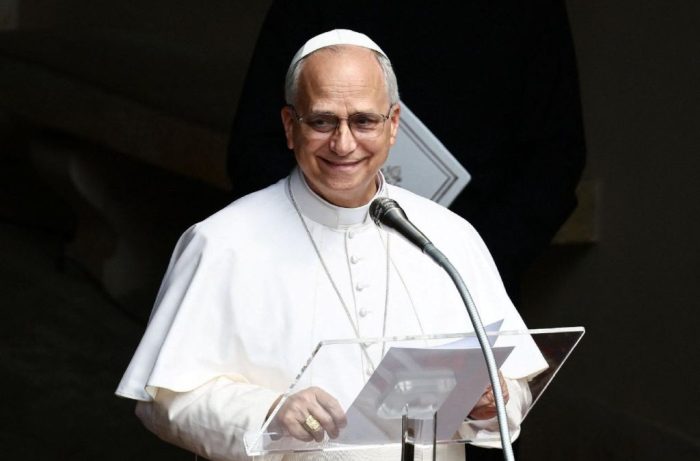
Newsroom (20/08/2025, Gaudium Press ) In his first General Audience since returning from Castel Gandolfo, Pope Leo XIV called on the faithful to seek the grace to forgive, even in moments of profound betrayal, emphasizing that Jesus’ love offers a path to hope and redemption. The Wednesday morning address, held indoors at the Vatican’s Paul VI Hall due to Rome’s intense heat, drew thousands of pilgrims, with overflow crowds gathering in nearby locations to escape the high temperatures.
Continuing his catechesis series on the Jubilee theme of “Christ our Hope,” the Holy Father reflected on Jesus’ Passion, Death, and Resurrection, focusing on the Lord’s boundless love and forgiveness. He highlighted a poignant moment from the Gospel account of the Last Supper, where Jesus offers a morsel of bread to Judas, the disciple who would betray Him. “It is not only a gesture of sharing,” Pope Leo said. “It is much more; it is love’s last attempt not to give up.”
A Love That Persists Through Betrayal
The Pope described Jesus’ act as a deliberate choice to love despite knowing betrayal was imminent. “Jesus knows the time, but He does not submit to it: He chooses it,” the Holy Father explained. “Instead of withdrawing, accusing, defending Himself… He continues to love: He washes the feet, dips the bread and offers it.” This gesture, he noted, reflects a love that persists through rejection, disappointment, and ingratitude, reaching out to the betrayer with humility and meekness.
Pope Leo emphasized that Jesus’ love does not ignore the pain of betrayal but refuses to let evil have the final word. “True forgiveness does not await repentance, but offers itself first, as a free gift, even before it is accepted,” he said. Tragically, Judas did not grasp this offer, as the Gospel notes that “after the morsel, Satan entered him.” The Pope described this as a stark reminder of evil’s power when love’s vulnerability is rejected, yet he insisted that Jesus’ gesture remains humanity’s salvation. “That morsel tells us that God does everything—absolutely everything—to reach us, even in the hour when we reject Him,” he said.
Forgiveness as a Path to Freedom
The Holy Father underscored that forgiveness is neither forgetfulness nor weakness but a powerful act that sets both the giver and receiver free. “It is the ability to set the other free, while loving him to the end,” he said. This act, he explained, prevents resentment from dictating the future and allows love to prevail even in broken relationships or irreparable situations. “How many relationships are broken, how many stories become complicated, how many unspoken words remain suspended,” Pope Leo reflected. “And yet the Gospel shows us that there is always a way to continue to love, even when everything seems irredeemably compromised.”
Addressing the personal struggles of the faithful, the Pope acknowledged the “nights of the soul” marked by disappointment and betrayal. In these moments, he said, the temptation is to close off, protect oneself, or retaliate. Yet, Jesus offers another way: “One can offer a morsel even to someone who turns their back on us. One can respond with the silence of trust. And we can move forward with dignity, without renouncing love.”
A Call to Forgive Without Ceasing
Pope Leo invited the faithful to pray for the grace to forgive, even when feeling abandoned or misunderstood. “It is precisely in those hours that love can reach its pinnacle,” he said, noting that Jesus’ example shows how love leaves others free—even to betray—while holding fast to the belief that even a wounded heart can be redeemed. “Every betrayal can become an opportunity for salvation, if it is chosen as a space for a greater love,” he concluded.
- Raju Hasmukh with files from Vatican News
Related Images: