









The journey includes a significant pilgrimage to İznik, the ancient city of Nicaea, where the historic council convened in 325 AD under Emperor Constantine I
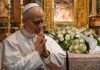
Newsroom (07/10/2025, Gaudium Press ) Pope Leo XIV will undertake his first apostolic journey to Turkey and Lebanon from November 27 to December 2, fulfilling the unrealized aspirations of his predecessor, Pope Francis, to commemorate the 1,700th anniversary of the First Council of Nicaea and to bring solace to the resilient people of Lebanon. The journey includes a significant pilgrimage to İznik, the ancient city of Nicaea, where the historic council convened in 325 AD under Emperor Constantine I, shaping the foundations of Christian doctrine.
The announcement was made on October 7 by the Holy See Press Office. Director Matteo Bruni stated: “At the invitation of the Head of State and ecclesiastical authorities, His Holiness Pope Leo XIV will make an Apostolic Journey to Turkey from November 27 to 30, including a pilgrimage to İznik to mark the 1,700th anniversary of the First Council of Nicaea. Subsequently, responding to invitations from the Head of State and ecclesiastical authorities of Lebanon, the Holy Father will visit Lebanon from November 30 to December 2.”
A Journey of Unity and Solidarity
The pontiff’s itinerary carries profound symbolic weight. In Turkey, the visit to İznik, located 130 km from Istanbul, honors the First Ecumenical Council, where the Nicene Creed—recited weekly by Christians worldwide—was formalized. Pope Francis had repeatedly expressed his desire to join Ecumenical Patriarch Bartholomew of Constantinople in celebrating this milestone, describing Nicaea as a “compass” guiding Christians toward full, visible unity. Despite his prolonged hospitalization at Gemelli, Francis had hoped to attend, even in frail health, underscoring the council’s enduring significance.
Pope Leo XIV echoed this sentiment during a June symposium at the Angelicum, titled Nicaea and the Church of the Third Millennium: Toward Catholic-Orthodox Unity. He called the council “not merely a historical event, but a compass that must continue to guide us toward the full visible unity of all Christians.” His presence in Turkey will strengthen ecumenical ties, particularly with Patriarch Bartholomew, who visited Rome in May to meet the new pontiff and pay respects to Pope Francis. Bartholomew later shared with journalists that Leo XIV had confirmed his “keen desire” to visit Türkiye, tentatively suggesting November 30, the feast of St. Andrew, a day when Catholic and Orthodox delegations traditionally exchange visits.
In an August interview at the Rimini Meeting, Bartholomew expressed enthusiasm: “We are particularly pleased that [Pope Leo XIV’s] first international journey will be to the Ecumenical Patriarchate in Türkiye and to Nicaea, where we will jointly bear witness to our firm commitment to ecumenical dialogue and the shared mission of our Churches in addressing global challenges. We await him with great anticipation.”
A “Caress” for Lebanon’s Resilient People
The second leg of the journey will bring Pope Leo XIV to Lebanon, a nation Pope John Paul II once called a “message” of coexistence, now scarred by economic collapse, the 2020 Beirut port explosion, and recent conflict in the south due to Israel’s war against Hezbollah. The visit fulfills a promise made by Pope Francis, who, during his historic 2021 Iraq pilgrimage, responded to a journalist’s question about Lebanon. Referencing a letter from Patriarch Bechara Raï urging a stopover in Beirut, Francis said, “I wrote a letter, I made a promise to make a trip.” Though unfulfilled during his pontificate, that commitment is now realized by his successor.
Lebanon’s people, known for their resilience amid crises, will receive what Pope Francis often described as the “caress” of Peter’s successor. The nation has faced profound challenges: economic turmoil, political paralysis until the recent election of President Joseph Aoun, and the devastating effects of last year’s conflict. In February, Cardinal Michael Czerny, prefect of the Dicastery for Promoting Integral Human Development, visited Lebanon on papal mandate, conveying the Holy See’s solidarity to local churches, charities, and refugees. At every encounter, Lebanese communities expressed hope for a papal visit, a wish last fulfilled by Pope Benedict XVI in 2012.
A Pontificate of Continuity and Hope
Pope Leo XIV’s journey reflects continuity with his predecessors’ vision. By commemorating Nicaea, he reaffirms the Church’s commitment to ecumenical unity. By visiting Lebanon, he brings hope to a nation yearning for peace and stability. As Pope Francis once remarked, papal journeys always carry “Peter”—not the man, but the mission of the papacy. Further details of the itinerary will be released in due course, but the journey already promises to be a milestone in Pope Leo XIV’s pontificate, blending historical reverence with pastoral care.
- Raju Hasmukh with files from Vatican News
Related Images: