







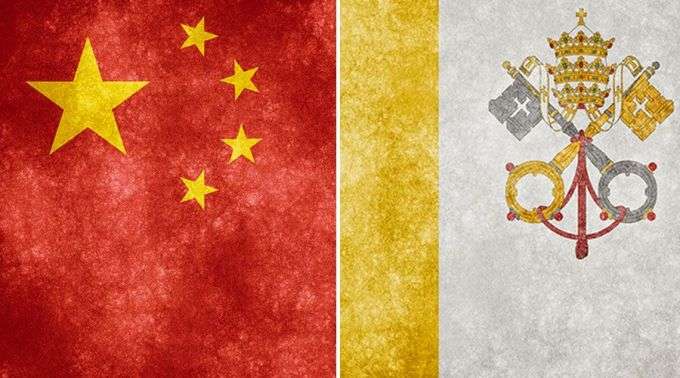
The creation of the Zhangjiakou diocese reflects the delicate balance of the Vatican’s 2018 provisional agreement with China
Newsroom (11/09/2025, Gaudium Press ) In a move underscoring persistent friction with Beijing over ecclesiastical boundaries, Pope Leo XIV has created a new Catholic diocese in northern China, named Zhangjiakou, aligning its borders with a diocese established by China’s state-controlled Catholic association in 1980. The Vatican’s announcement on Wednesday revealed that the new diocese replaces two historic dioceses, Xiwanzi and Xuanhua, established in 1946 by Pope Pius XII but suppressed by Pope Leo XIV to form the new jurisdiction.
The decision highlights the long-standing dispute between the Vatican and China’s government over diocesan boundaries, as Beijing’s Chinese Patriotic Catholic Association (CPCA), overseen by the Chinese Communist Party’s United Front Work Department, has redrawn Catholic dioceses to align with state administrative divisions. The Vatican recognizes 143 dioceses in China, while Beijing acknowledges only 104, creating a persistent canonical conflict.
New Diocese and Bishop Appointment
The Diocese of Zhangjiakou, based in the city of the same name in Hebei province, spans 14,000 square miles and serves approximately 85,000 Catholics across 14 districts and counties, supported by 89 priests. It will function as a suffragan diocese under the Archdiocese of Beijing. On July 8, 2025, Pope Leo XIV appointed Father Joseph Wang Zhengui, 62, as the diocese’s first bishop, with his consecration occurring on September 10 at the Church of the Holy Family in Zhangjiakou. The ceremony, attended by 300 Catholics, 50 priests, and CPCA leaders, was conducted under the framework of the 2018 Vatican-China provisional agreement on bishop appointments.
The Vatican’s statement emphasized pastoral motives: “In order to promote the pastoral care of the Lord’s flock and to attend more effectively to its spiritual welfare, on July 8, 2025, Pope Leo XIV decided to suppress the dioceses of Xuanhua and Xiwanzi in mainland China, established on April 11, 1946, by Pope Pius XII.”
Silence on Persecuted Bishop
Notably absent from the Vatican’s announcement was any reference to Bishop Augustine Cui Tai, 75, the underground bishop of the now-suppressed Xuanhua diocese. According to a 2024 Hudson Institute report, Bishop Cui has faced repeated detention, house arrest, and forced labor over the past three decades, with his most recent detention reported in April 2021. Asia News reported that Hebei clergy were informed of a planned “retirement” ceremony for Cui on September 12, though his current whereabouts remain unclear. The omission of Cui’s situation has raised questions about the Vatican’s approach to China’s treatment of underground Catholic clergy.
Vatican-China Relations: A Complex Landscape
The creation of the Zhangjiakou diocese reflects the delicate balance of the Vatican’s 2018 provisional agreement with China, renewed by Pope Francis in October 2024. While the agreement seeks to unify bishop appointments, its secrecy and reported violations by Beijing have drawn scrutiny. Critics, including Catholic clergy in China, argue that the deal has not curbed the Chinese government’s restrictions on religious freedom, including the detention of clergy like Bishop Cui.
The broader context of Vatican-China relations remains fraught. China’s imposition of new restrictions on May 1, 2025, bans foreign clergy from conducting religious activities without government approval, severely limiting missionary work. Additionally, state-sanctioned Catholic institutions in China offered minimal acknowledgment of Pope Francis’ death, signaling ongoing tensions.
Pope Leo XIV’s Approach
Pope Leo XIV, who succeeded Francis, has retained Cardinal Pietro Parolin, the architect of the Vatican-China deal, as secretary of state, suggesting continuity in diplomatic strategy. Cardinal Stephen Chow, bishop of Hong Kong, met with Pope Leo on September 2 and told the Sunday Examiner that the pontiff is “not entirely unaware” of the Church’s challenges in China. Chow noted that Leo, who visited China as superior general of the Augustinian order before his election, prioritizes “respectful communication” to address these challenges.
The creation of the Zhangjiakou diocese marks a significant step in navigating the complex interplay of faith and geopolitics, but the silence surrounding Bishop Cui and the unresolved diocesan border disputes suggest that tensions between Rome and Beijing are far from resolved.
- Raju Hasmukh with files from CNA
Related Images: