














Pope Leo XIV emphasized the enduring significance of the Virgin Mary as a guiding figure for the Church’s mission in a rapidly changing world
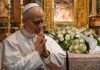
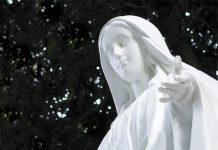
Newsroom (08/09/2025, Gaudium Press ) In a heartfelt address at the conclusion of the 26th Congress of the International Marian Academy, His Holiness Pope Leo XIV emphasized the enduring significance of the Virgin Mary as a guiding figure for the Church’s mission in a rapidly changing world. Speaking to an audience of distinguished religious, civil, and military authorities, ambassadors, scholars of Mariology, and faithful attendees, the Pope underscored Mary’s role as a “jubilant” and “synodal” woman whose example fosters hope, unity, and dialogue across cultures.
The Pontiff warmly greeted the Academy’s President, Secretary, Executive Council members, collaborators, and benefactors, commending their work in advancing Marian theology. He highlighted the Academy’s role as a vital forum for thought, spirituality, and dialogue, tasked with coordinating global Mariology studies to nurture a “genuine and fruitful pietas mariana.”
Reflecting on the Congress’s theme, the Pope addressed whether the Church’s Marian dimension is a relic of a bygone “Christian society” or a prophetic force for the future. He noted that participants explored how Marian devotion offers believers hope and consolation, aligning with the Church’s mission to proclaim these virtues. The themes of jubilee and synodality, he said, resonate deeply with Mary’s vocation as the Mother of the Lord, who listens to God’s Word with humility and engages fully in the Holy Spirit’s unifying action.
Quoting Saint Augustine, the Pope described Mary as a model of faithful listening: “Your most faithful servant is the one who does not seek to hear from you what he wants, but rather to want what he hears from you” (Confessions, X, 26). He portrayed her as a “synodal” figure, bridging divides and fostering unity among those separated by distrust or enmity, as inspired by Matthew 5:43-48.
The Pope emphasized that a Church with a “Marian heart” integrates faith’s truths with human realities, balancing mind and heart, body and soul, and the universal with the local. Such a Church, he said, courageously asks difficult questions, as Mary did in Luke 1:34 (“How shall this be?”), and responds with trust and service, as seen in her fiat: “Let it be done to me according to your word” (Luke 1:38).
Marian piety, the Pope argued, counters fatalism, superficiality, and fundamentalism by taking seriously the plight of the marginalized and giving voice to those sacrificed to “ancient and new idols.” He urged the Academy to cultivate a willingness among the faithful to “start afresh” with God’s Word and the needs of others, fostering unity rooted in the Trinity and bearing witness to faith, love, and hope.
The Pope also highlighted the protective role of Marian theology against distortions from propaganda, ideology, and misinformation, which he described as incapable of offering a “disarmed and disarming word.” By contemplating Mary’s inner gaze, the Church opens itself to divine gratuitousness, enabling people and cultures to walk together in peace, as reflected in Luke 24:36, 46-48.
Stressing the importance of Mariology, the Pope called for its promotion in academic centers, shrines, parishes, and cultural spaces, where art, music, and literature draw limitless inspiration from Mary. He praised the Academy’s initiatives to advance Mary’s image as a bridge between cultures, noting her role as the “perfect cooperator with the Holy Spirit” in breaking down walls and fostering harmony.
In closing, the Pope congratulated participants in the Academy’s annual international award, “Mary, Way of Peace between Cultures,” for their musical and artistic contributions. He expressed gratitude for the Academy’s ecclesial service, which underscores the Church’s Marian “face” and praxis, and offered his blessing, praying that the Academy remains a home and school for all dedicated to Marian studies.
- Raju Hasmukh with files from vatican.va
Related Images: