














Pope Leo XIV urges Christians to trust God’s timing, bring the Gospel to all, and pray for peace in Ukraine, the Middle East, and beyond.
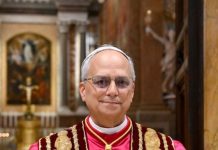
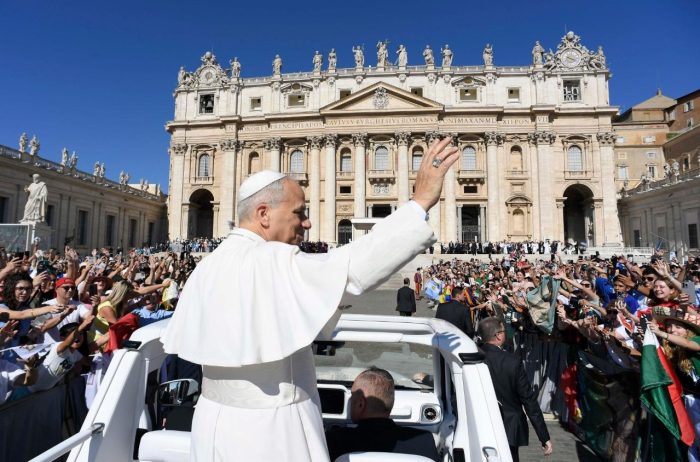
Newsroom (26/01/2026 Gaudium Press) Standing before thousands of faithful in St. Peter’s Square, Pope Leo XIV used his Sunday Angelus address to invite Christians to rediscover the courage of faith in uncertain times. Reflecting on the Gospel recounting the beginning of Jesus’ public ministry, the Pope spoke of trust, mission, and perseverance, urging the faithful not to be paralyzed by hesitation or fear but to act in confidence that “every moment is God’s time.”
Trusting God’s Time
The Pope began by highlighting the Gospel verse that notes Jesus started preaching “when he heard that John had been arrested.” It was, he observed, a moment shadowed by political tension and uncertainty—hardly a time that seemed ripe for proclaiming hope. Yet it was precisely then, Pope Leo explained, that the light of the Good News began to shine: “The kingdom of heaven has come near.”
“Even today,” he said, “we face situations, both personal and collective, where circumstances seem unfavorable—when we don’t feel ready to make a decision or proclaim our faith. But that is exactly when trust in God’s time matters most.”
The Pope cautioned that excessive prudence or fear can lead to spiritual paralysis. Instead, he encouraged believers to act with faith, reminding them that “God is at work at all times; His time is every time.”
A Mission Without Borders
The second theme of Pope Leo’s reflection looked to where Jesus chose to begin His mission—Capernaum, a small town in Galilee marked by cultural diversity and trade routes. This, the Pope noted, was not a random choice but a sign of a universal mission.
“Galilee,” he said, “was a crossroads of peoples and beliefs. By beginning there, Jesus revealed that His message was never meant to remain confined to one group or region. He came to draw near to all.”
The Pope described this as the essence of Christian witness: a faith that transcends boundaries and refuses exclusivity. “He is a God who excludes no one,” the Pope said, “a God who enters into the complexities of human life and relationship.”
Overcoming Isolation
From this perspective, the Pope called on Christians to resist withdrawal into comfort zones or closed communities. The Gospel, he insisted, “must be proclaimed and lived in every setting—at work, at school, in public life—so that it becomes a leaven of fraternity and peace among all peoples.”
His appeal resonated with his recurring message of universal solidarity and missionary outreach. The Holy Father urged believers to trust that even amid division and fear, faith can become a bridge, not a barrier.
Following with Joy
Concluding his Angelus address, Pope Leo XIV encouraged Christians to follow Christ with the same joy and immediacy shown by the first disciples. “Each of us is called to embrace this invitation with joy,” he said, “knowing that every place and time is permeated by God’s love.”
Prayers and Appeals for Peace
After the prayer of the Angelus, Pope Leo turned his thoughts to war-torn regions, renewing his appeals for peace. He spoke with visible sorrow of the suffering in Ukraine, where relentless attacks “leave entire populations exposed to the cold of winter.”
“I follow what is happening with sorrow,” he said, “and I am close to those who suffer and pray for them.” The Pope denounced the prolonged conflict and urged “everyone to intensify their efforts to end the war,” warning that continued violence “pushes a just and lasting peace further away.”
His message came as reports surfaced of ongoing peace talks between Ukrainian and Russian representatives in Abu Dhabi, part of renewed U.S.-brokered efforts to open a path toward peace.
The Pope also extended his prayers to the Middle East and other regions still scarred by conflict, reminding the world that peace “is built through respect for people.”
A “Caravan for Peace”
Turning with affection to a group of young people from Catholic Action present in the Square, the Pope expressed gratitude for their initiative to organize a “Caravan for Peace.” Their witness, he said, challenges adults to “see the world from another perspective—one of cooperation between peoples and nations.”
He encouraged the youth to be “builders of peace at home, in school, and in sports,” and to remember that non-violence begins in everyday life: “Never be violent—in words or in actions. Evil is overcome by good.”
A Call that Echoes Beyond the Square
As the bells of St. Peter’s rang out, Pope Leo XIV’s words lingered in the winter air: trust God’s timing, bring the Gospel into every human setting, and work tirelessly for peace. It was a reminder that faith, for him, is not an isolated belief but a living mission—one that reaches across boundaries, generations, and nations to uphold the dignity of all.
- Raju Hasmukh with files from Vatican News
Related Images: