







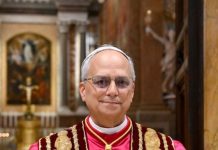
















The Archbishop of Owerri highlighted the proliferation of unregulated IVF facilities and their potential dangers physically as well a spiritually.
Newsroom (19/09/2025, Gaudium Press ) Archbishop Lucius Iwejuru Ugorji, President of the Catholic Bishops’ Conference of Nigeria (CBCN), has called for urgent government regulation of in vitro fertilization (IVF) clinics across the country, citing ethical, medical, and societal risks. Speaking at the CBCN’s second plenary assembly in the Diocese of Ikot Ekpene, the Archbishop of Owerri highlighted the proliferation of unregulated IVF facilities and their potential dangers.
“Though some IVF clinics are run by competent professionals, many others are managed by unqualified practitioners,” Archbishop Ugorji said. “Clients risk financial exploitation, medical complications, permanent infertility, and even death.” He urged the government to implement stringent regulations and ethical guidelines to protect vulnerable Nigerians seeking fertility treatments.
The Catholic Church considers IVF “gravely immoral,” the CBCN president reiterated, because it separates the unitive and procreative aspects of marriage and often involves the destruction or freezing of embryos. “Every embryo has inherent dignity and a right to life,” he emphasized, aligning with the Church’s long-standing teachings on the sanctity of human life from conception.
A Shifting Cultural Landscape
In Nigeria, infertility was once a deeply taboo subject, but societal attitudes have shifted dramatically in recent years. IVF has transitioned from a “foreign” concept to a widely recognized option, fueled by social media campaigns and endorsements from celebrities and influencers. As more middle-class and wealthy couples prioritize careers and financial stability, many are delaying starting families, leading to a rise in age-related infertility. For these couples, IVF has emerged as a popular solution.
However, the rapid growth of the fertility industry has outpaced oversight, leaving room for exploitation. Unregulated clinics, often operated by unqualified practitioners, pose significant risks to patients, including financial scams and serious health complications.
Broader Societal Challenges
Beyond the issue of IVF, Archbishop Ugorji addressed other pressing concerns facing Nigeria. He called for reforms in the education sector, condemning schools that engage in unfair practices, such as selling qualifications to unprepared students in exchange for money. He also highlighted the need for better management of oil exploration in the Niger Delta and action to address environmental degradation in the region.
The CBCN’s concerns echo the Vatican’s recent initiative in 2023, the Global Family Compact, launched by the Pontifical Academy for Social Sciences and the Dicastery for Laity, Family and Life. Accompanied by a message from then Pope Francis, the compact outlines four key action points to support families and reiterates the Church’s opposition to artificial reproductive technologies, including IVF and contraception.
The compact encourages infertile couples and those seeking to expand their families to consider adoption as an alternative. It also calls on Catholic universities and research centers to promote natural fertility solutions, such as NaPro-Technologies, which focus on monitoring women’s reproductive cycles to address infertility without resorting to artificial methods.
The document advocates for the establishment of centers dedicated to studying and monitoring infertility cases, offering ethical alternatives to assisted reproduction. These efforts aim to provide couples with solutions that align with the Church’s teachings while addressing the growing demand for fertility support.
A Call for Action
Archbishop Ugorji’s remarks underscore a broader call for ethical governance in Nigeria’s rapidly evolving fertility industry. As IVF becomes more accessible, the absence of regulation threatens to exacerbate existing inequalities and risks. The CBCN’s appeal aligns with the Vatican’s vision of fostering family life through ethical and natural means, urging both the government and society to prioritize the dignity of human life and the well-being of families.
– Raju Hasmukh with files from Agenzia Fides
Related Images: