








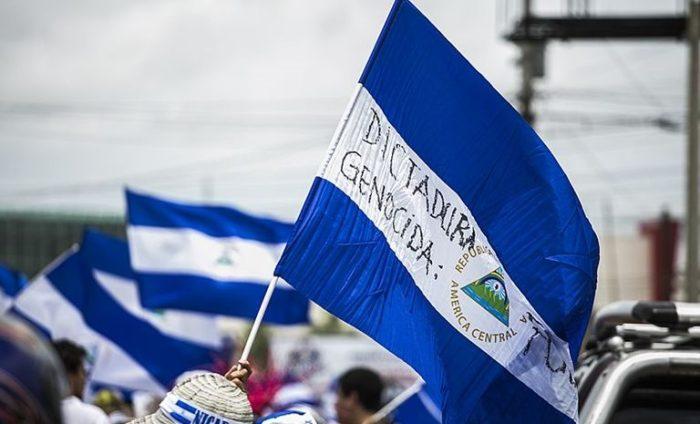
Nicaragua bans home pastoral visits by the Diocese of León, escalating the Ortega-Murillo regime’s persecution of the Catholic Church.
Newsroom (28/01/2026 Gaudium Press ) In another escalation of its campaign against the Catholic Church, Nicaragua’s government has banned the Diocese of León from conducting pastoral visits to laypeople’s homes, ordering that all church activities must now remain confined within ecclesiastical buildings.
The directive, unveiled by Nicaraguan lawyer and human rights advocate Martha Patricia Molina, author of Nicaragua: A Persecuted Church, marks a fresh attempt by the Ortega-Murillo regime to suppress religious engagement in local communities. Molina has meticulously documented the growing list of state measures designed to isolate and stifle Catholic life in the Central American nation.
“On Jan. 17, a group of altar boys was allowed to carry out a door-to-door mission to bring the Gospel to the people,” Molina told Crux. “But as soon as authorities realized it was something positive, they banned it.”
For generations, the Diocese of León, which includes the departments of Chinandega and León in Nicaragua’s west, has upheld the tradition of household evangelization. The region encompasses El Viejo, home to the revered 17th‑century Basilica of Our Lady of the Immaculate Conception of Mary — one of the country’s most significant shrines.
Molina explained that while persecution has become nationwide, the methods vary. “In other dioceses, repression takes different forms,” she noted.
Expanding Repression Across the Faith
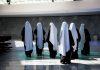
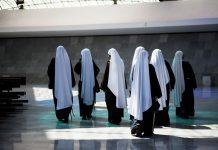
Over the past several years, President Daniel Ortega and Vice President Rosario Murillo have intensified efforts to suppress the Church. According to Molina, nuns have been expelled under the guise of surveillance, deacons barred from ordination, and evangelization pages across social media have been forcibly shut down. Clergy have even been coerced into taking staged, smiling photographs with police officers.
“On many occasions, policemen have entered retreats to interrupt them and speak about matters entirely unrelated to religion, using the priests’ own sound systems while the retreats were underway,” Molina said. “I could go on and on listing these arbitrary abuses.”
The tensions trace back to the 2018 mass protests, initially triggered by social security reforms but quickly expanding into a nationwide challenge to the Ortega regime. Many clergy opened their churches to care for injured demonstrators and call for peace. To Ortega, their humanitarian response amounted to conspiracy.
“The dictatorship does not fully control the Church – only a few bishops and priests collaborate with it,” Molina emphasized.
Fear and Paranoia Take Hold
Political analyst Enrique Sáenz described the regime’s recent behavior as “increasingly pathological,” driven by paranoia and a profound fear of people gathering.
“They feel threatened by many ghosts,” Sáenz told Crux. “One of them is linked to people gathering. The idea of people visiting one another and sharing a message terrifies Ortega and Murillo.”
He added that the regime’s repression now extends beyond institutional control of the Church to policing individual belief itself. “The totalitarian nature of the regime—its paranoia and obsession with clinging to power—drives this absurd attempt to control the minds of the population.”
Traditional devotions such as the Our Lady of Fatima processions and local patronal feasts, deeply woven into Nicaragua’s cultural identity, have been systematically curtailed. Even priests preaching from the pulpit have been confronted by state agents mid‑homily.
Mixed Signals Amid Regional Tensions
The crackdown comes amid regional unease following the January 3 U.S. intervention in Venezuela and the removal of Nicolás Maduro. Molina reported that some lay Catholics in Nicaragua have been detained for engaging with social media content related to the U.S. action. “Similar threats have been made during religious retreats,” she said.
Yet, paradoxically, a few dozen political prisoners have been released in recent weeks. Sáenz noted that Ortega has also made rare public remarks invoking “national reconciliation,” rhetoric uncharacteristic of his usual combative tone.
According to Sáenz, the shifts suggest that Managua is watching developments in Caracas carefully. “Despite the most recent prohibition imposed on the Church—which is clearly repressive—it has not been accompanied by new arrests or additional measures. I believe they are being cautious,” he observed.
Sáenz also pointed to the renewed attention in Washington, where U.S. lawmakers have revisited Nicaragua’s human rights record. Former Senator Marco Rubio, instrumental in passing both the NICA Act of 2018 and the Renacer Act of 2021, remains a key advocate for increasing pressure on the Ortega-Murillo administration.
“Rubio has demonstrated deep knowledge of Nicaraguan reality. U.S. lawmakers are once again discussing Nicaragua and human rights. Further measures cannot be ruled out,” Sáenz concluded.
- Raju Hasmukh with files from Crux Now
Related Images: