













New Colosseum director Simone Quilici debunks rave rumors, plans respectful concerts and cultural events to honor Rome’s iconic landmark.
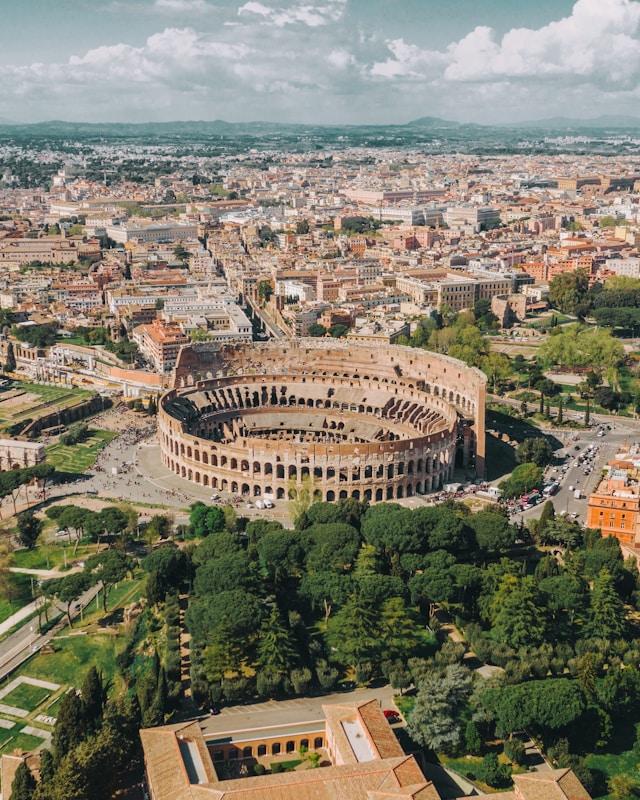
Newsroom (27/10/2025, Gaudium Press ) Simone Quilici, the newly appointed director of the Archaeological Park of the Colosseum, is determined to dispel rumors and restore reverence to one of the world’s most iconic landmarks. In his first interview with foreign media since assuming the role on October 20, Quilici firmly rejected sensationalized claims of “massive raves” at the nearly 2,000-year-old amphitheater, emphasizing that any cultural events will honor the Colosseum’s status as a “sacred space.”
The controversy erupted after Quilici’s recent comments to an Italian newspaper about hosting concerts were misconstrued online. Social media posts, amplified by AI-generated images of neon lights beaming from the Colosseum, sparked outrage among archaeologists and Romans who feared for their cultural heritage. Even electronic music fans raised concerns about potential damage to the ancient structure, which continues to reveal treasures like the emperor’s secret passage, set to open to the public on October 27.
“There will be no wild crowds,” Quilici, 55, told The Associated Press on Friday from the Colosseum’s uppermost balcony. “The music must be carefully controlled. I mentioned artists like Sting, who play calm music and attract a calm audience. It was reported the opposite of what I said.”
A Cultural Renaissance for the Colosseum
Quilici envisions a Colosseum that balances its historical significance with carefully curated cultural events. Acoustic or jazz concerts, poetry readings, dance performances, and theater productions are under consideration, pending the expansion of the existing small platform. Historical reenactments of gladiatorial battles, grounded in academic research, are also planned to offer visitors an authentic glimpse into ancient Rome.
“These activities will be the antithesis of the costumed centurions who harass tourists for photos,” Quilici said, distancing his vision from the commercialized spectacles that surround the site. The Colosseum’s first concerts and performances, he noted, are at least two years away.
The amphitheater has hosted only a handful of concerts in recent decades, including Ray Charles in 2002, Paul McCartney in 2003, and Andrea Bocelli in 2009, all with strictly limited audiences. Quilici aims to build on this precedent, ensuring events enhance rather than exploit the site’s cultural value. “Tourism is a commercial industry that doesn’t always connect with culture,” he said. “Bringing cultural activities here would enrich this place, making it a site not just to visit, but to experience.”
Managing Crowds and Expanding Horizons
With nearly 9 million visitors in 2024, up from 7 million the previous year, the Colosseum is at capacity, particularly during the Vatican’s Jubilee year, which draws pilgrims in droves. Quilici sees this as an opportunity to redirect tourists to lesser-known sites within the Archaeological Park, such as the Roman Forum, the heart of ancient Rome’s civic life, and Palatine Hill, the legendary birthplace of the city.
Despite 24-hour tickets granting access to all three sites, park data shows one-third of visitors explore only the Colosseum. Quilici hopes to change that. “Rome is an open-air museum,” he said. “Tourists now stay an average of four days, up from two and a half. The Colosseum can be a starting point for discovering less-visited treasures.”
Nearby, the Circus Maximus, famed for its chariot races immortalized in “Ben-Hur,” and the Appian Way, a UNESCO World Heritage site since 2024, remain underappreciated. Both are free to visit, yet draw far fewer crowds than the Colosseum. Quilici, who previously managed these sites, aims to integrate them into a cohesive archaeological experience, creating new access points and connections to alleviate overcrowding.
A Bold Vision for Rome’s Heart
Quilici’s ambitions extend beyond logistics. He envisions a revitalized “heart of Rome” where archaeological sites are seamlessly connected, free from the barriers of busy roads. “It’s a collective effort requiring cooperation from various administrations,” he said. “It’s not always about major infrastructure costs but courageous choices—like limiting traffic—to restore life to the city’s core.”
By prioritizing cultural integrity and strategic management, Quilici aims to preserve the Colosseum’s sanctity while inviting visitors to explore Rome’s broader historical tapestry. “This is about making choices that honor our heritage,” he said, “and ensure the Colosseum remains a living symbol of Roman identity.”
- Raju Hasmukh with files from Crux Now
Related Images: