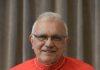











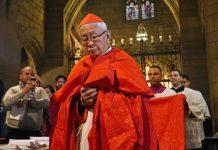


Malaysian Cardinal Sebastian Francis calls for Asian Catholics to stay true to universal mission of service and dialogue amid religious nationalism challenges.
Newsroom (18/12/2025 Gaudium Press ) In the face of growing religious nationalism across Asia, the Catholic Church’s most effective response is to remain steadfastly authentic to its core mission: serving all people across all nations without favoritism, according to Cardinal Sebastian Francis of Penang.
Speaking on the sidelines of the “Great Pilgrimage of Hope,” a major Asian Mission Congress hosted by his diocese from Nov. 27-30, the 74-year-old Malaysian prelate emphasized the Church’s role in fostering genuine unity in diversity. As the second cardinal from Malaysia and a former president of the Catholic Bishops’ Conference of Malaysia, Singapore, and Brunei, Francis has long championed interreligious and intercultural dialogue.
The event, organized by the Federation of Asian Bishops’ Conferences (FABC) Office of Evangelization and billed as the second Asian Mission Congress — two decades after the first in Thailand — drew participants to reflect on evangelization in a continent marked by profound religious and cultural pluralism.
Francis described his immediate acceptance of the hosting offer as a deliberate challenge to his diocese, aimed at helping local Catholics mature in their awareness of belonging to the broader Church in Asia. He highlighted the continent’s ancient Catholic communities, such as those in India tracing roots to Saint Thomas the Apostle nearly 2,000 years ago, and stressed the gathering’s goal: enabling Asian Catholics to know one another, learn mutually, and become effective storytellers of Jesus Christ.
Living as a Catholic in multireligious Malaysia, Francis likened the experience to Pentecost — a model of unity in diversity and equality. He portrayed Malaysian society as one where harmony stems from deep acceptance of differences among equal partners, rather than superficial cohesion. Echoing Pope Francis, he urged the faithful to embody Gospel values like mercy, charity, fraternity, and solidarity in daily life.
On the threat of religious nationalism, Francis acknowledged its significant challenge to minority faiths, including Christianity. He explained that such movements often align certain religious groups with national identity, marginalizing others. For Catholics, the response lies in unwavering commitment to universal service and advocacy for human rights, including freedom of conscience, religious practice, and faith choice — principles enshrined in the United Nations Charter.
Interfaith dialogue, Francis noted, has evolved profoundly since Vatican II, shifting from mere discussion to personal encounters and relationship-building. He advocated expanding the Church’s synodal conversations to include people of other faiths, viewing it as a vital step toward harmony and peace.
Reflecting on the FABC’s 55-year history, Francis credited it with energizing Asian churches on social issues and dialogue, though momentum waned in the 1990s. Renewal came through the 2023 50th-anniversary celebration in Bangkok, led by Cardinals Oswald Gracias and Charles Maung Bo, which produced the revitalizing Bangkok Document. The bishops’ extended time together — living, praying, and discerning over 21 days — forged stronger bonds and confidence.
Regarding Catholic media in Asia, Francis expressed optimism, pointing to the Penang event’s broad appeal across religious lines. He praised young digital missionaries and viewed emerging technologies like artificial intelligence not as threats but as tools for building genuine relationships. Challenging perceptions of Catholic media as mere public relations, he defended its focus on positive reporting and hope amid widespread negativity. Catholic outlets, he insisted, must prioritize truth, love, spiritual formation, and transformation over neutral information dissemination.
To advance the Asian Church as truly missionary, Francis called for deepened episcopal companionship within the FABC — bishops knowing, supporting, and standing in solidarity with one another. This brotherhood should empower Catholics to witness faith in diverse societies. Emphasizing Asia’s shared cultural values and unity in faith, he invoked Jesus as an Asian figure offering profound inspiration. Through recognizing diversity while speaking with one voice, the Church can develop an authentically Asian expression and propel its missionary vocation forward.
- Raju Hasmukh with files from UCA News
Related Images: