



















Prominent Bangladeshi journalist Anis Alamgir detained under Anti-Terrorism Act for critical statements, drawing outrage from media and rights groups amid interim government’s press freedom pledges.
Newsroom (16/12/2025 Gaudium Press ) In a move that has sent shockwaves through the Bangladeshi media landscape, prominent journalist Anis Alamgir was arrested under the country’s stringent Anti-Terrorism Act, accused of conspiring to destabilize the government through his public statements. The detention, which occurred during the escalating tensions of the pre-election period leading up to the February national vote, has ignited widespread condemnation from Catholic journalists, human rights organizations, and civil society leaders, who view it as a calculated effort to muzzle independent voices and erode press freedoms.
Alamgir, a veteran in the field known for his unflinching scrutiny of those in power, was taken into custody by intelligence officers around 8 p.m. on December 14 while at a gym in Dhaka. The arrest came despite recent assurances from the interim government, headed by Nobel Peace Prize laureate Muhammad Yunus, who on September 11, 2024, publicly affirmed a commitment to unrestricted media expression. “Full freedom of the press and expression has already been guaranteed,” Yunus declared at the time. “We have told everyone: feel free to criticize us. We respect everyone’s opinions. The government is actively considering the creation of a media commission so that they can carry out their work without any hindrance.”
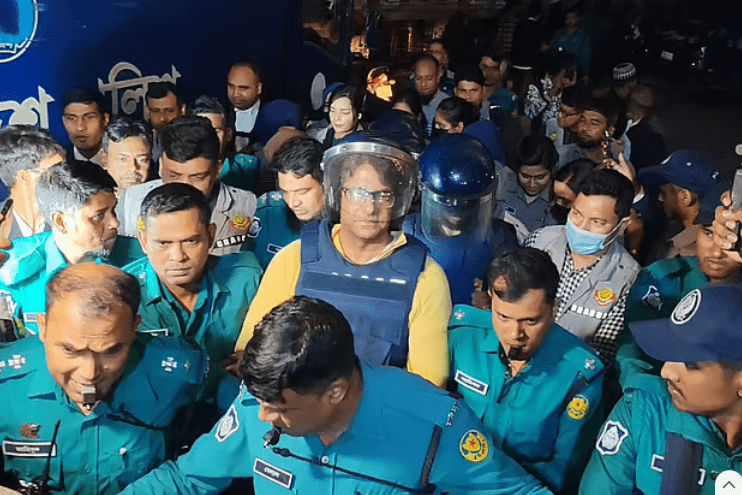
Yet, Alamgir’s case appears to contradict these promises, fueling concerns that the administration may be reverting to repressive tactics reminiscent of previous regimes. In court, where he was presented under heavy security, Alamgir mounted a defiant defense against the charges. “I’m a journalist, I question power,” he stated plainly. “I’ve been doing this for two decades. My job isn’t to kneel before anyone. I share my opinions openly on Facebook. I don’t know what I did wrong. Dr. Yunus can turn all of Bangladesh into a prison if he wants.” The Dhaka Metropolitan Magistrates’ Court, after hearing arguments from police who sought a seven-day remand, granted a five-day period for interrogation. The case, filed at the Uttara Paschim police station, names Alamgir alongside four others—actress Meher Afroz Shawon, model Maria Kispatta, and presenter Imtu Ratish Imtiaz—in allegations of spreading propaganda via social media and television talk shows to undermine national stability and revive banned organizations.
The accusations trace back to August 5, 2024, the date when former Prime Minister Sheikh Hasina fled the country amid a student-led uprising that toppled her long-standing government. Prosecutors claim that from that point onward, the group engaged in activities aimed at inciting unrest, particularly as the nation gears up for its first elections since the regime change. This timing has amplified anxieties about the political climate, with observers noting that the application of anti-terrorism laws against journalists could signal a broader clampdown on dissent.
Media professionals affiliated with the Church and civil society have been vocal in their alarm. Father Bulbul Augustine Rebeiro, director of the Christian Communications Center and secretary of the Commission for Social Communications of the Catholic Bishops’ Conference, expressed profound unease in an interview with AsiaNews. “We who work in the media are alarmed,” he said. “This arrest will make investigative journalists feel intimidated and extremely cautious in their choice of words. Those who always tell the truth will hesitate to express themselves freely. This is an attempt to stifle the voice of independent journalism.” Rebeiro’s sentiments underscore a growing fear that such actions could deter reporters from pursuing stories that hold the powerful accountable, especially in a country where the press has historically navigated precarious terrains of censorship and intimidation.
Human rights organizations have echoed these concerns, framing the arrest as a blatant misuse of legal instruments designed for genuine security threats. Ain O Salish Kendra, a leading advocacy group known as The Center for Law and Mediation, issued a strongly worded condemnation: “Applying the Anti-Terrorism Law against a journalist is an abuse of the law and a direct attack on freedom of expression. Criticizing government policies is not a crime. Independent journalism is essential to accountable governance.” The organization highlighted how such charges not only violate fundamental rights but also undermine the democratic processes that Yunus’s interim administration has vowed to uphold.
Further intensifying the backlash, the Board of Directors released a statement labeling the incident a “dangerous precedent” that harkens back to darker eras in Bangladesh’s history. “It evokes memories of state repression against journalists during dictatorial regimes,” the statement read. “False accusations, harassment, and arbitrary arrests were common then. This incident repeats that sad reality.” The board also pointed to a troubling pattern emerging since Hasina’s ouster on August 5, 2024, noting that numerous journalists have faced “false murder charges” and remain incarcerated, further constricting the space for free expression.
As Bangladesh stands on the cusp of pivotal national elections in February, the arrest of Anis Alamgir has cast a long shadow over the prospects for a transparent and inclusive democratic transition. Church leaders, alongside civil society advocates, warn that silencing critical voices could compromise institutional accountability and hinder the nation’s ability to address pressing issues openly. With the interim government’s media commission still in the planning stages, many in the journalistic community are left questioning whether the promised era of unfettered expression will materialize or if the cycle of repression will persist, threatening the very foundations of a free press in one of South Asia’s most vibrant yet vulnerable democracies.
- Raju Hasmukh with files from Asianews.it
Related Images: