






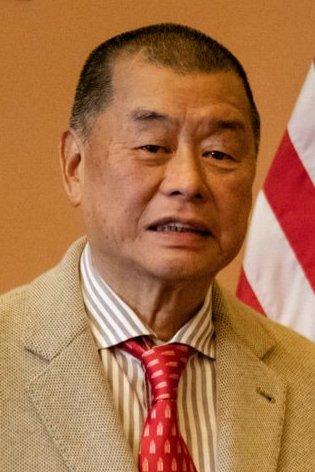
Jimmy Lai faces charges of conspiring to publish seditious materials and colluding with foreign forces, Judges Question Defense’s Framing of Alleged Actions as Fundamental Rights.
Newsroom (20/08/2025, Gaudium Press ) In a courtroom steeped in the weight of justice and moral scrutiny, two Hong Kong judges presiding over the national security trial of Catholic media magnate Jimmy Lai Chee-ying expressed skepticism about the defense’s portrayal of his actions as a legitimate exercise of fundamental rights. The founder of the now-defunct Apple Daily tabloid, Lai faces charges of conspiring to publish seditious materials and colluding with foreign forces, accusations that strike at the heart of Hong Kong’s turbulent struggle for freedom and identity.
On Wednesday, at West Kowloon Court, Senior Counsel Robert Pang Yiu-hung opened the defense’s closing arguments with a passionate rebuttal of the prosecution’s narrative. He accused prosecutors of dismissing human rights as “an alien concept” and argued that opposing government policies—whether the controversial 2019 extradition bill or allegations of police brutality during the anti-government protests—was not a crime. “You can’t force someone to think in one way or another,” Pang declared, emphasizing that seeking policy change, even through external pressure, is a fundamental right.
Yet Madam Justice Esther Toh Lye-ping, one of three High Court judges overseeing the case, offered a sobering counterpoint rooted in moral clarity. “It’s not wrong not to love the government,” she said, “but if you do that by certain nefarious means, then it’s wrong.” Her words echoed the prosecution’s claim that Lai’s alleged efforts to trigger Western sanctions sacrificed Hong Kong’s collective well-being for foreign interests, particularly those of the United States. Mr. Justice Alex Lee Wan-tang added that Lai’s personal views on government policies could illuminate his intent after the national security law took effect in June 2020, underscoring the gravity of the charges.
Lai, a 77-year-old devout Catholic who embraced the faith in 1997, has been in custody for over 1,700 days since his bail was denied in December 2020. Prosecutors allege that between April 2019 and June 2021, he used Apple Daily and social media to incite hatred against Beijing and Hong Kong authorities while financially supporting the “Fight for Freedom, Stand with Hong Kong” (SWHK) group to lobby for international sanctions. The prosecution, led by Deputy Director of Public Prosecutions Anthony Chau Tin-hang, pointed to Lai’s alleged encouragement of SWHK’s activism, including its ties to the Inter-Parliamentary Alliance on China (IPAC), as evidence of a broader conspiracy. Chau highlighted the timing of IPAC’s July 2020 meeting and the subsequent suspension of extradition treaties by Canada and Britain as proof of Lai’s influence.
The prosecution further accused Lai of betraying Hong Kong’s interests by supporting the revocation of its preferential trade status with the United States in July 2020. “So that was more than against the government,” Justice Toh observed. “It was against the whole of Hong Kong’s interests.” Chau also challenged Lai’s credibility, citing inconsistencies in his testimony about an opposition-led unofficial legislative election in 2020 and his alleged plan to meet then-U.S. Vice President Mike Pence under the guise of a family trip.
In response, Pang argued that the 161 allegedly seditious Apple Daily articles cited by the prosecution were a negligible fraction of the outlet’s output during the period. Justice Toh, however, dismissed this as a “number’s game,” noting other evidence suggesting an agreement among Lai and his associates to produce seditious content.
Lai’s case has become a global touchstone for the defense of freedom and human dignity, with Western leaders and human rights advocates calling for his release. U.S. President Donald Trump recently claimed he raised Lai’s plight with Chinese President Xi Jinping, vowing to “do everything I can to save him.” For Lai, whose Catholic faith has been a cornerstone of his resilience, the trial is not merely a legal battle but a testament to his commitment to truth and justice in the face of oppression.
As the defense continues its closing arguments on Thursday, the courtroom remains a crucible where the principles of justice, freedom, and moral responsibility are tested. For Lai and those who see his cause as a reflection of Hong Kong’s soul, the outcome will resonate far beyond the confines of West Kowloon Court, echoing the timeless call to stand firm in faith and conscience.
- Raju Hasmukh with files from South China Morning Post
Related Images: