





![Supreme Court, Minsk, 28 March 2020 Maksim Shikunets [CC BY-SA 3.0]](data:image/png;base64,iVBORw0KGgoAAAANSUhEUgAAANoAAACWAQMAAACCSQSPAAAAA1BMVEWurq51dlI4AAAAAXRSTlMmkutdmwAAABpJREFUWMPtwQENAAAAwiD7p7bHBwwAAAAg7RD+AAGXD7BoAAAAAElFTkSuQmCC "Belarus Supreme Court Seals Fate of Last Greek Catholic Parishes in Brest Region Amid Crackdown")
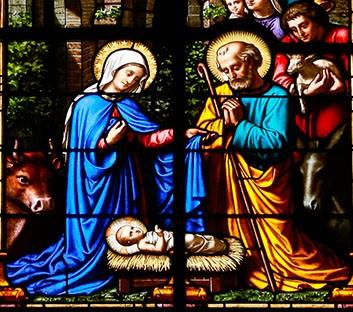
In Bethlehem, Father Francesco Ielpo urges believers to follow the Magi’s example, letting Christ’s light renew choices and heal humanity’s wounds.
Newsroom (06/01/2026 Gaudium Press ) In the heart of Bethlehem, near the very grotto where, according to Christian tradition, the light of the world was born, the Custos of the Holy Land, Father Francesco Ielpo, celebrated Mass for the Solemnity of the Epiphany. The liturgy took place this morning in the Latin parish of St. Catherine, adjacent to the Basilica of the Nativity. From the altar surrounded by pilgrims and local faithful, Father Ielpo spoke of the mystery that the Church contemplates on this feast: “To celebrate this day here, in Bethlehem, means letting ourselves be reached by the very heart of the mystery—the manifestation of Christ as light for all peoples.”
The Franciscan Custos invited those present to seek in that same light a new beginning. “Here, before the place where the Light chose to become small,” he said, “we ask for the grace to become men and women illumined—capable of bringing light into our choices, our relationships, and the wounds of history. Like the Magi, let us learn to be guided, to pause in adoration, and to set out again by another road: the road that begins with an encounter with the Lord.”
The Light and the Darkness
Father Ielpo’s homily unfolded as a meditation on the tension that runs through both Scripture and human history: light and darkness, acceptance and refusal, joy and fear. “The readings of this feast,” he explained, “intertwine these contrasts. It is the great human drama still before our eyes.” Reflecting on the Gospel, he evoked two cities—Bethlehem, the city of promise fulfilled, and Jerusalem, the city of Herod, restless and fearful of losing power. “To Herod’s violent search,” Ielpo continued, “is opposed the trusting search of the Magi; to the night, the light of the star; to the anxious question, ‘Where is the King of the Jews?’, the simple joy of those who saw the Child with Mary, His mother. And in the end, the Magi return ‘by another road’—the new way of those who have encountered God and can no longer walk as before.”
But the Custos warned that neutrality before Christ is impossible. “Either one welcomes or one refuses,” he said starkly. In the Gospel according to Matthew, rejection—embodied by Herod—grows ever more aggressive and destructive. Darkness often seems to dominate history, Father Ielpo admitted. Yet, “it never has the final word.” That word belongs to light—the same light symbolized by Christmas and the Epiphany, “a light that cannot be possessed or seized but that envelops, illuminates, and gives life.”
A Gentle Light for Human Eyes
The star of the Magi, Ielpo said, is not a miraculous beacon but a sign to be read through faith: “a luminous marker that leads to the light of Christ.” Unlike the blinding light of power, this illumination “does not dazzle, but heals; it does not dominate, but accompanies. It bends gently to the tired and wounded eyes of humanity.” Quoting Saint Augustine, Father Ielpo recalled that Christmas falls in winter, when the sun is weakest, as a symbol of the tenderness of Christ’s light—“a light that approaches our fragility.”
The Prophecy Made Flesh
At St. Catherine’s, the crowd—pilgrims from every continent and local Christians—offered a living image of that prophecy. “Today, as I looked at each of your faces,” said Father Ielpo, assisted by Father Raffaele Tayem’s simultaneous translation, “I realized that the prophecy we heard in the first reading and sang in the psalm is fulfilled each time we celebrate the Epiphany here in Bethlehem: ‘All peoples shall come to adore you.’ We who stand here represent all the nations of the earth.” His voice caught with emotion. “We are all different, yet united by one thing: we have all come here to adore the Child Jesus. This is the miracle of Christianity.”
A City Overflowing with Light
Beyond the parish walls, Bethlehem’s streets filled with believers once more. While the Latin Church celebrated the Epiphany, the Greek Orthodox and other churches following the Julian calendar prepared to mark Christmas on January 7. The city of the Savior’s birth thus became, again, a meeting place of faiths and calendars, prayer and pilgrimage. From the courtyard of the Nativity to the basilica itself, chants rose in many tongues—a living sign of that universal light of which Father Ielpo spoke, the light that “heals, accompanies, and reaches all the peoples of the earth.”
- Raju Hasmukh with files from Vatican News
Related Images:


![Supreme Court, Minsk, 28 March 2020 Maksim Shikunets [CC BY-SA 3.0]](data:image/png;base64,iVBORw0KGgoAAAANSUhEUgAAAGQAAABGAQMAAAAASKMqAAAAA1BMVEWurq51dlI4AAAAAXRSTlMmkutdmwAAABBJREFUKM9jGAWjYBQMKwAAA9QAAQWBn6cAAAAASUVORK5CYII= "Belarus Supreme Court Seals Fate of Last Greek Catholic Parishes in Brest Region Amid Crackdown")
