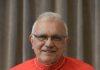








The conflict, centered on the denial of Holy Communion to Chris Coghlan, the Liberal Democrat MP for Dorking and Horley, stems from his support for a controversial assisted suicide bill
Newsroom (03 July 2025, Gaudium Press ) A public dispute between a Catholic priest and a newly elected British politician has cast a spotlight on the intersection of faith, politics, and canon law in the usually tranquil Diocese of Arundel and Brighton. The conflict, centered on the denial of Holy Communion to Chris Coghlan, the Liberal Democrat MP for Dorking and Horley, stems from his support for a controversial assisted suicide bill that passed its third reading in the U.K. Parliament’s House of Commons on June 20, 2025.
The diocese confirmed on June 27 that Bishop Richard Moth had spoken with Coghlan by phone and offered to meet in person to address “the issues and concerns raised” during their conversation. The offer followed a public announcement by Fr. Ian Vane, pastor of St. Joseph’s Catholic Church in Dorking, who declared at weekend Masses on June 22 that Coghlan would be denied Communion for voting in favor of the Terminally Ill Adults (End of Life) Bill. Coghlan, writing in a June 29 op-ed for The Observer, claimed Vane cited Canon 915 of the Code of Canon Law, “Can. 915 Those who have been excommunicated or interdicted after the imposition or declaration of the penalty and others obstinately persevering in manifest grave sin are not to be admitted to holy communion.”
The Spark: A Vote on Assisted Suicide
The controversy traces its roots to the Terminally Ill Adults (End of Life) Bill, introduced by Labour MP Kim Leadbeater after she won the private members’ bill ballot on September 4, 2024. The bill, unveiled on October 16, 2024, aimed to legalize assisted suicide—referred to by supporters as “assisted dying”—for terminally ill adults. It marked the eighth attempt since 2003 to pass such legislation in the U.K., following a landslide victory by the Labour Party under Keir Starmer in the 2024 general election.
Starmer, an atheist, had pledged to allocate parliamentary time for the bill, fulfilling a pre-election promise to television personality Esther Rantzen. Despite opposition from Catholic leaders, including Cardinal Vincent Nichols, who warned in an October 2024 pastoral letter that the bill would erode “the foundations of trust and shared dignity,” the House of Commons approved it on November 29, 2024, by a vote of 330 to 275. Coghlan, a first-time MP elected in 2024, supported the measure, as did most of his Liberal Democrat colleagues.
The bill’s third reading on June 20, 2025, saw it pass by a narrower margin of 314 to 291, with Coghlan again voting in favor. Bishop Moth, in a statement following the vote, expressed concern for “those who are sick and vulnerable” and urged Catholics to pray for members of the House of Lords, where the bill now awaits further scrutiny.
The Priest’s Response and Public Fallout
According to Coghlan, Fr. Vane emailed him on June 16, warning that supporting the bill would render him “an obstinate public sinner” complicit in a “murderous act.” Vane reportedly cited Church teaching and stated that giving Coghlan Communion after such a vote would “cause scandal.” At Masses the following weekend, Vane announced publicly that Coghlan was barred from receiving the sacrament, a move the MP described as “pretty horrific” and “utterly disrespectful” to his family, constituents, and the democratic process.
In a radio interview, Coghlan, who described himself as a liberal Catholic with doubts about certain Church teachings, argued that religious authorities should not expect him to prioritize Catholic doctrine over his constituents’ wishes. “I am here to represent my constituents, not the Catholic Church,” he said, adding that Bishop Moth had clarified the Church’s official stance does not mandate denying Communion over the assisted suicide vote. Coghlan suggested Vane acted independently and said he was unsure about remaining Catholic, stating he would reassess his faith “in a year’s time or so.”
The Diocese’s Response
The Diocese of Arundel and Brighton, in its June 27 statement, acknowledged the complexity of the assisted suicide debate and the “difficult task” faced by MPs. It emphasized that Bishop Moth had encouraged clergy and laity to privately urge MPs to oppose the bill but stopped short of endorsing Vane’s actions. The diocese reiterated the Catholic Church’s commitment to “the sanctity of life and the dignity of every person” and expressed prayers for those affected by the bill’s passage.
A Precedent in 2014
Coghlan’s situation echoes a 2014 controversy involving Bishop Philip Egan of Portsmouth. In an interview with LifeSiteNews, Egan suggested that Catholic politicians who supported same-sex marriage or abortion should not receive Communion, citing a lack of alignment with Church teaching. The remarks prompted Conor Burns, a Catholic Conservative MP who backed the U.K.’s 2013 same-sex marriage act, to say he felt “less welcome” in his diocese.
The Bishops’ Conference of England and Wales responded by emailing parliamentarians, clarifying that no bishops planned to deny Communion to MPs or peers who supported same-sex marriage. The email was authored by Greg Pope, a former Labour MP who later became the bishops’ conference’s acting general secretary in November 2024.
Broader Implications
The Coghlan-Vane dispute highlights tensions between personal faith and public duty in a pluralistic democracy. While private members’ bills like Leadbeater’s rarely succeed without government backing, the assisted suicide bill’s progress—bolstered by Labour’s parliamentary majority—has alarmed Catholic leaders and others who fear it could undermine protections for the vulnerable.
- Raju Hasmukh with files from The Pillar
Related Images: