







Chaldean bishops end Baghdad synod urging Iraq’s new government to protect Christian rights, respect quotas, and promote citizenship amid regional conflicts.
Newsroom (21/11/2025 Gaudium Press ) The annual ordinary session of the Chaldean Synod concluded yesterday at the patriarchal headquarters in Baghdad’s Mansour district after six days of deliberations focused on Iraq’s political transition, the worsening emigration crisis among Christians, and the impact of regional conflicts.
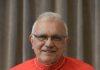
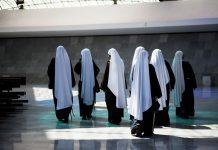
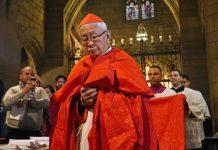
Presided over by Cardinal Louis Raphael Sako, Patriarch of Babylon of the Chaldeans, the gathering brought together 20 active bishops in a marked atmosphere of reconciliation following recent internal tensions. Notably absent were the three emeritus bishops – Ibrahim Ibrahim, Gabriel Kassab, and Shlemon Warduni.
In its final communiqué sent to AsiaNews, the Synod stressed “harmony” and a “spirit of responsibility,” describing the meeting as a visible sign of restored episcopal unity. The bishops opened proceedings by sending a letter to Pope Leo XIV requesting his “paternal blessing” to better address the material, moral, and spiritual needs of the faithful.
Domestic politics dominated discussions in the wake of the 11 November parliamentary elections. The Synod urged the incoming government to prioritize national “unity and sovereignty,” full implementation of citizenship rights, peace, stability, rule of law, justice, and equality. The statement explicitly called for “concrete measures” to guarantee Christians equal rights in political representation and public employment, warning that any dilution of the constitutional quota system for minorities would further erode Christian presence.
Expressing deep concern over “rapid international changes, conflicts, and wars” in the Middle East and beyond, the bishops reiterated that Iraqi Christians continue to endure systemic marginalization and accelerated emigration. They insisted that respecting the quota system remains the first indispensable step to “preserve Christian representation” and halt the demographic collapse of one of the world’s oldest Christian communities.
The Synod issued several pastoral and structural guidelines for the coming years:
- Strengthening “team spirit” and episcopal collegiality to overcome past divisions and serve the Church’s mission;
- Advancing “liturgical renewal” in light of cultural and social changes, faithful to the spirit of Vatican II;
- Intensifying ecumenical dialogue with sister Eastern Churches based on openness, mutual listening, and shared destiny.
Specific decisions included continued financial and institutional support for the patriarchal seminary, Babel College, and Christian schools; reinforced safeguarding policies to protect minors from abuse; promotion of beatification causes for Chaldean martyrs; and deeper engagement in Christian-Muslim dialogue to foster reconciliation and preserve Chaldean archaeological sites, manuscripts, and cultural heritage. The bishops also expressed openness to creating a dedicated Chaldean cultural center or museum.
Looking ahead, the Synod underscored the urgent need to appoint new bishops to vacant or overburdened sees.
In his opening address, Cardinal Sako insisted that synodal decisions must be respected and effectively implemented in every diocese as “a sign of episcopal unity.” He identified social media’s “toxic atmosphere” and occasional clerical infighting as major obstacles to vocations, stressing that many young candidates suffer psychological instability and are discouraged by negative examples within the clergy itself.
The Patriarch lamented the failure of broader unity initiatives among Iraq’s Christian denominations, attributing the impasse to some churches’ political affiliations and others’ fear of diminished influence.
On the political level, Cardinal Sako reaffirmed that the Church’s role is not partisan but prophetic: “to enlighten consciences on issues that affect people’s lives in terms of dignity and fundamental rights,” to denounce injustice, and to advocate for citizenship, rule of law, peace, and security.
As Iraq prepares to install a new government, the Chaldean Synod’s message is unequivocal: without deliberate policies to reverse Christian marginalization and emigration, the country risks losing one of its foundational communities forever.
- Raju Hasmukh with files from Asianews.it
Related Images: