






Chaldean Archbishop Warda appeals for peace amid escalating Middle East conflict, unable to contact Tehran bishop after U.S., Israeli strikes.
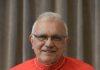
Newsroom, June 25, 2024, Gaudium Press – Chaldean Catholic Archbishop Bashar M. Warda of Irbil, Iraq, told OSV News June 23 that he has been unable to contact his fellow bishop in Iran, Chaldean Catholic Archbishop Imad Khoshabeh of Tehran, following recent U.S. and Israeli-led strikes on Iranian sites. The communication breakdown comes as tensions escalate in the Middle East, prompting the archbishop to issue a heartfelt plea for peace.
“I cannot reach [Archbishop Khoshabeh]. I tried many times, and I will keep calling,” Archbishop Warda said, expressing concern for his colleague amid the intensifying conflict.
The region faces heightened volatility following Israel’s “Operation Rising Lion” and U.S. airstrikes on June 21 targeting three of Iran’s nuclear facilities. Iran and Israel have exchanged retaliatory strikes, further destabilizing an already fragile region. Against this backdrop, Archbishop Warda, who has witnessed the devastating impact of war firsthand, urged an immediate end to the violence.
In 2014, Islamic State militants swept through northern Iraq, capturing Mosul and the Nineveh Plains, displacing thousands of Christians and Yazidis. The atrocities left deep scars, with countless Yazidi women and girls subjected to sexual enslavement. Reflecting on that trauma, Archbishop Warda said, “As someone who has witnessed firsthand the devastation that war leaves behind — how it empties villages, scatters families, and deepens the wounds of identity and trust — I cannot help but echo the words of Pope Leo XIV in his recent appeal for peace.”
“War has never brought us lasting peace,” he added. “Here in Iraq, we carry the memory of shattered cities and displaced people. Each new conflict reopens old wounds and threatens to erase what remains of our fragile presence [as a Christian minority] in this land.”
Archbishop Warda called for dialogue and diplomacy to replace the “war machine,” emphasizing that the Middle East, plagued by centuries of conflict, “does not need more destruction. It needs healing. It needs space for its people to breathe again, to believe again, to build again.”
Speaking not only as a bishop but as a native of Iraq — a predominantly Muslim nation with a 2,000-year Christian heritage tracing back to St. Thomas the Apostle — Archbishop Warda lamented the erosion of his community’s vibrant legacy. “Iraq was a land where Christians once thrived, where faith and culture were deeply woven into the soil,” he said. “Today, that soil is dry and cracked, not only by the heat of the sun, but by the fire of violence and fear.”
The archbishop extended his prayers to all civilians caught in the conflict, regardless of faith. “As Christians, we do not pray only for our own, but for every human being whose dignity is being crushed under the weight of war,” he said, highlighting the plight of the dead, wounded, and displaced.
Warning of the potential extinction of Christianity in its birthplace, Archbishop Warda urged the international community to prioritize peace. “If the world does not act now, the slow disappearance of Christianity from its birthplace may become irreversible,” he said.
Yet, even amid the uncertainty, Archbishop Warda clung to hope. “Hope is what we teach our young people here every day. Hope is what gives our families the courage to stay. And hope is what I choose to hold on to now,” he said.
He concluded with a call for solidarity, asking for prayers and advocacy. “Please pray with us. And if [you] can be a voice for peace — through prayer, advocacy, or solidarity — I would be deeply grateful.”
- Raju Hasmulh with files from UCAN and OSV
Related Images: