












Catholic leaders at COP30 in Belém demand climate justice for Global South; bishops’ letter urges unified action on finance, NDCs.
Newsroom (12/11/2025 Gaudium Press ) As the 30th United Nations Climate Change Conference (COP30) unfolds in this Amazonian gateway city from Nov. 10-21, the Catholic Church is mounting an unprecedented presence, underscoring the climate crisis as a profound moral imperative rooted in the Gospel call to stewardship of creation and defense of the poor.
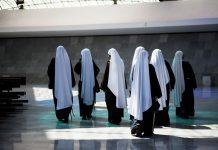
The Brazilian bishops’ conference (CNBB) has assembled a formidable delegation: eight cardinals, 47 bishops, and 97 officials from various ecclesial bodies. “But in the so-called green zone of COP30, numerous priests, sisters, and lay Catholics will also take part in activities concerning the climate crisis debates,” said Father Jean Poul Hansen, a CNBB adviser, in an interview with OSV News.
Beyond the official proceedings, Catholic faithful are engaging in parallel forums. The People’s Summit, hosted at the Federal University of Pará from Nov. 12-16, will draw civil society activists, scholars, Indigenous groups, and traditional populations to deliberate on climate action through lenses of solidarity and social justice. Clergy and laity alike will join the Ecumenical and Interreligious Tapiri — Towards COP30, running Nov. 11-16. The term “Tapiri,” derived from the Indigenous Tupi language meaning a hut for wayfarers, symbolizes a communal space where Christians, adherents of other faiths, and traditional communities can reflect on the climate crisis’s devastating effects on vulnerable lives.
At the heart of COP30’s official agenda lie contentious issues, including climate finance. Developing nations insist that wealthier countries bear responsibility for funding adaptive measures. Initial agreements targeted $300 billion annually by 2035, but the “Baku to Belém Roadmap,” issued under Brazil’s COP30 presidency, outlines pathways to escalate this to $1.3 trillion per year via existing mechanisms.
Delegates will also scrutinize Nationally Determined Contributions (NDCs) — national pledges essential to capping global warming at 1.5 degrees Celsius (2.7 Fahrenheit) by century’s end. COP30 marks the deadline for submitting updated or new NDCs.
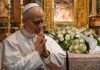
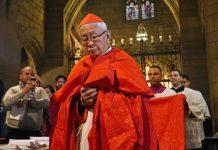
The Church’s voice will resonate in the blue zone sessions, addressing the Global South’s plight, climate justice, and a just energy transition. Leading these interventions are Cardinal Jaime Spengler, CNBB president and head of the Latin American and Caribbean Episcopal Council (CELAM); Cardinal Fridolin Ambongo Besungu of Kinshasa, Congo, president of the Symposium of Episcopal Conferences of Africa and Madagascar (SECAM); and Cardinal Filipe Neri Ferrão, president of India’s bishops’ conference and the Federation of Asian Bishops’ Conferences.
These prelates co-signed a pivotal September letter from Global South bishops, delivered to European, U.S., and Canadian conferences, Pope Leo XIV, and the United Nations. The document urges the Church and U.N. partners to unite as a bloc against climate change, decrying its disproportionate toll on the planet’s poorest. “Brazil’s church was organized in order to influence the COP as much as possible. We decided to write that letter in order to express the central elements that should be debated at the event in our opinion,” explained Father Dario Bossi, a member of CNBB’s Integral Ecology and Mining Commission and its COP30 commission, to OSV News.
Originating with CNBB, the letter critiqued false climate solutions and was refined by CELAM, then enriched by Cardinals Ambongo and Neri Ferrão, who emphasized adapting finance to the needs of severely affected groups, such as island dwellers facing submersion.
This epistolary effort crowns two years of intensive preparation. “Cardinal Spengler created a commission for COP30 that has been producing content about climate change and guides for the discussion of that theme in parishes and dioceses,” Father Hansen noted.
Culminating in regional pre-COPs — capacity-building gatherings for pastoral agents and activists across Brazil’s South, Southeast, Center-West, Northeast, and North — from March to August, these initiatives began with parish-level dialogues, escalating to diocesan forums and engaging nearly every Brazilian diocese.
“Such works won’t stop, despite COP30’s results. The church will keep working after the meeting. Like Pope Francis said, change comes from those little things we do on a daily basis,” Father Hansen affirmed, echoing the Holy Father’s encyclical Laudato Si’ and its vision of integral ecology.
In Belém, amid the Amazon’s verdant embrace, the Catholic Church stands as a beacon of hope, advocating for creation’s care as an act of faith and justice for the marginalized.
- Raju Hasmukh with files from OSV News
Related Images: