







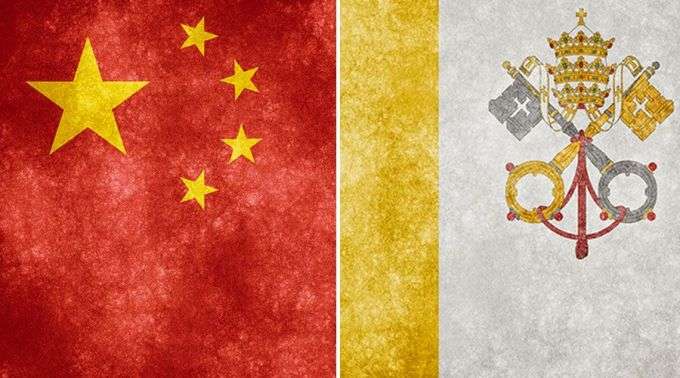
The recent meeting between Cardinal Stephen Chow Sau-yan of Hong Kong and Pope Leo XIV offers a beacon of hope for Sino-Vatican relations
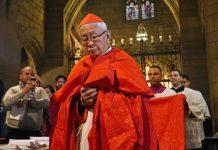
Newsroom (08/09/2025, Gaudium Press ) In the delicate arena of global diplomacy, where stability lays the groundwork for progress, the recent meeting between Cardinal Stephen Chow Sau-yan of Hong Kong and Pope Leo XIV offers a beacon of hope for Sino-Vatican relations. Held at the Apostolic Palace in the Vatican earlier this month, the encounter underscores the Holy See’s commitment to fostering respectful dialogue with mainland Chinese authorities. For Catholics, particularly those in Hong Kong, this continuity signals a path toward mutual respect and goodwill, even as significant challenges persist in one of the Church’s most complex diplomatic relationships.
The Hong Kong diocese revealed that the meeting involved an “in-depth exchange on the situation of the church in China,” marking the first such discussion since Pope Leo XIV’s election in May 2025. Cardinal Chow, speaking to the Sunday Examiner, a Hong Kong-based Catholic weekly, noted that the American pontiff intends to follow the path laid by his predecessor, Pope Francis, in engaging with China. “He recognizes the importance of dialogue between the Church and the mainland authorities and considers respectful communication a priority in addressing challenges in China-Vatican relations,” Chow said. According to the cardinal, the meeting allowed the pope to “gain a fuller picture and a better understanding of the current state of China-Vatican relations,” particularly as he navigates one of the Vatican’s most contentious diplomatic landscapes.
This commitment to continuity is vital. The Sino-Vatican agreement, first signed in 2018 and renewed periodically, represents years of painstaking negotiations to regulate the appointment of bishops on the mainland through a joint process. For Pope Leo XIV to diverge from this framework would risk unraveling hard-won progress. Chow emphasized that the pontiff is “not entirely unaware of the Church in China,” having gathered insights from “multiple sources” and through the agreement itself. This informed perspective suggests a measured approach, rooted in the Catholic principle of seeking peace through dialogue, as reflected in Proverbs 15:1: “A gentle answer turns away wrath, but a harsh word stirs up anger.”
However, the path forward is fraught with challenges. As the Vatican-China agreement nears its seventh anniversary, Pope Leo faces a growing backlog of unresolved issues, particularly regarding the appointment of bishops and the redrawing of diocesan boundaries by Chinese authorities. These moves, often unilateral, have created tensions that threaten the agreement’s efficacy. A notable example is the “election” of Fr. Li Janlin as bishop of Xinxiang, announced by Chinese authorities during the sede vacante period following Pope Francis’s death, when no pope was in office to confirm the appointment. Coordinated by the Chinese Patriotic Catholic Association (CPCA), the state-sanctioned body overseeing the Church on the mainland, Li’s installation highlights the ongoing friction, as the Vatican recognizes Bishop Joseph Zhang Weizhu, appointed by Pope St. John Paul II in 1991, as the legitimate bishop of Xinxiang.
Vatican Secretary of State Cardinal Pietro Parolin, the chief architect of the Vatican-China deal, suggested that Li’s appointment had been pre-approved by Pope Francis. Yet, no official Vatican statement has confirmed this or acknowledged Li as bishop, likely due to the presence of Bishop Zhang, an “underground” bishop unrecognized by the government. Resolving such conflicts often requires delicate negotiations, with incumbent underground bishops sometimes persuaded to resign, retire, or accept state-sponsored appointees as coadjutors or auxiliaries. However, no such settlement has been reached in Xinxiang, adding to a growing list of irregularities awaiting resolution at the Secretariat of State.
In contrast, the appointment of Bishop Joseph Lin Yuntuan as auxiliary bishop of Fuzhou in June 2025 exemplifies the Vatican-China deal functioning as intended. Lin, consecrated by Rome in 2017 for the underground Church, was appointed by Pope Leo with Beijing’s subsequent approval, facilitated by Archbishop Joseph Cai Bingrui, a CPCA member installed in January 2025. This rare success underscores the importance of interpersonal relationships in navigating the complex dynamics between Rome and Beijing. As Chow noted, these relationships are critical, as the Chinese episcopate is not simply divided between pro-Rome underground bishops and pro-Beijing CPCA members. Many underground bishops seek regularization while preserving their fidelity to Rome, while some CPCA bishops, like Cai, demonstrate openness to communion with the Holy See, as evidenced by two mainland bishops overstaying their visas to remain in Rome during the 2023 synod on synodality.
Beyond bishop appointments, the redrawing of diocesan boundaries by Chinese authorities poses an even thornier challenge. Only the pope can erect or suppress a diocese, and government-led changes are canonically invalid. Unlike bishop appointments, which can sometimes be retroactively approved, reconfiguring dioceses involves numerous stakeholders, making consensus nearly impossible after the fact. Senior mainland clerics have told The Pillar that state authorities aim to align diocesan boundaries with regional municipalities, often unaware of the canonical implications. This has led to a patchwork of dioceses recognized by either Rome or Beijing but not both, undermining the very unity the Vatican-China deal seeks to foster.
For Rome, approving state-driven diocesan changes risks appearing as a capitulation on a core ecclesiastical matter. Yet, for Beijing, alienating the Vatican could recreate a mass underground Church, a scenario the Chinese Communist Party (CCP) views as a security threat, particularly given recent legal changes that some clerics describe as pretexts to arrest practicing Catholics. Both sides have much to lose, making trust and personal relationships essential for progress. Cardinal Chow’s insights, drawn from his historic 2023 visit to Beijing—the first by a senior Hong Kong Catholic clergyman since reunification—equip him to guide Pope Leo in identifying good-faith collaborators and distinguishing between deliberate provocations and misunderstandings by Chinese authorities.
Hong Kong’s Catholic Church, operating under the “one country, two systems” framework, remains uniquely positioned to bridge the Vatican and Beijing. Its historical role as a mediator must continue, guided by the Church’s mission to foster peace and reconciliation. As Pope Leo navigates these complexities, his commitment to dialogue offers hope that, with patience and prudence, the Church in China can move toward closer communion with Rome, avoiding the specter of a state-controlled “franchise Church.” For Catholics worldwide, this pursuit reflects the Gospel call to unity and understanding, even in the face of profound challenges.
Raju Hasmukh with files from:
-
Sunday Examiner, Hong Kong Catholic Diocese, September 2025.
-
Vatican News, “Pope Leo XIV Meets with Cardinal Chow on China Relations,” September 2025.
-
Catholic News Agency, “Hong Kong Cardinal Visits Beijing, Signals Continued Dialogue,” April 2023.
-
Holy See Press Office, “Sino-Vatican Agreement: Background and Updates,” 2025.
-
The Pillar, “Vatican-China Deal: Challenges and Opportunities in Bishop Appointments,” August 2025.
-
The Pillar, “Chinese Diocesan Reconfigurations Pose Canonical Dilemma for Rome,” July 2025.
Related Images: