






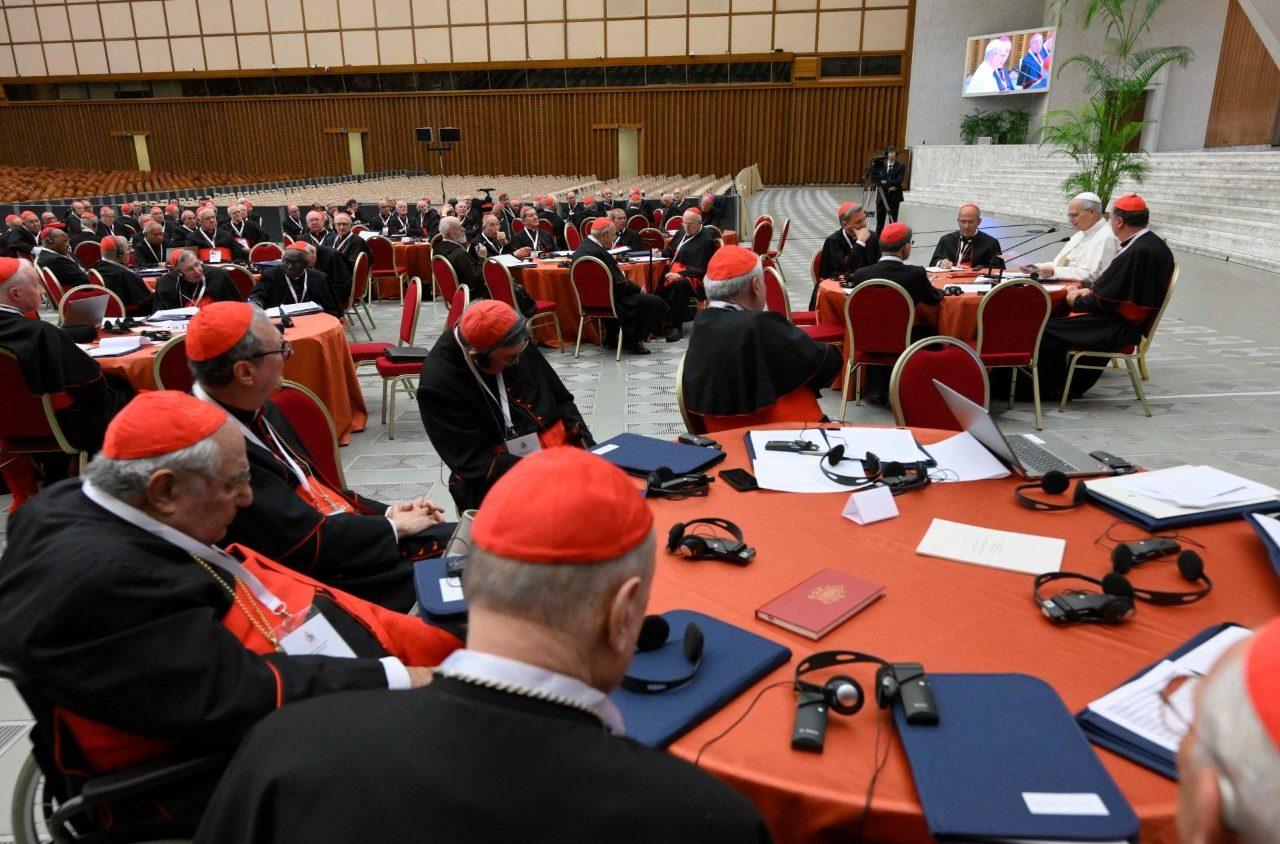
Cardinal Müller reveals why the Vatican’s extraordinary consistory with Pope Leo XIV focused on synodality and mission, not liturgical reform.
Newsroom (12/01/2026 Gaudium Press) When nearly 170 cardinals gathered in Rome last week for Pope Leo XIV’s extraordinary consistory, many observers expected the traditional Latin liturgy—often a flashpoint of ecclesial debate—to dominate discussions. Yet as the meeting unfolded, it became clear that the focus would lie elsewhere: on mission and synodality.
Cardinal Gerhard Ludwig Müller, former prefect of the Vatican’s Dicastery for the Doctrine of the Faith, has now explained why. Speaking to EWTN, he confirmed that while the liturgy had been a proposed topic, the cardinals ultimately opted to spend their limited time addressing issues they deemed more urgent for the life and witness of the Church.
“Since time was limited,” Müller said, “the cardinals preferred to talk about the great challenges for the Church and not so much about internal aspects.” In his view, questions about pre-conciliar liturgy, while important, pale in comparison to the cultural and political headwinds Christianity faces today.
A Church in an Age of Secularization
Müller’s analysis situates the decision in a broader context. “It is not the central question for the Church today,” he explained, “because we live in times of secularization, atheism, and some great anti-Christian political systems.”
This remark underscored what many within the Vatican have increasingly voiced: that the Church’s mission in modern society requires grappling less with intra-ritual disputes and more with the erosion of faith in a post-Christian world. For Müller, the pressing challenge is evangelization amid cultures that often no longer speak the language of transcendence.
Inside the Consistory: Mission and Synodality
The cardinals’ two-day meeting with Pope Leo XIV focused chiefly on mission and synodality—topics decided at the gathering’s outset. Other proposals, such as exploring relations between the Roman Curia and local Churches or revisiting the traditional Mass, did not gather sufficient support.
Müller nonetheless expressed confidence that Pope Leo XIV will eventually address the liturgical question “with balance” and find “a good solution for everyone.”
The consistory also illuminated an ongoing tension in the Church’s understanding of synodality—a theme that has dominated the papacy’s global agenda. Müller noted that Pope Francis had consistently resisted interpreting synodality through a lens of democratization. “The problem,” Müller said, “was the mixture of the Synod of Bishops and the so-called ‘synodality.’”
Clarifying Synodality’s Meaning
For Müller, synodality must not be confused with political practice. “Synodality has nothing to do with a parliament in a democratic state,” he insisted. “The Church is not a state, but an assembly of the faithful, a sacrament for the salvation of the world in Jesus Christ.”
The cardinal warned against reducing ecclesial life to mechanisms of power or populism. Instead, he emphasized collaboration between clergy and laity that respects the Church’s hierarchical nature and theological identity.
A Call to Return to Tradition in Dialogue
Müller also questioned the modern format of small discussion tables introduced in recent synodal meetings, which he argued stray from the Church’s traditional deliberative methods. Historically, consistories involved prepared interventions presented before the entire assembly—a process he believes fostered clarity and unity. “I think a large part of cardinals want to return to this classic form,” he said.
For him, full plenary discussions better capture the spirit of episcopal collegiality than fragmented, small-group exchanges. This sentiment reveals an undercurrent of traditionalism within the hierarchy, a quiet pushback against procedural experimentation.
Looking Ahead
The extraordinary consistory may not have resolved the liturgical question, but Müller’s comments illuminate the Church’s shifting priorities. In an age he describes as marked by “secularization and atheism,” the hierarchy seems intent on refocusing its attention toward evangelization and global mission.
Whether the pre-conciliar liturgy will reemerge on the Vatican’s agenda remains uncertain. Yet Müller’s assurance that Pope Leo XIV will eventually find “a good solution for everyone” suggests that the issue, though set aside for now, still lingers at the heart of the Church’s evolving identity.
- Raju Hasmukh with files from Info Catholica
Related Images:


