











Kinshasa’s archbishop Cardinal Ambongo slams the Washington Accords amid M23’s rapid advance, urging a church-led pact for true peace in DRC.
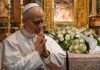
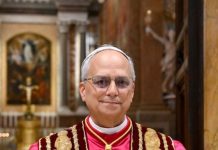
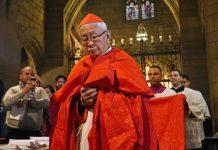
Newsroom (16/12/2025 Gaudium Press) In the shadowed grandeur of Our Lady of the Congo Cathedral in Kinshasa, Cardinal Fridolin Ambongo delivered a homily on December 14 that resonated like a clarion call through the turbulent heart of the Democratic Republic of the Congo. As the Archbishop of Kinshasa, Ambongo stood before his congregation, his words laced with sorrow and resolve, lamenting the swift occupation of the strategic city of Uvira by rebel forces. This seizure came mere days after the ratification of a high-profile peace agreement in Washington, D.C., exposing, in his view, the profound flaws in international efforts to quell the region’s enduring conflict.
The Washington Accords for Peace and Prosperity, signed on December 4 by Congolese President Félix Tshisekedi and Rwandan President Paul Kagame in the presence of U.S. President Donald Trump, were meant to herald a new era of stability. Yet, less than a week later, on December 9, M23 rebels launched a rapid advance on Uvira in South Kivu province, declaring full control by December 10. For Ambongo, this brazen defiance was not just a military setback but a stark indictment of the accords themselves. “How can we fail to see, in this collapse, the very limitations of these Accords and other initiatives,” he intoned, “which subtly exclude the Congolese people and seek to normalize the systematic plundering of Congo’s resources?”
The cardinal’s critique cuts to the core of a nation long ravaged by exploitation and violence. The Democratic Republic of the Congo, home to approximately 112 million people—roughly half of them Catholic, making it the world’s fifth-largest Catholic population—has endured decades of instability, particularly in its mineral-rich eastern provinces. Ambongo’s words echoed the frustrations of a populace weary of foreign-brokered deals that, he argued, prioritize external interests over local voices. By sidelining the Congolese people, such agreements perpetuate a cycle of resource extraction that has fueled conflict for generations.
In contrast, Ambongo championed an alternative vision: the “Social Pact for Peace and Living Well Together in the DRC and the Great Lakes,” a comprehensive plan put forward by the Congolese bishops’ conference and the Church of Christ in the Congo, a coalition of 62 Protestant denominations. Launched in January 2025, this initiative seeks to address the root causes of the strife, advocating for dialogue among all parties, including the contentious M23 group. The pact has faced resistance from the Congolese government, which views M23 as a proxy force backed by Rwanda and has balked at direct negotiations. Yet, for Ambongo, it represents the only viable path to enduring resolution.
Drawing inspiration from Pope Leo XIV’s post-election appeal for “a peace that is unarmed and disarming,” the cardinal described the Social Pact as embodying this ideal. “Unarmed, because this Pact rejects the logic of retaliation, exclusion, and fleeting triumphalism,” he explained. “Disarming, because this initiative seeks to address the roots of conflict by restoring truth, justice, and dignity to every person.” In a direct plea, Ambongo urged all stakeholders—from Congolese protagonists and national forces to the international community—to rally behind this church-led effort. “This is the place to call on all the protagonists of the crisis in the Democratic Republic of the Congo,” he said, emphasizing the urgency of collective action.
The homily, delivered following a plenary assembly of the Association of Episcopal Conferences of Central Africa—which unites bishops from Burundi, the DRC, and Rwanda—served as a poignant reminder of the human cost of inaction. Ambongo reflected on missed opportunities, particularly after M23’s capture of the border town of Bunagana in 2022, which marked a significant escalation in the insurgency. Had leaders heeded the appeals of Catholic and Protestant figures then, he lamented, countless lives might have been spared. “But alas! What a waste of time! What a waste of victims that could have been avoided!” he declared, his voice rising in condemnation. “That is why we condemn, with the utmost energy, as we have already done in other circumstances, all those who see war as the solution to this crisis.”
To understand the depth of Ambongo’s anguish, one must trace the threads of this conflict back to its origins. The current upheaval in eastern Congo stems from the 1994 Rwandan genocide, when ethnic Hutu extremists slaughtered up to a million Tutsis and moderate Hutus. As the Tutsi-led Rwandan Patriotic Front took control, nearly two million Hutus fled across the border into the DRC, settling in refugee camps in North Kivu and South Kivu provinces. This influx ignited a powder keg, leading to the overthrow of longtime dictator Mobutu Sese Seko and a sprawling war that engulfed neighboring countries. Often likened to the First World War for its staggering death toll and international scope, the conflict has left scars that fester to this day.
Amid this chaos, M23 emerged as a formidable player, capturing Goma and Bukavu—the capitals of North Kivu and South Kivu, respectively—in early 2025. Their latest conquest of Uvira underscores the fragility of ceasefires and the persistence of armed groups in a landscape riddled with shifting alliances. Yet, even in the midst of occupation, glimmers of normalcy persist. In Uvira, Catholic life is reportedly resuming its rhythms; Local Bishop Sébastien-Joseph Muyengo Mulombe presided over a Gaudete Sunday Mass on December 14 at St. Paul’s Cathedral, gathering young people in a moment of communal resilience.
Ambongo’s message, then, is not one of despair but of defiant hope. By highlighting the Washington Accords’ shortcomings and elevating the Social Pact, he positions the church as a moral anchor in a storm-tossed nation. As the DRC grapples with its future, the cardinal’s call for an “authentic and lasting peace” challenges all involved to transcend the failures of the past and embrace a framework rooted in inclusion, justice, and human dignity. In a country where faith and survival are inextricably linked, such voices may yet pave the way toward reconciliation.
- Raju Hasmukh with files from The Pillar
Related Images: