A Canadian Defence Department advisory panel wants to rid the Canadian Armed Forces of military chaplains whose religious faiths don’t openly promote diversity.
Newsroom (10/05/2022 1:00 PM Gaudium Press) In an April 25 report, the Defence Department Advisory Panel on Systemic Racism and Discrimination makes more than 40 recommendations to eliminate systemic racism and discrimination. Among them, to “not consider for employment as spiritual guides or multi-faith representatives Chaplaincy applicants affiliated with religious groups whose values are not aligned with those of the Defence Team.”
As examples of such values, the advisory panel cites “some churches’ exclusion of women from their priesthoods” and “sexist notions embedded in their religious dogmas.”
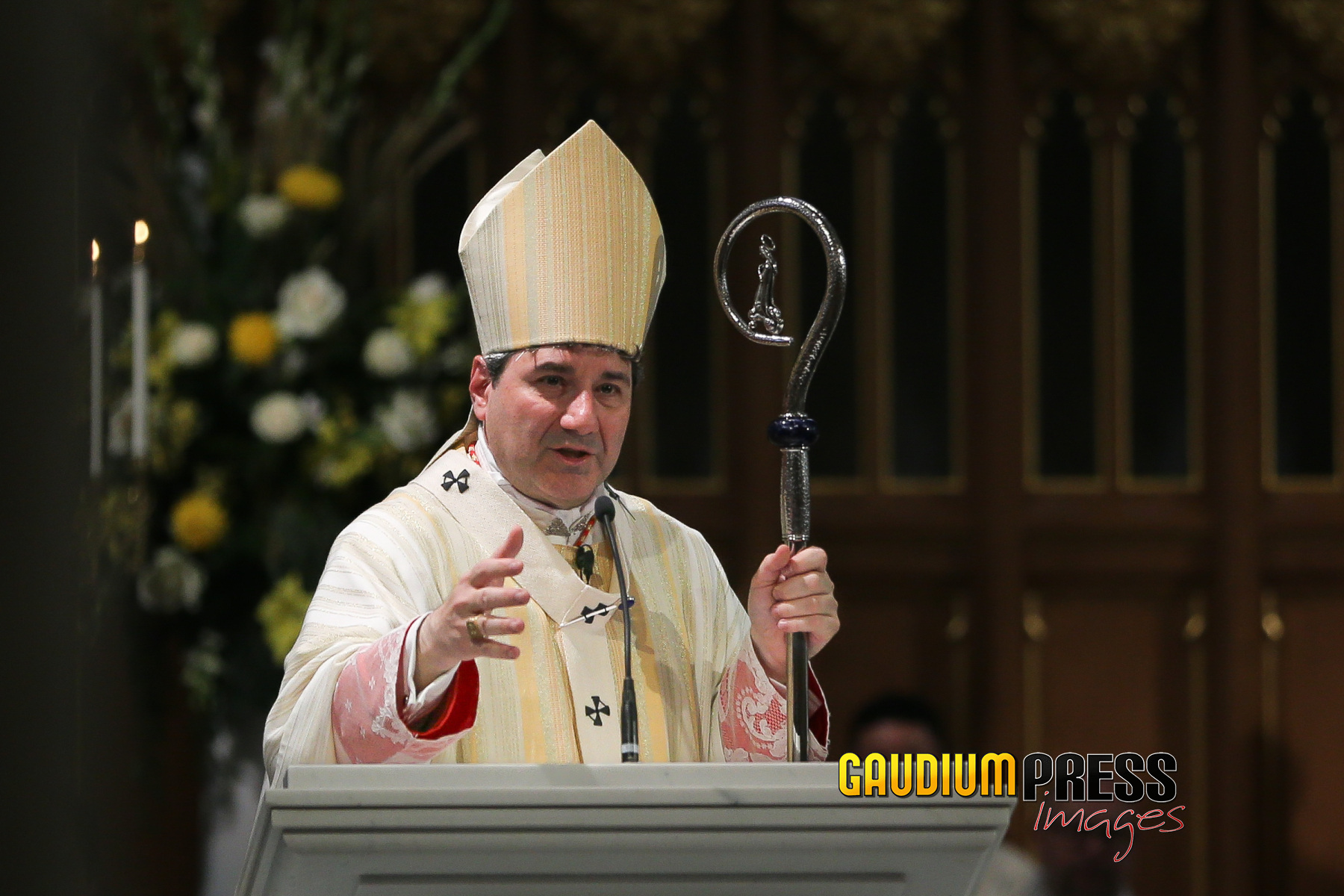
Bishop Scott McCaig, CC, the Catholic Military Ordinary for Canada, called the section on redefining chaplaincy “deeply problematic and regrettable.”
Responding to the report in a memo for chaplains and members of the Military Ordinariate of Canada – the Catholic archdiocese for Catholics who serve in the Canadian Armed Forces – the Bishop said an official response from Chaplain General Guy Belisle was expected. Yet, it was “essential” that the Military Ordinariate respond.
“Many of the pejorative remarks would appear to be directed to Catholics, as well as some other Christians, and amounted to mere caricatures of what we actually profess,” he wrote in a six-page response.
Bishop McCaig spends part of his six-page letter answering what he calls “fundamental misunderstandings and misconceptions” and “errors and oversimplifications.”
He stressed that all chaplains are committed to “inclusive, non-judgmental, and universal care of service members regardless of their religious or ethical convictions.”
Chaplains are responsible for “accompaniment, general counselling, ministry of presence and availability, discernment of morale and the authentic needs of members, and support for the military chain of command” to all persons “regardless of race, gender, religion or non-religion.” Such care, he said, “specifically excludes proselytization or any imposition of religious belief.”
He noted that implementing the panel’s recommendation would be “a grave mistake. Narrowing spiritual support does not increase diversity; Excluding the majority of Faith Traditions does not make the CAF more inclusive; Facilitating intolerance toward particular religious groups, who are believing and living in accord with the Canadian Charter of Rights and Freedoms, does not make the CAF more tolerant; Historic discrimination is not overcome by new and different forms of discrimination.”
Bp. McCaig noted that a Canadian Armed Forces “without the dynamic and vital presence of Catholic chaplains, ending over a century of proud and essential service, is very sad to contemplate.”
The Bishop concluded by asking for chaplains to “sincerely and wholeheartedly forgive those who have unfortunately misrepresented our Faith, to reach out with greater generosity to those who may have misunderstood our hopes and motives, and to pray fervently and insistently” for the Ordinariate, and the Royal Canadian Chaplain Service, and those in leadership.
From another angle, the non-partisan think tank Cardus responded in a memo to Defence Minister Anita Anand, calling the recommendation “extremely troubling and overtly discriminatory against certain religions.”
Cardus viewed the recommendation as “explicitly prejudiced” as it “undermines the panel’s very purpose: to address discrimination in DND and the CAF.”
The recommendation is one of four in a section titled “Redefining Chaplaincy,” which says, “at present, some chaplains represent or are affiliated with organized religions whose beliefs are not synonymous with those of a diverse and inclusive workplace. Some of the affiliated religions of these chaplains do not subscribe to an open attitude and the promotion of diversity.”
In a commentary preceding the recommendation, the advisory panel cites some churches’ “sexist notions” and “certain faiths (that) have strict tenets requiring conversion of those they deem to be ‘pagan,’ or who belong to polytheistic religions.”
According to Cardus, the comment “demonstrates thinly veiled hostility” to Abrahamic religions such as Islam, Judaism and Christianity and shows “gross ignorance” of such faiths by presenting “caricatures of their adherents as violators of equality and social justice.”
“In a constitutional democracy, -Cardus added, – it is wholly outside the scope of the state to make judgements on the truth claims of any religion or the attitudes of their adherents.”
Moreover, as the panel’s report voices, the Defence Department “cannot justify hiring representatives of organizations who marginalize certain people or categorically refuse them a position of leadership,”
Cardus called the panel’s position “a clear violation” of constitutional protections of freedom of conscience, religion, and association. the report was advocating for the state to “effectively police the legitimacy of Canadians’ most deeply held beliefs and how those are lived out in the community with others.”
The advisory panel said it “has observed that there are varying degrees of misogyny, sexism and discrimination woven into the philosophies and beliefs of some mainstream religions currently represented in the cadre of chaplains in the CAF.”
Cardus responded that the comment was “deeply troubling” and displays “a deep ignorance and unfounded prejudice of various religious traditions.”
The role of the state, Cardus pointed out, is “to ensure that all religious communities are protected from this kind of intrusion, not to engage in such intrusion themselves.”
For Cardus, the advisory panel’s overall goal of finding ways to eliminate systemic racism and discrimination but said its “narrow reading of inclusivity fails to understand that in a pluralist democracy, everyone is free to adhere or not adhere to a religious faith.”
Sukhwinder Singh, national director of UNITED SIKHS Canada, said the recommendation was discriminatory and would “ostracize Christians, Jewish people, Muslims … by allowing an outsider to judge that a group of people are not worthy of a chaplain.”
Singh said, “Everyone has the right to practise their beliefs, whether we agree with them or not. We cannot take away religious freedom just because we think that another religion does not promote enough diversity.”
It’s essential in the military “for a person to lean on their faith in hard times,” he enunciated. “They need a chaplain.”
He warned that the policy would also be “a nightmare to enforce. How does one test whether a religious group promotes diversity, and what would the standard be? There are different schools of faith in each religion. What would count as openly promoting diversity and who judges?”
Cardus called on Defence Minister Anita Anand to “firmly and publicly reject” the discriminatory sections and “affirm that all Canadians, including those with religious beliefs, will be supported through the pastoral services of CAF chaplains as they serve our country.”
Anand responded to the report with a Tweet saying, “As Minister of National Defence and a racialized woman, I am committed to building institutions where Canadians from all backgrounds are included, welcomed and empowered. The report released today will help us achieve this mission.”
A spokesperson for Anand said in a statement, “For many decades, chaplains from a wide range of faiths have served the members of the Canadian Armed Forces and will continue to do so in the years to come. Minister Anand believes that the chaplaincy should represent Canada’s diversity, uphold the values and principles of the military, and provide CAF members with access to spiritual or religious guidance if they seek it, regardless of their faith.
“Minister Anand is grateful to members of the Advisory Panel on Systemic Racism and Discrimination for their hard work in producing this final report, and strongly believes in the importance of building a more inclusive military free from racism and discrimination.”
In a column in The National Post, Father Raymond J. de Souza called the panel’s chaplaincy recommendations “a total assault not only on religious liberty, but the very idea of religion itself — unless that religion happens to be the ‘total health and wellness’ dogmas” of the Canadian Armed Forces.
(Via BC Catholic)
Compiled by Raju Hasmukh
Related Images: