






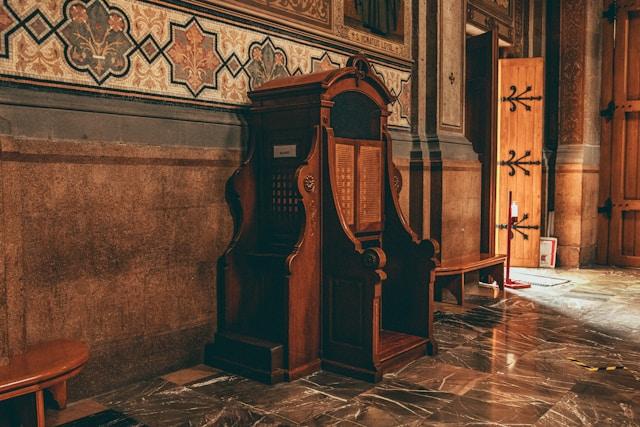
Arizona lawmakers let HB 2039 expire, preserving confessional secrecy as debate over clergy reporting laws and religious freedom continues.
Newsroom (07/07/2026 Gaudium Press ) A controversial Arizona proposal that would have required Catholic priests to report certain information obtained during the sacrament of Confession has failed to become law following the conclusion of the state’s 2026 legislative session. The measure marks the second unsuccessful attempt in three years to alter the legal protections surrounding confidential sacramental communications in Arizona, reflecting a broader national debate over the intersection of child protection laws and religious freedom.
House Bill 2039, introduced by Democratic Representative Stacey Travers, sought to compel clergy members to notify civil authorities if they became aware of ongoing or anticipated child abuse, even when that information was learned exclusively through sacramental confession. The proposal would have represented a significant change to Arizona’s longstanding legal recognition of confidential communications between clergy and penitents.
Severe Criminal Penalties Proposed
The legislation carried substantial legal consequences for clergy who failed to comply. Under the bill, a first violation would have been classified as a Class 6 felony, punishable by fines of up to $150,000 and prison sentences of up to two years. Repeat offenses could have resulted in significantly harsher penalties and longer terms of imprisonment.
One of the most contentious provisions involved the removal of clergy-penitent privilege in cases where a minister believed abuse was ongoing or likely to occur in the future. Critics argued that such language would require priests to make speculative judgments about potential future actions while simultaneously forcing them to violate the confidentiality of a sacrament that the Catholic Church considers inviolable.
Supporters Emphasized Child Protection
Representative Travers defended the proposal as a necessary measure to protect minors and ensure that religious institutions could not rely on sacramental secrecy when information related to child abuse was involved.
According to Travers, legal and moral obligations to protect children should take precedence over ecclesiastical practices in situations involving potential harm. She argued that the Catholic Church has attempted to shield itself through the sanctity of the confessional and suggested that some religious institutions have placed legal concerns ahead of accountability.
Supporters of similar measures have generally maintained that no form of confidentiality should prevent authorities from intervening when children may be at risk.
Opponents Argued Existing Law Already Requires Reporting
Opposition to the bill centered on the claim that Arizona law already mandates clergy to report suspected child abuse in virtually every context outside sacramental confession. Critics therefore contended that the legislation did not address a genuine gap in child protection laws but instead targeted a specific religious practice.
Among the bill’s most vocal opponents was Republican Representative Quang Nguyen, a Catholic lawmaker who also played a leading role in defeating a similar proposal in 2023. Nguyen argued that mandatory reporting obligations already exist throughout Arizona law and that the true issue was whether the state should compel priests to disclose information obtained during a sacred sacrament.
“This bill has absolutely nothing to do with reporting crimes, because the obligation to report already exists in the state of Arizona, just not in the confessional,” Nguyen stated. He characterized the measure as an effort directed specifically at the Catholic Church rather than a broader public-safety initiative.
Part of a Growing National Debate
The Arizona controversy reflects a wider legislative trend across the United States. In recent years, several states have explored measures designed to narrow or eliminate legal protections for confidential religious communications in cases involving child abuse.
Washington became the first state to enact legislation requiring clergy to report certain abuse-related information despite religious confidentiality concerns. However, implementation of that law faced immediate constitutional challenges, and a federal judge blocked enforcement while legal disputes over religious freedom proceeded. Observers noted that Arizona’s HB 2039 closely resembled the Washington measure.
Similar efforts have emerged elsewhere. In Montana, Democratic Representative Mary Ann Dunwell advanced legislation in 2025 aimed at expanding clergy reporting requirements. Although revisions were made following discussions with the Montana Catholic Conference, concerns persisted regarding the treatment of information obtained through pastoral counseling. Ultimately, that proposal also failed to become law.
Why the Catholic Church Opposes Such Measures
For the Catholic Church, the issue extends beyond professional confidentiality and enters the realm of religious doctrine. The seal of confession is considered absolute under canon law and admits no exceptions.
Church law holds that a priest who directly reveals either the identity of a penitent or the contents of a sacramental confession incurs automatic excommunication, known as latae sententiae, with such cases reserved to the Holy See. Because the obligation is viewed as intrinsic to the sacrament itself, Catholic priests are expected to maintain confidentiality regardless of potential civil penalties, including imprisonment.
Church authorities distinguish the confessional seal from legal privileges such as attorney-client or doctor-patient confidentiality. While those protections are created by civil law and can include statutory exceptions, the Catholic Church teaches that the seal of confession is a sacred duty owed to God. In this understanding, the priest is not merely safeguarding private information but fulfilling a fundamental religious obligation that cannot be overridden.
Existing Legal Balance Remains Intact
With the expiration of HB 2039 at the close of Arizona’s 2026 legislative session, the state’s current framework remains unchanged. Clergy members continue to be subject to mandatory reporting requirements in nearly all circumstances involving suspected child abuse, with sacramental confession remaining the principal exception.
The bill’s failure preserves the existing balance between Arizona’s child protection statutes and legal recognition of religious confidentiality. Nevertheless, as similar proposals continue to surface across the United States, the debate over where to draw the line between public safety concerns and religious liberty is likely to remain a prominent issue in state legislatures for years to come.
- Raju Hasmukh with files from INfocatholica
Related Images:


