









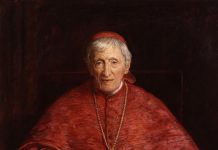

The simple statement of Our Lord when He says “my peace” makes it clear that not all “peace” is His.
Newsroom (05/24/2025 5:03 PM, Gaudium Press) The dialogue between Jesus and the Apostles, recorded in the Gospel of the 6th Sunday of Easter, takes place at a deeply moving moment in the History of Salvation. It follows the Last Supper and the departure of the traitor from the Upper Room, as the Master imparts His final teachings to His disciples.
Peace, order, and purpose
“Peace I leave with you; my peace I give to you. Not as the world gives do I give it to you” (John 14:27).
Christ’s simple affirmation—“my peace”—clearly shows that not every kind of “peace” is His. In the same verse, Jesus contrasts His peace with that offered by the world, implying that peace, understood in another way, belongs to a different lord—namely, the world.
There are, therefore, two ways to understand peace: that which is given by Christ and that which is offered by the world.
What is the difference between them?
The distinctions are many and too numerous to detail fully here. However, to get to the heart of the matter, it is worth recalling what Saint Augustine teaches in The City of God: he explains that peace is the tranquility of order, and order, in turn, is the proper arrangement of things according to their end. Thus, when each being is oriented toward its rightful purpose, authentic order is established—and with it, the peace of Christ.
The theory is perfect, but the challenge lies in practice: things are not always used according to their true end. And this leads us to a critical question: what is the true end of things?
In his letter to the Colossians, St. Paul gives a decisive answer: “All things were created through Him and for Him” (Col 1:16). That is, nothing in the universe exists apart from the glory of God. From a grain of sand to the highest of angels, everything was created by God, in God, and for God.
Moreover, Holy Mother Church teaches that the ultimate purpose of the human being is to know, love, and serve God in this life, so as to save one’s soul and enjoy eternal happiness in Heaven.
Therefore, any human act not oriented toward the love of God and neighbor deviates from the true purpose of man.
Worldliness
Worldliness, then, consists in believing that one’s ultimate end is fulfilled here on earth—that we were made for this world. For example: owning a car is a legitimate need for living well, and there is nothing wrong with it being comfortable and high-quality. But when someone’s reason for buying a car is to impress others, gain prestige, or elevate their social status, then the goal of the act is rooted in the world—in something transient and superficial. In such cases, St. Paul’s advice to the Corinthians becomes relevant: “those who use the things of the world, as if not engrossed in them” (1 Cor 7:31). That means not giving one’s heart to worldly things or living in function of material possessions or social recognition.
Likewise, it’s common to say a family is “at peace” when its members aren’t fighting or exchanging insults. However, true peace is not just the absence of conflict. Are each of the members fulfilling their roles according to their state in life? Parents are responsible for educating their children—but how often is that duty passed on to cell phones and computers? Can any device truly replace a father’s guidance or a mother’s affection? Just as charity begins at home, so does true peace.
Christ’s peace is within everyone’s reach. All that is needed is for each person to live according to God’s commandments and act in line with their God-given purpose. Then the tranquility of order—true peace—will take root.
Let us ask the Queen of Peace to direct our souls, so that our lives may not be centered on the fleeting things of this world, but grounded in virtue and love of God.
By Rodrigo Siqueira
_________________
[1] Cf. Augustine of Hippo, The City of God, XIX, 13, 1. Digital edition. Petrópolis: Vozes, 2017, p. 573.
Compiled by Gustavo Kralj
Related Images: