





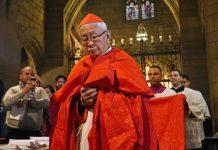

Archbishop Caccia warned against modern forms of ideological colonization that undermine the natural attachment of peoples to their values, traditions, history, and religious ties
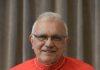
Newsroom (09/10/2025, Gaudium Press ) Archbishop Gabriele Caccia, the Holy See’s Permanent Observer to the United Nations, delivered an address to the Third Committee during the 80th session of the UN General Assembly, emphasizing the critical role of religious freedom in safeguarding human rights amid global challenges.
In his remarks, Archbishop Caccia highlighted the myriad crises facing the contemporary world, including conflict, poverty, hunger, and social fragmentation. He noted that efforts to enhance the UN’s effectiveness are often hampered by polarization and compounded by financial constraints stemming from a liquidity crisis. “In such circumstances,” he said, “careful reflection, innovative thinking, and the courage to make difficult decisions are necessary.”
Human Rights Rooted in Dignity
The archbishop underscored that human rights are grounded in the God-given dignity of every person. He stressed that states have a duty to promote and protect these rights, which are essential for human flourishing. “This must occur within a framework that supports both individual freedoms and our mutual responsibilities,” he said. “These rights are universal, inviolable, and inalienable—universal because they are present in all human beings without exception; inviolable as they are inherent to the human person and their dignity; inalienable because no one can legitimately deprive another of these rights, as doing so would violate their very nature.”
The Threat of Ideological Colonization
Archbishop Caccia warned against modern forms of ideological colonization that clash with reality and undermine the natural attachment of peoples to their values, traditions, history, and religious ties. He critiqued a “cultural fashion” that levels differences, judges the past solely through contemporary lenses, and fosters a “cancel culture” that disregards duties toward the most vulnerable—such as the poor, migrants, the elderly, the sick, and the unborn. “These are the forgotten in ‘prosperous societies,’” he said. “They are discarded like dry leaves to be burned in the general indifference.”
Religious Freedom as a Cornerstone
Central to the Holy See’s message was the pivotal role of religious freedom. “The Holy See emphasizes the centrality of religious freedom, not because it ignores other freedoms, but because it serves as a litmus test for the respect of all other human rights and fundamental freedoms,” Archbishop Caccia declared. Quoting Pope Leo, he added that collaborative efforts provide an opportunity to “build a world in which all can lead an authentically human life in truth, justice, and peace.”
The Holy See, he concluded, remains committed to advancing this vision, advocating for a global community that upholds the dignity and rights of every person.
- Raju Hasmukh with files from Vatican News
Related Images: