









Young Catholics from Arabic & Hebrew communities unite at ‘Be Happy’ retreat near Jerusalem, bridging war divides through shared faith.
Newsroom (22/10/2025, Gaudium Press ) Grace Rofa, a 20-year-old Catholic Palestinian from Jerusalem, arrived at the Oct. 18 “Be Happy Youth Festival” with trepidation. Beside her stood Reign Arpon, 19, a Filipino member of Tel Aviv’s Hebrew-speaking Catholic community. Two years into the Israel-Hamas war—and even after a fragile ceasefire—their experiences could not have been more divergent. Yet by midday at this sunlit monastery retreat outside Jerusalem, their hesitations melted away.
As Christians, they discovered, they shared far more than they differed.
The event, hosted at Deir Rafat monastery, drew about 200 young people from Arabic- and Hebrew-speaking Catholic communities across Israel. Organized by the St. James Vicariate for Hebrew-speaking Catholics, the Latin Patriarchate’s youth secretariat in Galilee, and the Youth Pastoral Office of the Latin Patriarchate, it aimed to foster unity amid lingering war scars.
‘Standing Together in Hope’
Father Piotr Żelazko, patriarchal vicar for the St. James Vicariate, described the retreat as a deliberate effort to help youth “stand together in hope” after the Oct. 7, 2023, Hamas attack on southern Israeli communities and the ensuing conflict. Participants hailed from nine parishes, blending young adults and leaders.
“It’s not as hard as I thought because we’re human,” Rofa said, her voice steady. “We can have different ideologies, but we’re united by the church and by Christ. We’re Christian. That’s how we’re here.”
Arpon echoed the sentiment. “I thought it would be awkward … since the war, maybe people wouldn’t see each other as friends, as sisters and brothers,” she said. “But they are very friendly, and I’m so happy.”
Ram Perez, 18, a recent convert in the Hebrew-speaking community, rarely encounters Christian Arabs. He invoked St. Paul: “We are all one body, the body of Christ. To not know the other members of your body is like for the eye to not know the ear. So we have to communicate, talk, meet, pray together, love each other.”
Breaking Down Walls
Father Żelazko emphasized the retreat’s urgency. “The goal is to see all who are here as persons in the spirit of God,” he said. “Their worlds are so separated that the fact we are all Catholics sends a message—for us in this difficult time—that we have more in common. Same fears, problems, even music likes. This is a moment of hope.”
Activities unfolded in smaller groups: crafting friendship bracelets, painting hope symbols on stones, and reflecting on a fictional pilgrim’s wartime letter. Conversations wove Hebrew, Arabic, and English into a tapestry of connection.
Father Benedetto di Bitonto, parish priest for Jerusalem’s Hebrew-speaking Catholics, addressed the invisible barriers. Hebrew-speaking youth, embedded in Israeli society and often serving in the army, rarely mingle with Christian Arabs whose realities diverge sharply.
“We have to let fall many walls in our minds and hearts,” he said. “The Gospel challenges us not to box anybody but to see human beings as brothers.”
He called such gatherings essential—and routine. Amid trauma’s pull toward isolation, their convergence felt miraculous. “One of the war’s hardest effects is that our pain blinds us to others’ pain,” he reflected.
Shared Struggles, Shared Faith
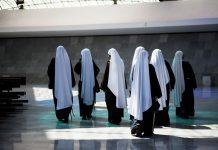
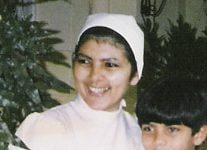
Sister Muna Totah, a Ramallah native and teacher with the Sisters of St. Joseph of the Apparition, working in Israel, chose deliberate bridge-building. “We’re all in the same boat,” she said. “We confront emotions openly, letting Jesus heal us by approaching the other, not pushing away.”
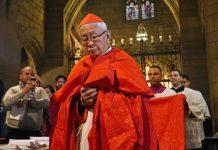
The day culminated in Mass led by Latin Patriarch Cardinal Pierbattista Pizzaballa. In his homily, he framed unity as the church’s core vocation in the Holy Land’s fractured landscape.
“Maybe we have many differences,” he said, “but I don’t know what unites us other than Jesus Christ. Because of Him, we overcome differences and find common ground—not only in humanity, but in faith that fulfills it.”
- Raju Hasmukh with files from OSV News
Related Images: