










More Christians die for their faith in Nigeria than in every other country combined. Jihadists kill, abduct, and displace. The government denies genocide.
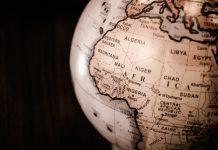
Newsroom (27/11/2025 Gaudium Press ) For anyone who follows religious freedom around the world, Nigeria requires no introduction. Year after year, more Christians are murdered for their faith inside its borders than in the rest of the world combined, according to Open Doors, the respected international advocacy group that publishes the annual World Watch List. The Nigerian human-rights organization Intersociety estimates that jihadist groups have killed more than 100,000 Christians and roughly 60,000 moderate Muslims since 2009. A separate five-year study by the Observatory for Religious Freedom in Africa, covering October 2019 to September 2024, documented 66,656 civilian deaths; Fulani militants—widely regarded as Islamist extremists—were responsible for nearly half. During that period, for every Muslim killed, 2.4 Christians died, and abductions skyrocketed from 1,665 in 2020 to 7,648 in 2024.
The perpetrators are a network of Islamist organizations that have operated with near-impunity for a decade and a half. Boko Haram, whose name roughly translates as “Western education is forbidden,” began its violent campaign in 2009 to impose an Islamic state, especially in the twelve northern states already governed by sharia law. It was joined by the Islamic State West Africa Province (ISWAP), armed Fulani militias, the newly formed Lakurawa group, and even reported cells of Al-Shabaab. These groups do not limit their violence to Christians; moderate Muslim clerics who preach coexistence or criticize extremism have also been assassinated. Yet Christians remain by far the primary targets.
On the ground, the pattern of attack is chillingly consistent. A Church of the Brethren official in the town of Mubi described how militants arrive and ask one simple question: “Are you a Christian or a Muslim?” Those who answer “Christian” are shot on the spot, and their church is burned to the ground. Nigerian missionary Fred Williams, now based in the United Kingdom but still traveling to Nigeria four times a year, says the violence is actually worse than genocide and that most of what he has witnessed is too graphic to be shown in the media. He notes with grim irony that the first Islamist assault on his own village in Plateau State occurred on September 11, 2001—the same day the Twin Towers fell.
The Nigerian government, however, vigorously rejects any suggestion that its Christian citizens are being systematically targeted. President Bola Ahmed Tinubu, a Muslim who took office in May 2023, insists that the country’s constitution guarantees religious liberty for all and that claims of religious intolerance are inaccurate. The Ministry of Foreign Affairs echoed that position after President Trump redesignated Nigeria a Country of Particular Concern (CPC) on October 31, 2025, calling the American characterization unfounded. Officials frequently describe the violence as economic “farmer-herder clashes” rather than religious persecution. Local analysts from the affected Middle Belt region counter that no Muslim community has ever been permanently driven out and occupied the way hundreds of Christian villages have been.
That CPC redesignation marked the second time the United States has formally labeled Nigeria one of the world’s worst violators of religious freedom. The Trump administration first placed Nigeria on the list in December 2020; the Biden administration removed it the following year. The 2025 return to the list has provoked sharp backlash from Abuja but strong support from a growing chorus of American lawmakers. In 2025 alone, resolutions have been introduced by Senator Ted Cruz, Representative Chris Smith, Representative Riley Moore, and others. Cruz’s Nigeria Religious Freedom Accountability Act aims to sanction officials who enforce sharia or blasphemy laws. Recent House resolutions commend the CPC redesignation and call for concrete measures: conditioning U.S. aid on verifiable protection of religious minorities, visa bans, asset freezes, and sustained diplomatic pressure.
Advocates such as Nina Shea of the Center for Religious Freedom, along with dozens of organizations that wrote to President Trump in October, argue that the Nigerian state has either been unable or unwilling to stop the slaughter. Pastor John Joseph Hayab, a leader of the Christian Association of Nigeria in the north, says the cries of the persecuted have been raised dozens of times, yet “nobody hears us.” With independent data, survivor testimony, and now renewed American attention all pointing in the same direction, the question is no longer whether a crisis of historic proportions is unfolding in Nigeria. The question is what the rest of the world intends to do about it.
- Raju Hasmukh with files form Providence
Related Images: