





















The Administration of the Patrimony of the Apostolic See (APSA), which oversees the Vatican’s properties and investments, announced a net profit of €62.2 million for the 2024 fiscal year
Newsroom (29/07/2025, Gaudium Press )The Administration of the Patrimony of the Apostolic See (APSA), the entity overseeing the Vatican’s properties and investments, announced a net profit of €62.2 million ($72.1 million) for the 2024 fiscal year on July 28, marking one of the highest returns since the agency began publishing financial statements. The results, detailed in APSA’s annual report, reflect a strategic overhaul emphasizing transparency, ethical management, and alignment with the Catholic Church’s mission.
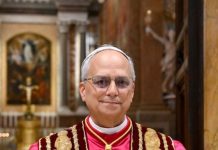
APSA also increased its contribution to the Holy See’s budget deficit, providing €46.1 million ($53.4 million) to support the Roman Curia’s operations, up €8 million ($9.27 million) from 2023. “This is one of the best financial statements in recent years,” said Archbishop Giordano Piccinotti, APSA’s president, in a statement to Vatican media. He attributed the success to effective asset management, a renewed ecclesial vision, and a commitment to the common good.
A Mission-Driven Approach to Wealth
Piccinotti emphasized that APSA’s role extends beyond financial stewardship. “APSA is not limited to offering operational services,” he wrote in the report’s introduction, “but is configured as an organization at the service of the mission of the Catholic Church.” This vision is built on three pillars: an ecclesial understanding of patrimony as a tool for communion and Church unity, a commitment to transparency and collaboration, and a focus on ethical and pastoral decision-making.
The 2024 profit, a €16 million ($18.5 million) increase from 2023’s €45.9 million ($53.2 million), underscores the success of this approach. Of this, €46.1 million was allocated to the Vatican’s budget (known as the “fabbisogno”), comprising a fixed €30 million ($34.7 million) contribution and 50% of the residual net profit. The funds supported the Curia’s €170.4 million ($197.5 million) budget, reducing the Holy See’s financial strain.
Strategic Investments and Real Estate Stability
APSA’s financial strategy yielded an 8.51% return on investments, generating an additional €10 million ($11.6 million) compared to 2023. This was driven by the adoption of separate management accounts (SMAs), guided by the Holy See’s Investment Committee. The approach allowed APSA to capitalize on market highs and reinvest strategically, aligning with ethical investment principles.
Real estate, a cornerstone of APSA’s portfolio, delivered stable revenues of €35.1 million ($40.7 million). This was fueled by a €3.2 million ($3.7 million) increase in rental income in Italy and €0.8 million ($0.92 million) abroad, though higher maintenance costs of €3.8 million ($4.4 million) tempered gains. APSA manages 4,234 real estate units in Italy, including 2,866 owned properties, and holds assets abroad through affiliates in England, France, Switzerland, and Italy.
“We have restructured property management, allowing rentals at market prices, which generates additional resources,” Piccinotti said, highlighting efforts to optimize underutilized assets.
Transparency and Tax Compliance
The 2024 report, the fifth publicly released since Pope Francis’s economic reforms in 2020, underscores APSA’s commitment to transparency. The agency paid €6 million ($6.9 million) in municipal property taxes (IMU) and €3.19 million ($3.69 million) in corporate income taxes (IRES), dispelling misconceptions about tax exemptions. Nearly 40% of APSA’s staff also supports other Vatican entities, providing services like accounting and maintenance for apostolic nunciatures.
Toward a Sustainable Future
APSA’s forward-looking initiatives include Fratello Sole, an agrovoltaic project in Santa Maria di Galeria aimed at advancing the Vatican’s energy transition. Pope Leo XIV visited the site on June 19, signaling support for sustainable development rooted in integral ecology.
Looking ahead, Piccinotti remains optimistic but pragmatic. “The goal is to continue improving deficit coverage in 2025,” he said, invoking his grandfather’s adage: “You can’t get more than 15 kilos of cherries from a cherry tree. We are close to the limit, but there is still room for improvement.” With robust management and a mission-driven ethos, APSA is poised to further strengthen the Holy See’s financial foundation while advancing the Church’s global mission.
- Raju Hasmukh with files from CNA
Related Images: