











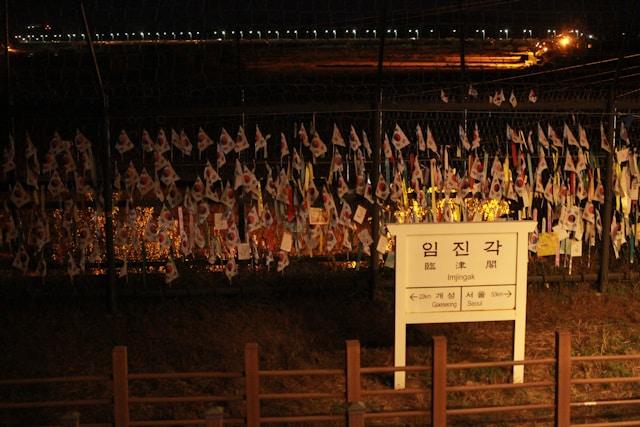
South Korean lawmakers urge Pope Leo XIV to visit North Korea during 2027 Seoul WYD, pitching it as a peace symbol for the divided peninsula.
Newsroom (22/10/2025, Gaudium Press ) In a bold diplomatic overture blending faith, geopolitics, and the aspirations of a divided nation, a delegation of South Korean lawmakers has urged Pope Leo XIV to extend his anticipated 2027 visit to Seoul for World Youth Day (WYD) across the heavily fortified border into North Korea. The proposal, delivered formally during high-level meetings at the Vatican this week, frames the papal trip as a potential “significant symbol” of peace on the Korean Peninsula—a region long scarred by the unresolved tensions of the 1950-1953 Korean War and decades of intermittent brinkmanship.
National Assembly Speaker Woo Won-shik, leading the delegation, handed a personal invitation letter to Cardinal Pietro Parolin, the Holy See’s Secretary of State, during an October 21 audience. “If the Pope’s visit to North Korea is realized during his trip to Seoul, it would be a very significant symbol for world peace and peace on the Korean Peninsula,” Woo declared, according to statements released by the South Korean parliamentary delegation.
The initiative builds on momentum from South Korean President Lee Jae-myung, who in July publicly floated the idea of Pope Leo crossing into the North during the WYD festivities. Lee’s Democratic Party administration, which assumed power earlier this year, has prioritized de-escalation with Pyongyang. Key gestures include suspending South Korea’s provocative loudspeaker broadcasts and leaflet drops targeting the North—practices that had escalated rhetorical warfare in recent years. In a reciprocal move, North Korea has ceased its own border broadcasts aimed at the South, signaling a fragile thaw in hostilities.
Echoes of Past Papal Diplomacy
The lawmakers’ Vatican visit evokes precedents from recent history. In 2018 and 2021, former President Moon Jae-in traveled to the Holy See to invite then-Pope Francis northward, receiving a cautious green light: Francis indicated he would go “if an official invitation came from the North.” No such invitation materialized amid deteriorating inter-Korean ties under Moon’s successor, Yoon Suk-yeol, whose hawkish stance gave way to Lee’s more conciliatory approach.
This week’s discussions occurred against the backdrop of preparations for WYD 2027, the triennial global gathering of Catholic youth established by Pope John Paul II in 1985. Drawing tens of thousands of pilgrims from around the world, the event in Seoul—where Pope Leo is slated to preside—presents a rare platform to spotlight the peninsula’s plight. The delegation, which included Democratic Party lawmaker Park Jeong, pressed Vatican officials on collaborative measures to ensure the event’s success while weaving in peace advocacy.
Cardinal Parolin, in his remarks, praised the “dynamic and vibrant” Korean Catholic community, which numbers over 5.8 million in the South alone—a robust 11% of the population. He hailed WYD as “an important occasion that the government and the Church must prepare together,” while voicing dismay over stalled dialogue between Seoul and Pyongyang. Parolin explicitly backed Lee’s “renewed efforts to resume talks,” a nod to the administration’s trust-building initiatives.
Symbolic Gestures and a Vision for Unity
Woo’s pitch extended beyond a papal border crossing. He spotlighted a proposed “human chain” event linking North and South Korea, envisioning it as a global emblem of reconciliation. “I hope this dream becomes reality, as it would be a precious event to thaw frozen hearts,” Woo said, invoking the emotional weight of a peninsula technically still at war under a 1953 armistice.
Park Jeong amplified the symbolism, casting the Demilitarized Zone (DMZ)—the world’s most heavily militarized frontier—as a “place yearning for peace” rather than perpetual division. She advocated hosting WYD’s closing Mass there, arguing it would powerfully convey messages of peace, climate action, and shared human challenges. “Holding the closing Mass of Seoul WYD here would symbolically express the message of peace, climate, and humanity’s common challenges,” she stated.
The delegation’s Vatican itinerary included a prior meeting on October 20 with Cardinal Lazarus You Heung-sik, a South Korean prelate serving as prefect of the Dicastery for the Clergy. You and Woo aligned on transforming WYD into a catalyst for peninsula-wide peace and global solidarity. “The Vatican chose ‘peace’ as WYD’s core theme as it recognized South Korea as the most suitable country to convey a message of peace to young people worldwide,” You emphasized, underscoring the event’s deliberate geopolitical framing.
Broader Implications for a Tense Peninsula
South Korea’s overtures come at a precarious moment. North Korea, under Kim Jong-un, has accelerated its nuclear and missile programs, conducting record test launches in recent years while deepening military ties with Russia amid the Ukraine conflict. Yet Pyongyang has shown flickers of openness to dialogue, including rare cross-border worker exchanges and cultural overtures. Lee’s government views the papal visit as a low-risk, high-impact bridge—leveraging the Vatican’s unique neutrality and moral authority, which has historically mediated flashpoints from Cuba to the Middle East.
Vatican watchers note Pope Leo XIV’s short tenure has emphasized interfaith dialogue and humanitarian outreach, making the proposal a natural fit. No official response has emerged from the Holy See or Pyongyang, but Parolin’s supportive tone suggests internal consideration. An official North Korean invitation remains the critical hurdle, as Francis once stipulated.
As preparations for WYD 2027 accelerate, the Seoul event looms as more than a youth festival: it could emerge as a fulcrum for diplomacy on one of Asia’s most volatile fault lines. For now, Woo’s delegation returns home with cautious optimism, their letter a seed planted in the fertile ground of faith and fragile hope. Whether it blossoms into a historic papal pilgrimage—or withers amid familiar impasse—will test the limits of symbolism in a world hungry for reconciliation.
- Raju Hasmukh with files from UCA News
Related Images: