















Vatican endorses Bishop Kennedy’s synodal plan for Maitland-Newcastle, restructuring diocese governance with councils, fostering collaboration and mission.
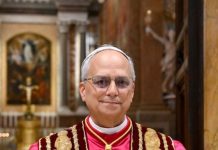
Newsroom (21/10/2025, Gaudium Press ) The Vatican’s General Secretariat of the Synod has formally recognized a pastoral plan by Bishop Michael Kennedy of Maitland-Newcastle, Australia, to restructure the diocese’s governance in a “synodal mode,” emphasizing collaboration, consultation, and shared decision-making. The Vatican’s synodal office highlighted the initiative on social media on Oct. 14, sharing Kennedy’s pastoral letter and commending its call for the faithful to “embrace this vision more fully” to foster a Church that listens, learns, and acts collectively in service of the Gospel.
A Four-Pronged Synodal Framework
Detailed in Kennedy’s “Letter on Synodality and the New Diocesan Governance Framework for the Diocese of Maitland-Newcastle,” the plan outlines reforms across four key areas to align the diocese with the principles of synodality, a process emphasizing communal discernment and participation.
First, a diocesan pastoral council will be established to guide the diocese’s synodal process by revitalizing its pastoral planning cycle, which has been on hold since the death of Bishop Bill Wright in 2021. Kennedy described the cycle as a mechanism for “significant synodal engagement” to shape the diocese’s future direction. “This will be a significant milestone in our synodal journey,” he wrote, while emphasizing that the journey is “ever ongoing.”
Second, the pastoral planning cycle will extend to the parish level, tailored to each community’s unique needs. Revised statutes for parish pastoral and finance councils, expected in 2025, will support this effort, Kennedy noted.
Third, the diocesan curia will undergo a restructuring to incorporate “structures of participation.” Kennedy underscored that the bishop’s governance must be “constitutional, follow the laws and customs of our Church, and be consultative (synodal),” involving the voices of relevant stakeholders before decisions are made. In some cases, he added, consent may be required before acting, though the letter does not specify when this would apply.
Finally, the plan calls for the creation of new advisory groups employing synodal methods. These include three civil councils—covering the bishop’s senior leadership, governance, and safeguarding—and four canonical councils, comprising a council of priests, pastoral council, college of consultors, and finance council. These groups will provide “critical discernment” to the bishop and diocesan trustees in their respective areas of expertise.
A Call for Community Involvement
Kennedy invited the faithful to contribute to the diocese’s mission, announcing that expressions of interest for advisory board and council roles will be sought in the coming months. “Whether your background is in pastoral life, education, social services, finance, governance, community leadership, or good plain commonsense problem-solving and decision-making,” he wrote, “your perspective can help us faithfully serve our communities into the future.”
The bishop concluded by promising further details about the advisory groups on the diocese’s website. He expressed gratitude for the community’s commitment and emphasized a shared journey “guided by the Holy Spirit” toward synodal listening, communion, and mission to spread the Gospel.
The recognition from the Vatican underscores the significance of Kennedy’s plan as a model for synodal governance, aligning with Pope Francis’ broader vision for a more participatory and inclusive Church.
- Raju Hasmukh with files from CNA
Related Images: