






















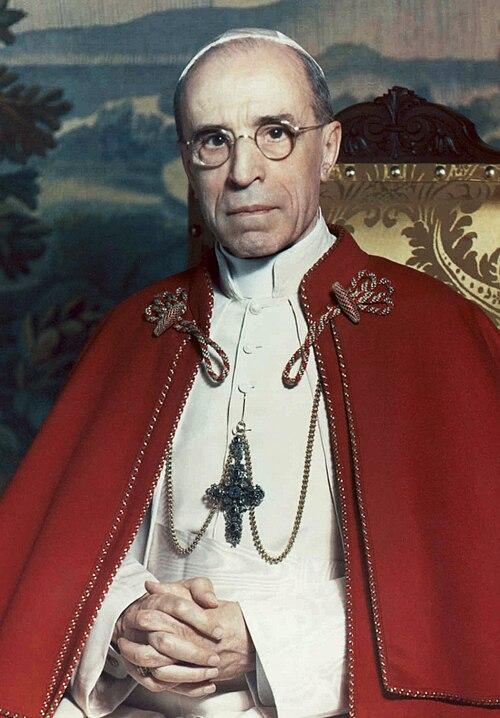
While Pius XII strengthened the Church’s global presence, he operated in an era of growing secularization, where mass media, including cinema, challenged ecclesiastical authority.
Newsroom (26/09/2025, Gaudium Press ) A conference held at the Casina Pio IV has shed new light on the intricate relationship between the Holy See and the film industry during the pontificate of Pope Pius XII (1939–1958). Titled “Cinema in the Global Pontificate of Pius XII: New Sources from the Vatican Archives,” the event marked a significant milestone in an ongoing historiographical study led by the Center for Catholicism and Audiovisual Studies (CAST) at the International Telematic University Uninettuno.
Monsignor Dario Edoardo Viganò, director of CAST, opened the conference, emphasizing the transformative impact of accessing Vatican archives opened in March 2020. “These archives allow us to explore Pius XII’s pontificate with greater depth,” Viganò stated. “Following his death, interpretations of his legacy have often been polarized—either sensationalized or overly judgmental. Examining cinema through these new archival sources offers a more nuanced understanding of a pontificate frequently misunderstood.”
A Paradox of Influence
Viganò highlighted a central paradox: while Pius XII strengthened the Church’s global presence, he operated in an era of growing secularization, where mass media, including cinema, challenged ecclesiastical authority. The conference, attended by scholars from institutions such as the University of Milan, Uninettuno, and the Suor Orsola Benincasa Institute, explored how cinema served as both a cultural force and a tool for evangelization during this period.
Cinema as a Historical Lens
The morning session focused on institutional dynamics, with particular attention to the Holy See’s interactions with the Italian government. Archival documents revealed insights into the relationship between the Vatican’s Secretariat of State and key Italian figures, such as Giulio Andreotti and Oscar Luigi Scalfaro, who led the General Directorate of Entertainment during Pius XII’s era. “At the time, cinema was seen as a potential instrument for evangelization,” Viganò noted, underscoring its strategic importance.
Church, Cinema, and Cultural Tensions
Tomaso Subini, principal investigator of a National Interest Research Project (PRIN) at the University of Milan, addressed the inherent tensions in the Church-cinema relationship. “The Church viewed cinema as a powerful social force, capable of shaping or challenging moral values and societal norms,” Subini explained. This perspective often placed the Church at odds with an industry navigating the complexities of a rapidly modernizing world.
The conference represents a pivotal step in reframing Pius XII’s pontificate, leveraging cinema as a lens to explore the interplay of faith, culture, and global influence in the mid-20th century.
- Raju Hasmukh with files from Vatican News
Related Images: