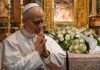



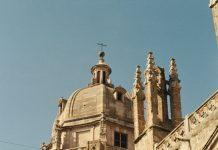



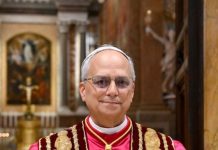














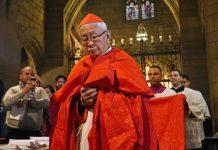


Vatican officials, archaeologists, and historians gathered to mark the restoration of the tomb of St. Eusebius, a fourth-century pope, in the Catacombs of St. Callixtus
Newsroom (06/06/2025 11:26 , Gaudium Press) On June 4, 2025, Vatican officials, archaeologists, and historians gathered to mark the restoration of the tomb of St. Eusebius, a fourth-century pope, in the Catacombs of St. Callixtus, located near the start of Rome’s historic Appian Way. This ancient underground cemetery, one of the earliest known in the city, houses the remains of early Christian believers, popes, and martyrs, offering a profound glimpse into the roots of the Roman Church.
A Sacred Space Restored
The tomb of St. Eusebius, who served as pope for just four months before his exile to Sicily by Emperor Maxentius, occupies a rare spacious chamber within the cramped network of the Catacombs of St. Callixtus. Adorned with marble, mosaics, and red-and-blue geometric vault paintings, the crypt features a high wall with an opening for natural light and a large marble slab inscribed with an epitaph praising Eusebius’ goodness and mercy. The restoration, initiated in 2023 by the Pontifical Commission for Sacred Archaeology, meticulously repaired the effects of time, reconstructing the tomb’s original appearance.
Cardinal Pietro Parolin, Vatican Secretary of State, spoke at the event, emphasizing the tomb’s historical significance. “This most recent restoration reflects the desire to safeguard and promote the ancient memories of the witnesses to the faith,” he said, noting its connection to a “particularly sensitive and difficult” period in the Roman Church’s history.
St. Eusebius and the Controversy of the Lapsi
Eusebius’ brief papacy was marked by a divisive debate over the “lapsi,” Christians who renounced their faith under persecution but sought to return to the Church. Eusebius advocated forgiveness for repentant lapsi, aligning with Christ’s teachings, while his rival, Heraclius, elected as an anti-pope, argued against their reintegration. This conflict sparked unrest in Rome, prompting Emperor Maxentius to exile both leaders. Eusebius’ legacy of mercy endures, reflected in the reverence for his restored tomb.

The Catacombs of St. Callixtus: A Christian Legacy
Discovered in 1844 by Giovanni Battista de Rossi, a 22-year-old archaeologist walking the Appian Way with his brother, the Catacombs of St. Callixtus are a testament to early Christian devotion. The complex, managed by the Pontifical Commission for Sacred Archaeology since its establishment by Pope Pius IX in 1852, contains the burial sites of nine popes and eight bishops, earning the nickname “little Vatican” from de Rossi in 1854. Among the notable figures interred is St. Cecilia, the patron saint of music, whose remains were later moved to a basilica in 821 to protect them from invaders. A replica of Stefano Maderno’s statue of Cecilia now marks her original burial site.
The catacombs’ labyrinthine corridors are lined with symbols from the Hebrew Bible and New Testament, illustrating Christian beliefs, particularly the hope of Resurrection. Graffiti from early pilgrims and remnants of small oil lamps used to navigate the dark passages offer a tangible connection to the faith of the first Christians.
Preserving a Window to the Past
The restoration of St. Eusebius’ tomb underscores the Vatican’s commitment to preserving its early Christian heritage. The project, detailed in recent posts on X and Vatican News, highlights the ongoing work of the Pontifical Commission for Sacred Archaeology to protect these sacred sites. As Cardinal Parolin noted, the effort ensures that the “witnesses to the faith” continue to inspire future generations, connecting modern believers to the trials and triumphs of the early Church.
Raju Hasmukh with files from Vatican News, June 4, 2025; Posts on X, June 2025; Pontifical Commission for Sacred Archaeology Archives; RNS
Related Images: