












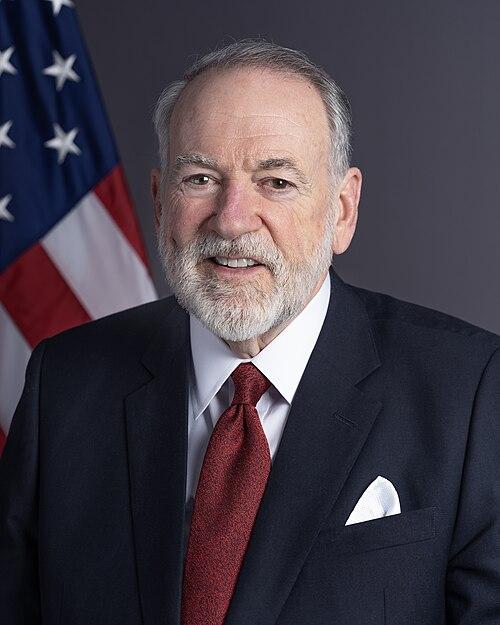
U.S. Ambassador Mike Huckabee’s reply to Holy Land church leaders’ critique of Christian Zionism raises diplomacy and theology questions.
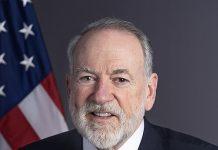
Newsroom (21/01/2026 Gaudium Press ) When U.S. Ambassador to Israel Mike Huckabee took to social media on Tuesday to respond to a letter from the patriarchs of the Churches in the Holy Land, the move marked an unusually pointed intersection of diplomacy, religion, and theology. The ambassador’s statement came in direct response to a collective message from Christian leaders representing the region’s ancient communities—an exchange that has since ignited debate across both political and religious circles.
Appointed ambassador in April of last year, Huckabee is a well-known evangelical and ordained Southern Baptist minister, adding complexity to his dual roles as a diplomat and faith leader. In his post, Huckabee expressed respect for the patriarchs of the traditional liturgical churches but firmly rejected their claim to represent Christians universally.
“I love my brothers and sisters in Christ from traditional, liturgical churches and respect their views,” Huckabee stated. “But I do not feel any sect of the Christian faith should claim exclusivity in speaking for Christians worldwide.”
The ambassador went further, offering an explicitly theological defense of what he called “Christian Zionism.” Identifying himself as an adherent, he voiced confusion at the idea that any Christian might reject it. The ambassador described the belief as central to his understanding of scripture, drawing on the biblical covenant between God and the patriarchs Abraham, Isaac, and Jacob.
“Labels such as ‘Christian Zionism’ are too often used in a pejorative manner to disparage free-church believers, of which there are millions across the planet,” Huckabee wrote. “Christians are followers of Christ, and a Zionist simply accepts that the Jewish people have a right to live in their ancient, indigenous, and Biblical homeland.”
Christian Zionism, a deeply rooted current within U.S. evangelical thought, often associates the modern state of Israel with biblical prophecy and divine promise. The movement’s theological framework is typically “dispensationalist,” a 19th-century schema dividing history into successive ages in which God’s relationship with humanity changes in form and condition. Despite its prominence among evangelicals, the ideology remains controversial—especially in the Middle East, where Christian communities trace their heritage to the earliest days of the faith.
Huckabee’s assertions have triggered questions about how his personal religious convictions might influence his diplomatic role. As an ambassador whose mandate is to represent U.S. policy, his engagement with religious controversy in Israel has prompted observers to wonder whether those remarks signal an official stance or an individual theological defense.
The debate was sparked by a statement issued by the patriarchs of Jerusalem’s historic churches on January 18. Representing the Latin, Maronite, Melkite, Syrian, and Armenian Catholic patriarchs, alongside the Armenian Apostolic, Coptic, Greek Orthodox, Lutheran, and Anglican leaders, the letter condemned Christian Zionism as a “damaging ideology.”
The patriarchs expressed concern over “local individuals” who, they alleged, “mislead the public, sow confusion, and harm the unity of our flock.” They accused those actors of being welcomed “at official levels both locally and internationally,” warning that such actions interfere in the internal life of the churches. Their statement insisted on their exclusive authority to represent their communities in “Christian religious, communal, and pastoral life in the Holy Land.”
Huckabee’s social media response included a digital reproduction of the patriarchs’ full statement, which he framed as being from “non-evangelical churches in Israel.” His decision to engage so directly with ecclesiastical authorities has underscored growing divisions within global Christianity over how theology, politics, and diplomacy converge in the Holy Land.
As theologians and policy analysts parse Huckabee’s remarks, one question looms: where does the ambassador’s religious conviction end and his official diplomatic duty begin?
- Raju Hasmukh with files from Crux Now
Related Images: