









Vatican’s Cardinal Parolin declares Kuwait’s Our Lady of Arabia Church a Minor Basilica, marking a milestone for Christianity in the Gulf.
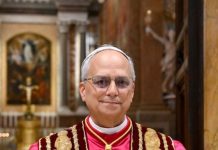
Newsroom (16/01/2026 Gaudium Press ) On a bright Friday morning in Kuwait, history was made amid the desert sands. The Vatican’s Secretary of State, Cardinal Pietro Parolin, presided over Mass at Our Lady of Arabia Church in Ahmadi, marking its elevation to the rank of Minor Basilica. It is the first church in Kuwait to receive this honor, a moment the Cardinal described as “truly historic,” not just for local Catholics, but “for the Church throughout the entire Arabian Peninsula.”
From Chapel to Basilica
The story of Our Lady of Arabia began in 1948, when a small group of Catholic oil workers—then new arrivals in Kuwait—built a modest chapel in the developing city of Al-Ahmadi. It was a small spiritual outpost in a desert country undergoing immense change, as the discovery of oil transformed the region into an international hub.
Within a few years, the chapel gave way to a permanent church. Its cornerstone feature was an image of the Blessed Virgin Mary, blessed by the Pope himself. Dedicated to Our Lady of Arabia, the church quickly matured into a central symbol of faith for a growing community of migrant Catholics drawn from across the world to Kuwait’s booming oil sector.
A Desert Sanctuary
Today, that same church stands not just as a local parish but as a spiritual sanctuary woven into the heart of Kuwait’s religious diversity. During the solemn celebration, Cardinal Parolin reminded the congregation that this desert church mirrors Mary’s own experience of refuge. “Built upon the sands of the desert,” he said, “this Basilica reminds us that Mary herself once found refuge in those same desert lands, where she cared for, raised, and safeguarded the one Mediator between God and the human family, Jesus Christ.”
The congregation assembled for the momentous Mass included local Catholics, dignitaries, government officials, diplomats, and representatives of the Kuwait Oil Company—a testament to the church’s long history of engagement with the nation’s development.
A Reflection on Faith
Reflecting on the day’s Gospel, Cardinal Parolin spoke on Jesus’s question to His disciples: “Who do people say that the Son of Man is?” In light of the recently concluded Christmas season, the Cardinal emphasized that recognizing Jesus’s divine identity remains central to the Christian faith. “We cannot welcome the Child Jesus into our homes,” he said, “unless we recognize His true identity and all that it implies.”
Believers, the Cardinal urged, are called to bear witness to Jesus Christ as “true God and true man”—a message resonant for Christians striving to live out their faith in places where it is often expressed quietly, yet with deep conviction.
The Christian Presence in Kuwait
Christians now comprise roughly 20% of Kuwait’s population, though nearly all are migrants without citizenship. Their presence reflects the broader reality of Christianity in the Gulf, where faith takes root among transient communities of foreign workers. Among the Gulf states, only Kuwait and Bahrain include a small number of Christian citizens, many descended from families originally from Lebanon, Palestine, and other parts of the Middle East.
Despite being a faith practiced largely by expatriates, Christianity in Kuwait has contributed quietly yet meaningfully to the nation’s cultural fabric—offering spiritual refuge, social support, and community to thousands who live and work far from home.
Entrusting Kuwait to Mary
As the Mass drew to a close, Cardinal Parolin entrusted Kuwait and its people to the protection of the Virgin Mary under her title as Our Lady of Arabia, “Patroness of the entire Peninsula that bears her name.” With heartfelt prayer, he invoked her intercession: “May she guide us always to her Son. To her I entrust the protection of the State of Kuwait, its citizens, and all Christians.”
With that, the Cardinal sealed a moment that resonated far beyond Ahmadi—the recognition of a church built by migrants 75 years ago, now standing as a Minor Basilica in the heart of the Arabian desert. A church that began as a small chapel for oil workers now shines as a beacon of peace and faith for the region.
- Raju Hasmukh with files from Vatican News
Related Images: