
























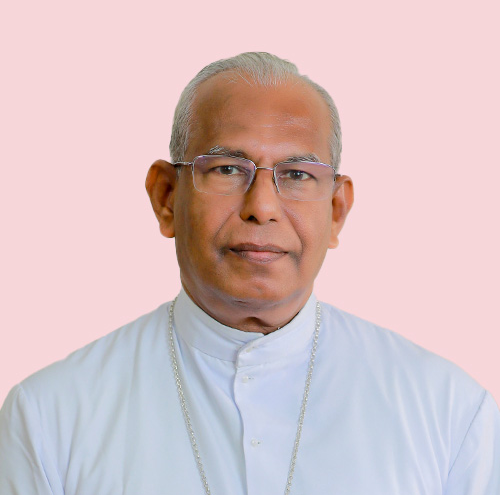
India’s top Catholic bishop seeks police action after cybercriminals impersonate him, exposing rising digital fraud and online identity threats.
Newsroom (27/01/2026 Gaudium Press ) As India faces a surge in cybercrime and online fraud, Archbishop Andrews Thazhath, president of the Catholic Bishops’ Conference of India (CBCI), has called on law enforcement to act against cybercriminals allegedly posing as him to solicit money and sensitive information from clergy and the public.
The complaint, filed on January 23 with the Thrissur City Police in Kerala, details a disturbing pattern of digital impersonation. According to the archbishop, unidentified individuals created fake online profiles using his photograph and title, reaching out to priests, seminarians, religious figures, politicians, and laypeople across multiple platforms. The impostors, he said, pretended either to be Archbishop Thazhath himself or high-ranking CBCI officials such as secretary general or heads of church commissions.
“The nature and intent of these communications vary,” Archbishop Thazhath explained in his statement. “Some ask for OTP numbers sent to mobile phones, while others invite clergy to video conferences under the pretext of church discussions. In some cases, they even request financial assistance in the name of the CBCI.”
He firmly denied authorizing any such calls, messages, or financial solicitations, describing the incidents as attempts at “deliberate impersonation and deception.” The archbishop warned that the fraudulent activity not only threatened his personal reputation and institutional credibility but also jeopardized the security and privacy of those targeted.
To support his complaint, Archbishop Thazhath provided screenshots of suspected messages and call logs as evidence. He urged the police to launch a “detailed investigation” to trace those behind the scams and to take swift legal action to prevent further misuse of his identity.
“This is a very serious matter and it needs a detailed police probe to identify those behind it,” said Father Robison Rodrigues, spokesperson for the CBCI. He confirmed that, as of January 26, no confirmed cases of financial loss had been reported, but cautioned clergy and parishioners to verify all communications purportedly from church leaders or CBCI offices before responding.
A Growing National Concern
The case underscores India’s mounting struggle with cyber threats amid its rapid digital expansion. According to the federal cybercrime data, reported cybersecurity incidents in India more than doubled from 1.029 million in 2022 to 2.268 million by 2024. Experts warn that the number reflects only a fraction of the actual attacks, as many victims, especially private individuals and smaller institutions, fail to report cases.
Figures from the Indian Cyber Crime Coordination Centre further underline the scale of financial damage. The country recorded annual cyber theft losses surpassing US$1 million in recent years, with cumulative losses exceeding $6 billion in the six years leading up to 2026.
Authorities have repeatedly emphasized the rising complexity and scope of digital crimes, linking the surge to India’s deepening internet penetration. More than 86 percent of Indian households now have internet access—a massive increase driven by affordable mobile connectivity and the government’s push for digital inclusion.
Faith and Technology at a Crossroads
The misuse of Archbishop Thazhath’s digital identity is part of a broader global trend in which religious institutions—often trusted voices in communities—have become targets for cybercriminals. Experts say impersonating religious leaders can yield high emotional leverage, making victims more likely to trust appeals for help or financial support.
For India’s Catholic Church, the incident also raises questions about data security and online awareness in faith-based organizations that rely increasingly on digital communication. As Father Rodrigues noted, the CBCI’s immediate focus is on education and vigilance, ensuring its members verify the authenticity of any digital correspondence before taking action.
“This episode, while unfortunate, is also a wake-up call,” said a CBCI official privately. “Cybersecurity isn’t just a technical issue—it’s about protecting trust.”
As law enforcement begins its probe in Kerala, the case of Archbishop Thazhath stands as a telling illustration of the new frontier of crime in India: one where faith, technology, and fraud now intersect in dangerous and complex ways.
- Raju Hasmukh with files from UCA News
Related Images: