












Tokyo archbishop condemns Trump’s plan to resume U.S. nuclear testing, citing Russia’s hypersonic weapons and Japan’s WWII atomic scars. Calls for peace.
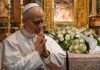
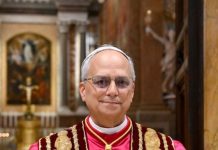
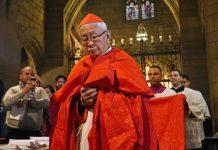
Newsroom (05/11/2025, Gaudium Press ) Cardinal Tarcisio Isao Kikuchi, the archbishop of Tokyo, expressed profound unease on Wednesday over U.S. President Donald Trump’s recent announcement to restart nuclear weapons testing, a move that could reverse decades of global disarmament efforts and heighten tensions with Russia amid its advancements in hypersonic and nuclear-powered weaponry.
Kikuchi, speaking from the capital of Japan—the only nation to suffer atomic bombings during World War II—told Crux that he found Trump’s rationale “regrettable,” as it appeared to counter international pushes for peace. “Although the details remain unclear, it has been reported that he justified this decision by saying, ‘other countries are doing it, so the U.S. will, too.’ This reasoning runs counter to the global trend toward nuclear disarmament and peace,” the cardinal said.
The United States has not conducted a nuclear test since 1992, adhering to a moratorium that has been a cornerstone of post-Cold War arms control. Trump’s comments, aired during a Nov. 2 interview on CBS News’s 60 Minutes, emphasized the need for testing to ensure weapon reliability. “You know, you do have to — and the reason I’m saying — testing is because Russia announced that they were going to be doing a test. If you notice, North Korea’s testing constantly. Other countries are testing. We’re the only country that doesn’t test, and I want to be— I don’t want to be the only country that doesn’t test,” he stated. Trump added that Russia and China were testing covertly, contrasting with America’s “open society.”
Trump’s reference to Russian activities comes as Moscow continues to develop and test advanced nuclear delivery systems, including hypersonic weapons that challenge traditional defense mechanisms. Among these are three key hypersonic platforms: the Avangard, a glide vehicle launched from intercontinental ballistic missiles (ICBMs) like the RS-28 Sarmat, capable of maneuvering at speeds exceeding Mach 5 to evade interception; the Kinzhal (Kh-47M2), an air-launched ballistic missile with a range of 460-480 kilometers and a top speed of Mach 10, deployed from aircraft like the MiG-31 and used in conflicts such as Ukraine; and the Tsirkon (Zircon), a ship-launched cruise missile reaching Mach 9 with a 1,000-kilometer range, operational since 2023 and recently fired during the Zapad 2025 military drills in September.
Russia’s arsenal also features two nuclear-powered systems: the Burevestnik (known in the West as Skyfall), a ground-launched cruise missile with theoretically unlimited range due to its nuclear propulsion, recently hailed by President Vladimir Putin who awarded its developers on Nov. 4 for successful tests; and the Poseidon, an underwater drone torpedo with a range exceeding 6,000 miles, designed to trigger radioactive tsunamis against coastal targets and tested as recently as Oct. 28 from submarines like the newly launched Khabarovsk. These systems, unveiled by Putin, are part of Russia’s “superweapons” initiative, though experts debate their strategic impact amid ongoing U.S.-Russia arms talks.
Japan’s historical scars from nuclear warfare amplify Kikuchi’s concerns. The U.S. dropped atomic bombs on Hiroshima on Aug. 6, 1945, and Nagasaki three days later, killing between 150,000 and 250,000 people, mostly civilians. American officials at the time argued the attacks hastened the end of World War II, averting greater losses from prolonged conventional fighting.
Echoing Catholic teachings, Kikuchi invoked the Church’s longstanding call for disarmament. “As the Catholic Church has long emphasized — as the appeal of Pope Leo — our ultimate goal should not only be the abolition of nuclear weapons, but the elimination of all weapons,” he said. “Some may call this a dream, but we must continue to call for peace through nonviolence. True peace, which is the realization of the order of God, could not be achieved by force but only by mutual understanding, dialogue and care for each other.”
Trump’s Oct. 27-29 visit to Japan, during which he highlighted the “beautiful friendship” between the two nations, offered a glimmer of optimism for Kikuchi. Following the trip, the cardinal met with U.S. officials who assured him of Trump’s desire for peace. “If that is true, I sincerely hope he will choose paths other than nuclear testing to demonstrate that commitment and lead the world toward genuine peace,” Kikuchi added.
As geopolitical rivalries intensify, with Russia’s recent tests underscoring the fragility of arms control treaties, Kikuchi’s plea underscores the human cost of escalation, urging dialogue over deterrence in a world still haunted by the shadows of 1945.
- Raju Hasmukh with files from Crux Now, CNN, Reuters, NY Times, Kremlin.ru, Newsweek, Washington Post
Related Images: