
















Amid unrest in Iran, the Vatican balances moral concern and careful diplomacy, reinforcing ties with Tehran while calling for peace in the Middle East.
Newsroom (29/01/2026 Gaudium Press) As tensions in Iran continue to escalate, the Holy See finds itself walking a fine line — maintaining a long-standing dialogue with Tehran while expressing concern over mounting repression and loss of life. On January 9, Iran’s ambassador to the Holy See, Mohammad Hossein Mokhtari, exchanged brief greetings with Pope Leo XIV during the traditional New Year meeting of the diplomatic corps. At that moment, the Vatican had yet to issue a formal statement on the turmoil unfolding across Iran.
The first unofficial but significant remark came ten days later from Cardinal Pietro Parolin, the Vatican’s secretary of state. Speaking during a celebration for the exposition of a relic of St. Pier Giorgio Frassati, Parolin expressed sorrow and disbelief, wondering aloud how a government could “attack its own people, to the point of causing so many deaths.” His words—carefully measured but unmistakable—carried more weight than a formal communiqué. While the Holy See traditionally avoids direct criticism of sovereign states, its humanitarian concern is evident, especially given reports suggesting that Iran’s death toll may far exceed official figures.
A Cardinal in Tehran
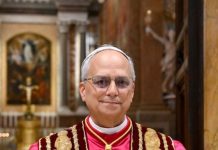
Despite the sensitivity of the political climate, the Vatican’s ties to Iran have deepened through symbolic and practical gestures. At the last consistory held on December 7, 2024, Pope Francis elevated the Belgian missionary Dominique Joseph Mathieu, the archbishop of Tehran-Isfahan, to the rank of cardinal. The appointment underscored the Vatican’s commitment to sustained dialogue with Iran and its recognition of the small but resilient Catholic presence there.
That dialogue had been reinforced just weeks earlier, on November 20, 2024, when Pope Francis addressed participants in the 12th Colloquium between the Dicastery for Interreligious Dialogue and Tehran’s Center for Interreligious and Intercultural Dialogue. He declared the Catholic Church in Iran a “little flock” dear to his heart, rejecting suggestions of antagonism toward the Iranian government.
The Holy See’s engagement with Iran is not new. In November 2023, Pope Francis spoke directly by phone with then-President Ebrahim Raisi—who later died in a helicopter crash in May 2024—to discuss the conflict in Gaza. The call, requested by Raisi himself, reflected Tehran’s appreciation for the Pope’s repeated pleas for a ceasefire. These discussions have been part of a broader Vatican effort to position itself as a moral and neutral mediator across the Middle East.
The Holy See’s Regional Outlook
The Vatican’s policy toward the Middle East rests on dialogue over confrontation. Its diplomacy has long emphasized coexistence, regional stability, and support for a two-state solution between Israel and Palestine. This message was reiterated by Archbishop Paul Richard Gallagher, Vatican foreign minister, in successive conversations with Iranian Foreign Minister Hossein Amir-Abdollahian in late 2023 — talks initiated by Tehran. Gallagher’s references to a two-state solution underscored a crucial Vatican principle: the recognition of Israel’s legitimacy as non-negotiable.
The Holy See has also expressed cautious optimism about the gradual thaw between Sunni and Shiite powers, notably between Saudi Arabia and Iran. In August 2024, Cardinal Parolin’s conversation with Iran’s new president, Masoud Pezeshkian, revisited this theme. The Vatican’s message was consistent: dialogue, negotiation, and peace must prevail to prevent the conflict from spreading across the region.
This pragmatic approach extends to the Vatican’s past endorsement of the Iran nuclear deal, seen not merely as a technical accord but as a model for mutual trust-building in the Middle East. When the U.S. withdrew from the deal in 2018, the Holy See voiced apprehension that isolating Iran could destabilize the already fragile region.
A Quiet but Enduring Relationship
Though at times strained, diplomatic relations between Tehran and the Vatican — established in 1966 — have grown steadily. Cooperation has flourished through official exchanges and cultural initiatives, including a 2014 translation of the Catechism of the Catholic Church into Farsi by the University of Religions and Confessions of Qom. Shared social and moral concerns — from the defense of family values to opposition against gender ideology and assisted reproduction — have provided common ground. Both sides also emphasize combating extremism and nurturing human fraternity, themes central to Pope Francis’s pontificate.
Even controversies, such as Iran’s 2021 refusal to renew a residence permit for a long-time missionary nun in Isfahan, have not seriously undermined the overall relationship. Historical moments, including Mahmoud Ahmadinejad’s 2006 letter to Pope Benedict XVI and successive high-level delegations, have cemented mutual respect.
A Balancing Act
For the Holy See, Iran’s importance transcends its borders. It is seen as a key interlocutor within Shiite Islam and a bridge to influential religious figures such as Grand Ayatollah al-Sistani, whom Pope Francis met in Iraq in 2021. This religious dimension complements a political one: maintaining open channels with Tehran is essential to preserving influence in a volatile region and protecting Christian minorities.
Thus, even as protests roil Iran and voices like Cardinal Parolin’s pierce the air with moral concern, the Holy See’s diplomatic posture remains steady. It seeks to accompany, not condemn; to mediate, not polarize. In the Vatican’s eyes, change in Iran must come through peace and persuasion—not public confrontation.
- Raju Hasmukh with files from NCR
Related Images: