

















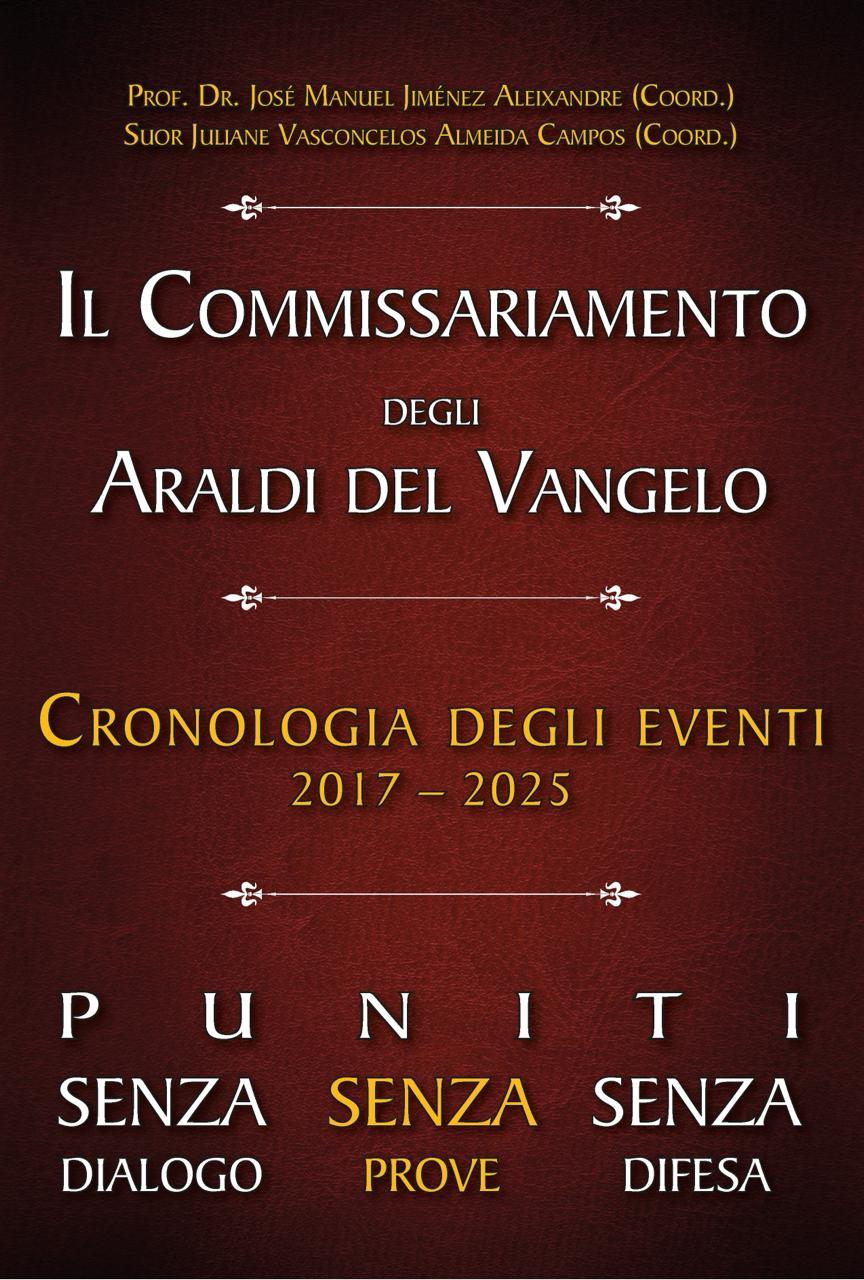
Andrea Gagliarducci, one of today’s most renowned Vatican analysts and a specialist in Vatican diplomacy, brings to light for public opinion a book published and organized by the canon lawyer Prof. Dr. José Manuel Jiménez Aleixandre and by the doctor of philosophy Sister Juliane Vasconcelos Almeida Campos, titled: The Commissariat of the Heralds of the Gospel: Chronicle of the Facts 2017–2025 – punished without dialogue, without evidence, without defense.
Newsroom (11-11-2025 Gaudiumpress) In a succinct review, Vatican analyst Andrea Gagliarducci highlights some key points of the intervention by the Dicastery headed by Cardinal João Braz de Aviz in what is one of the most “flourishing” associations of our time.
In the sharp view of this analyst, it is important to bring the case to public awareness as a classical example of how ideology, when placed above factual objectivity, can cause serious harm not only to the institution in question but to the Church itself. The Vaticanist implies that there are still useless divisions that wound the Church’s unity.
Gagliarducci sticks strictly to the facts:
-
As can be verified, the apostolic visitation had a favourable opinion toward the Heralds and yet the commissariat was still imposed.
-
The animosity of Cardinal Braz de Aviz is notorious, dating back to his time as bishop in Ponta Grossa, Brazil (the book brings details).
-
There is a vast documentary appendix proving the serious and unjust moral, financial, and spiritual harm suffered by the institution.
-
The Heralds are in a Kafka-style process, not even knowing what to defend themselves from before the Dicastery for Institutes of Consecrated Life and Societies of Apostolic Life.
It is true that more than 30 proceedings were opened against the institution. However, after an impartial reading of the robust documentary body prepared by the very commissariat and found in the book, one can see its artificiality: they were orchestrated—with the help, as the book shows, even of certain clergy—precisely to create what Gagliarducci calls a “media explosion.” I may add that there are reports of agents attempting to negatively influence the Pope on this matter, trying to mislead him regarding the truth of the facts. The renown Vaticanist mentions the issues of minors and supposed exorcisms. In any case, he repeatedly emphasizes, all procedures resulted in the Heralds’ favour.
Despite all this, the entire vocational process of the Heralds remains frozen by the Dicastery to this day: they cannot receive new members, and—even without any canonical impediment—there have been no diaconal or priestly ordinations since 2019, depriving the Church of at least a hundred new priests. Who, after all, are the victims?
Given this panorama, Andrea Gagliarducci wonders how Pope Leo XIV will respond to this case, so important for the Church, especially in Brazil. His gestures in pursuit of justice and truth are, so far, auspicious. All that remains is to confirm his brethren (cf. Lk 22:32).
by Rafael Tavares
_______________________
Next, we reproduce Andrea Gagliarducci’s post, taken from the original Italian Version and translated by Gaudium Press English Edition:
Among the legacies of Pope Francis’ pontificate, there is also a matter that remained suspended and that foresees an indefinitely delayed intervention due to accusations never truly proven—even in the cases where civil proceedings (30 in total) were initiated, they always ended in dismissal or acquittal of the accused individuals.
This case is reported in a detailed book, composed one-third of original documents, titled The Commissariat of the Heralds of the Gospel – Chronology of the Facts 2017–2025, recently released in Italian (note: the original is in Portuguese and there is also a Spanish translation). Written by José Manuel Jiménez Aleixandre and Sister Juliane Vasconcelos Almeida Campos, both from the Heralds of the Gospel, the book details in over 700 pages the entire history of the Heralds starting with the decision to impose a commissariat in 2019 after an apostolic visitation begun in 2017.
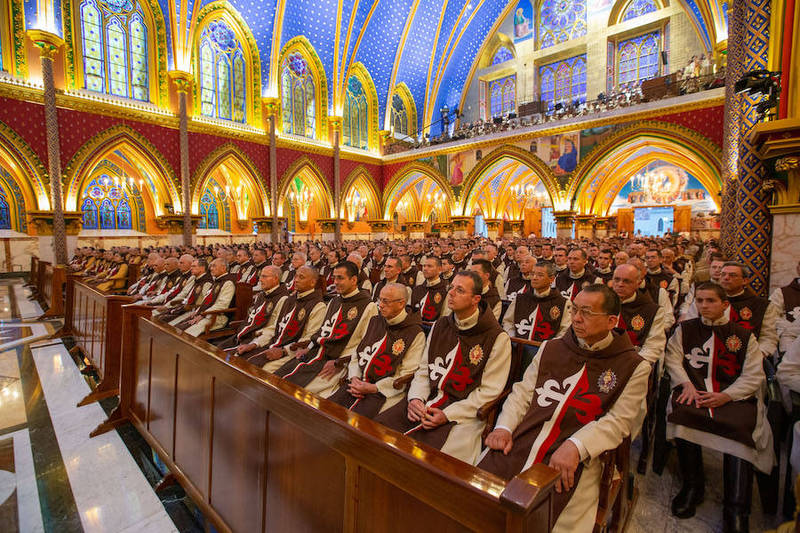
The visitation and later the commissariat affected one of the most prosperous religious congregations, active in 78 countries and with a mission to promote culture and a civilization of love, which pleased John Paul II so much that the Heralds became the first association of the faithful erected by the Holy See in the new millennium.
Why speak about the Heralds of the Gospel today?
Because, first of all, their case seems representative of several others during Pope Francis’ pontificate. The most recent, Sodalitium Christianae Vitae, saw its suppression by Pope Francis on his deathbed. Already in 2024, Cardinal Carlos Castillo Mattasoglio, Archbishop of Lima, had written an article in El País calling for its suppression.
The Sodalitium case marked a reversal in the Holy See’s practice: even when grave abuses occurred by founders—such as Maciel of the Legionaries of Christ—the Holy See generally chose to reform the congregation and preserve its fruits.
But in Latin America, the situation has become so polarized that ideology clouds reality. Errors and sins are mixed in such a way that every decision becomes political, further feeding the progressive vs. conservative narrative, now deeply internalized among the faithful.
This is especially true considering that the Dicastery during the period was led by a Brazilian cardinal, João Braz de Aviz, who had not had positive experiences with the Heralds during his episcopacy in Brazil and found himself in antagonistic positions.
The Heralds, however, have no proven abuses to this day. The persistence might be justified by the number of accusations—but if nothing is proven in court, why continue the attack?
The case also resembles, mutatis mutandis, the Vatican’s Becciu trial regarding financial mismanagement in the Secretariat of State. In both, many decisions seem arbitrary, accusations biased, and narratives constructed with intent to harm.
Finally, the Heralds’ case reflects many recent Vatican processes where the accused are placed at the center of a media storm before they even have a chance to defend themselves—a Kafka-style scenario.
The book, it must be said, was written by two members of the Heralds. However, the documentary apparatus—letters, communications, and exact words from the Dicastery—deserves impartial examination to grasp the situation.
Requests to change the nature of the association from private to public are interpreted as attempts to seize the association’s assets.
It’s worth noting: the 2017 apostolic visitation had definitively positive results. Yet the Dicastery still placed them under guardianship.
There have been many accusations:
– That the Heralds disobeyed the order to exclude minors. In reality, all the families of those minors—shocked and hurt—chose to keep their children in a healthy and Catholic environment.
– That exorcisms were performed without diocesan authorization. In fact, they were “healing prayers”, a type of charismatic exorcism clarified by the local bishop.
Above all, more than 30 civil and canonical accusations have ended in favour of the Heralds, as confirmed by the very commission appointed by the Holy See.
It’s alarming that the Heralds say they were never told the reasons for the visitation or for the commissariat. Cardinal Raymundo Damasceno Assis, the commissioner, was never properly received, and the bishop of Bragança Paulista, whose diocese includes many Herald houses, was never consulted.
From a flourishing reality, the Heralds have, since 2019, been unable to ordain priests or deacons (despite no canonical impediment), are blocked from opening new houses, and cannot receive new members. Everything is frozen in a process that seems endless.
What will Pope Leo XIV do now?
That is the question that remains.
Will he also listen to the Heralds’ side? Will he allow them to defend themselves? Or will he make a decision based solely on Dicastery reports and filtered information?
This book is necessary reading—because it is only fair to read the documents and hear the other side. We must leave behind ideological prejudice and discern whether the Heralds must address internal issues, or whether, rather, the accusations have no real basis.
This balance is today the Church’s most difficult task. Yet it is necessary to move beyond antagonism and into a season of communion.
Andrea Gagliarducci, Vatican Reporting
Compiled by Gus Kralj
Related Images: