




















Talitha Kum, derived from the Aramaic phrase meaning “Little girl, arise” (Mark 5:41), embodies a mission of restoration and empowerment.
Newsroom (18/09/2025, Gaudium Press ) As the streets of Jakarta pulsed with massive demonstrations, a quieter but no less urgent gathering unfolded in the city’s heart. The 5th Talitha Kum Asia Conference, held in late August 2025, brought together religious leaders, activists, and youth from 16 Asian nations to confront what Pope Francis has called “a deep wound in the body of contemporary society, a crime against humanity”: human trafficking. Against the backdrop of Indonesia’s social unrest, the conference, organized by Talitha Kum—an international network of religious women founded in 2009 under the International Union of Superiors General (UISG)—served as a clarion call for action, collaboration, and hope.
A Sacred Beginning Amid Symbolism
The conference opened with a solemn Mass led by Fr. Agustinus Heri Wibowo, head of the Justice and Peace Commission of the Archdiocese of Jakarta. The liturgy set a reflective tone, emphasizing the spiritual imperative to combat modern slavery. Following the Mass, participants were greeted by a vibrant performance of traditional Betawi dance, a nod to Indonesia’s rich cultural heritage. A procession of symbols—each representing resistance to human trafficking—underscored the gathering’s purpose: to affirm human dignity and reject the commodification of people.
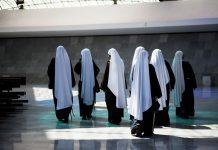
Talitha Kum, derived from the Aramaic phrase meaning “Little girl, arise” (Mark 5:41), embodies a mission of restoration and empowerment. Since its inception, the network has worked tirelessly to combat human trafficking through service, awareness-raising, and survivor empowerment. The Jakarta conference, attended by coordinators, religious leaders, and Youth Ambassadors—young advocates dedicated to prevention—marked a pivotal moment for the network’s Asian chapter.
Leadership and Vision
Sr. Paula Kwandao Phonprasertruksa, a Thai nun of the Sisters of Saint Paul de Chartres and coordinator of Talitha Kum Asia, outlined the conference’s ambitious goals. She emphasized strengthening regional collaboration networks, embracing the spirit of the Jubilee Year—a Catholic tradition of renewal and reconciliation—and engaging younger generations in the fight against trafficking. “This is a call to awaken hope and action,” Sr. Paula declared, urging participants to build bridges across communities and faiths.
Sr. Abby Avelino, a Filipino Maryknoll nun and the international coordinator of Talitha Kum, echoed this urgency. “Human trafficking thrives when people are treated as commodities,” she said. “Our work is to restore their dignity and amplify their voices.” Her words resonated deeply as delegates shared harrowing accounts of trafficking’s impact across Asia, from forced labor in supply chains to sexual exploitation facilitated by digital platforms.
Emerging Challenges in a Changing World
The conference provided a platform for delegates to discuss the evolving landscape of human trafficking. They identified three pressing challenges: the misuse of digital platforms, the climate crisis, and forced migration. Social media and online marketplaces, while powerful tools for connectivity, have become hunting grounds for traffickers who exploit vulnerable populations. The climate crisis, driving displacement and economic instability, has further heightened risks, particularly for women and children. Forced migration, often fueled by conflict or economic desperation, leaves millions susceptible to exploitation.
The Youth Ambassadors program emerged as a beacon of hope in this grim context. By engaging young people in prevention efforts, the program has gained traction globally, with ambassadors leading grassroots campaigns to educate peers and communities. Their work, delegates agreed, is critical to dismantling the cultural and systemic factors that enable trafficking.
A Roadmap for Change
The conference crystallized three priorities for Talitha Kum’s Asian network. First, systemic change is essential to address root causes such as inequality, labor exploitation, conflict, and forced migration. Delegates called for policies that tackle these structural issues while promoting economic justice and human rights. Second, survivor empowerment was highlighted as a cornerstone of the network’s mission. By equipping survivors with tools to rebuild their lives and become leaders, Talitha Kum aims to transform victims into advocates for change. Finally, interfaith collaboration and networking were deemed vital. By uniting young people, local organizations, governments, and faith communities, the network seeks to create a united front against trafficking.
These priorities were not merely theoretical. Survivors shared powerful testimonies, offering firsthand insights into the horrors of trafficking and the resilience required to overcome it. These stories, coupled with listening sessions with local Jakarta communities, grounded the conference in lived realities. The Youth Ambassadors also organized an interfaith meeting with Jakarta’s young leaders, drafting actionable prevention plans tailored to their home countries.
A Call to Action and Celebration
The conference culminated in a Mass of thanksgiving presided over by Cardinal Ignatius Suharyo, Archbishop of Jakarta, who urged participants to carry their renewed commitment back to their communities. The closing event, a joyful cultural evening, celebrated Asia’s diversity while reinforcing the shared resolve to end human trafficking.
As participants departed Jakarta, they carried with them a three-year regional plan to strengthen Talitha Kum’s efforts across Asia. This roadmap, developed through collaborative workshops, emphasizes prevention, survivor support, and advocacy. For the Youth Ambassadors, the conference was a catalyst, inspiring them to lead with compassion and creativity in their local contexts.
A Persistent Hope
The 5th Talitha Kum Asia Conference was more than a gathering; it was a testament to the power of collective action in the face of one of humanity’s gravest injustices. Amid Indonesia’s turbulent protests, the delegates’ work stood as a quiet revolution—a movement rooted in compassion, fortified by collaboration, and driven by an unwavering commitment to dignity. As Sr. Paula poignantly stated, “We are called to be the hands that lift up the fallen, the voices that speak for the silenced.” For Talitha Kum and its allies, that call resonates far beyond Jakarta, echoing across Asia and the world.
- Raju Hasmukh with files from Asianews.it
Related Images: