

















SC confirms Christian officer’s dismissal for skipping temple puja. On Constitution Day, Bombay Bishop Savio Fernandes denounces anti-conversion laws as tools of minority persecution.
Newsroom (26/11/2025 Gaudium Press ) India’s Supreme Court on Tuesday upheld the Indian Army’s dismissal of Lieutenant Colonel Samuel Kamalesan, a Christian officer punished for refusing to enter the garbhagriha (sanctum sanctorum) of his regiment’s temple to participate in a Hindu puja ritual. The bench, headed by Justice Surya Kant, ruled that the officer’s actions constituted “the most serious form of indiscipline” that undermined unit cohesion.
“Kamalesan used a personal interpretation of his faith to violate military discipline,” Justice Kant observed during the hearing. The court held that Article 25 of the Constitution, which guarantees freedom of religion, protects only “essential” religious practices and does not extend to every individual sentiment, especially when it conflicts with military obligations.
Additional Solicitor General Aishwarya Bhati, appearing for the Army, informed the court that Kamalesan had repeatedly absented himself from parades and mandatory religious ceremonies despite counselling by superior officers. The Delhi High Court had in May 2025 already rejected Kamalesan’s plea, stating he had “placed his religion before a legitimate order” in violation of military ethics.
Kamalesan’s counsel, senior advocate Gopal Sankaranarayanan, argued that the right to religious freedom cannot be suspended merely because a citizen wears a uniform. The officer himself maintained that bonds among soldiers are forged through “mutual respect, patriotism, and shared life,” not compulsory religious rituals.
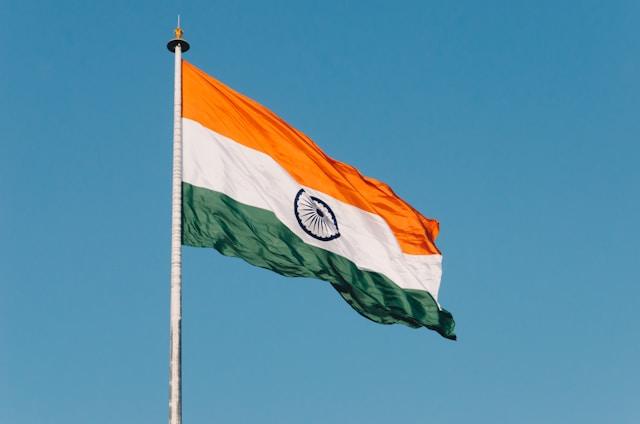
The verdict coincided with India’s 76th Constitution Day, prompting sharp criticism from Catholic Church leaders who linked the case to a broader pattern of pressure on religious minorities.
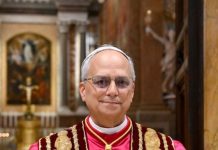
In a strongly worded statement released on Tuesday, Auxiliary Bishop Savio Fernandes of Bombay described anti-conversion laws—enacted in at least eleven states and pending in Maharashtra—as “swords against conscience” that “subvert justice, presuppose guilt, and criminalise compassion.”
“These so-called Freedom of Religion Acts are not shields of freedom; they have become instruments of persecution,” Bishop Fernandes said. “They authorise third-party complaints, encourage vigilante violence, and leave the accused to prove their innocence while false accusers walk free.”
The prelate cited the July 25, 2025 incident in Durg, Chhattisgarh, in which two Kerala nuns and a tribal Christian man were assaulted by a mob led by a Durga Vahini activist while escorting three adult tribal women—long-time Christians with parental consent—to domestic jobs in Agra. Despite documented consent and an eventual clean chit from an NIA court in Bilaspur, the nuns spent eight days in jail while their attackers faced no charges.
“This is not an exception; it is the foreseeable outcome of laws that legitimise prejudice and state complicity,” Bishop Fernandes said.
Warning that Maharashtra’s proposed ‘Freedom of Religion Bill’ 2025 would cast “an even darker shadow,” the bishop defended the Church’s extensive social work among Dalits, Adivasis, and refugees. “Every loaf of bread could be interpreted as bait, every classroom as a conspiracy,” he cautioned, stressing that service to the marginalised is “not proselytism but prophetic presence.”
The Catholic Church in India, he added, has served the nation “from St. Thomas in 52 AD to Mother Teresa and the martyred Father Stan Swamy,” and regards defence of constitutional pluralism as “democratic patriotism.”
Church leaders are calling for repeal or comprehensive reform of anti-conversion legislation, stronger penalties for false accusations, reversal of the burden of proof, and explicit legal protection for faith-based charitable activities.
As India marked the adoption of its Constitution, Bishop Fernandes concluded: “India’s soul is at a crossroads. May conscience, not coercion, shape our future. May India remain the land where every heart is free to seek God in its own way.”
- Raju Hasmukh with files form Asianews.it
Related Images: